A pool pump moves your entire water volume through the filter every 4 to 6 hours. For a 30 m3 pool you need a pump that delivers at least 7.5 m3/h. Too small and the water stays cloudy. Too large and you waste energy and stress the filter.
Which type of pool pump fits your setup?
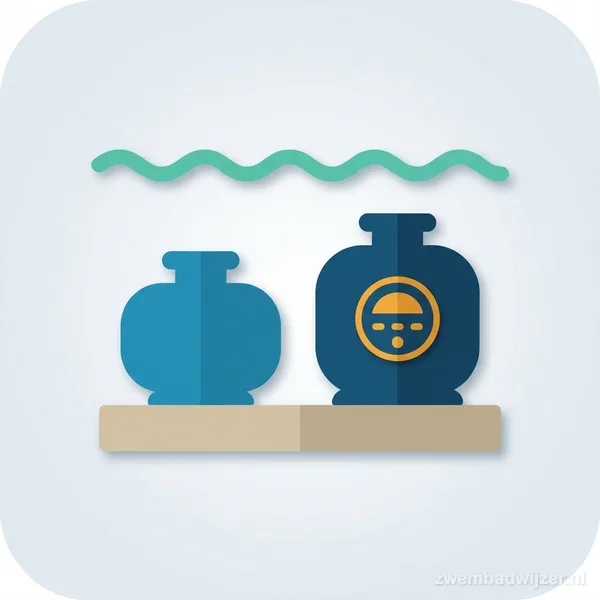
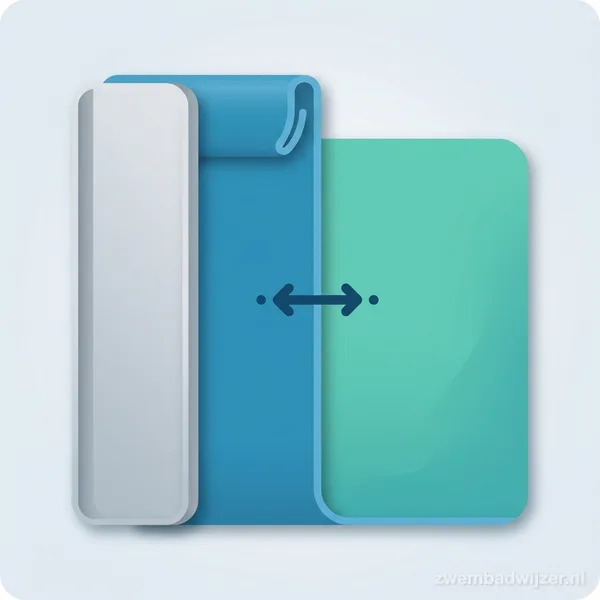
There are two main types: self-priming pumps and non-self-priming circulation pumps. The difference is how each handles air in the line.
A self-priming pump is the standard choice for above-ground and side-by-side installations. It has a built-in strainer pot and can clear air from the suction line at startup without filling it manually. This is the most commonly sold type for residential pools.
A non-self-priming pump (also called a circulation pump) is quieter and lighter but must always sit below the pool water level. It is designed for in-ground setups where the pump pit is lower than the waterline.
Self-priming vs. circulation pump: which should you choose?
| Type | Installation | Price | Noise | Startup ease |
|---|---|---|---|---|
| Self-priming | Above-ground, side-by-side | € 80 to € 300 | Medium | Easy |
| Circulation pump | In-ground, pump pit below water | € 150 to € 600 | Low | Requires priming |
| Variable speed | Both setups | € 300 to € 900 | Low | Automatic |
A variable speed pump has a built-in frequency converter and runs at 30 to 100% of max speed. At low speed it uses up to 80% less electricity than a single-speed model. The higher purchase price typically pays back within 1 to 2 seasons of daily use.
How to calculate the pump size you need
Pump capacity is measured in m3/h (cubic metres per hour). The rule of thumb: your full water volume must pass through the filter within 4 to 6 hours. For a heavily used pool in hot weather, use 4 hours.
Formula: Minimum flow (m3/h) = pool volume ÷ turnover time in hours
Sizing examples for common pool volumes:
| Pool volume | 4-hour turnover | 6-hour turnover | Recommended pump |
|---|---|---|---|
| 15 m3 | 3.75 m3/h | 2.5 m3/h | 4 to 6 m3/h |
| 30 m3 | 7.5 m3/h | 5 m3/h | 8 to 10 m3/h |
| 50 m3 | 12.5 m3/h | 8.3 m3/h | 12 to 15 m3/h |
| 80 m3 | 20 m3/h | 13.3 m3/h | 18 to 22 m3/h |
Beyond volume, account for total head in your system: pipe length, elevation, filter resistance and fittings. A sand filter with a dirty bed adds 0.5 to 1 bar of back-pressure.
Read more about how a sand filter works and how much resistance it adds to sharpen your sizing.
How to connect a pool pump
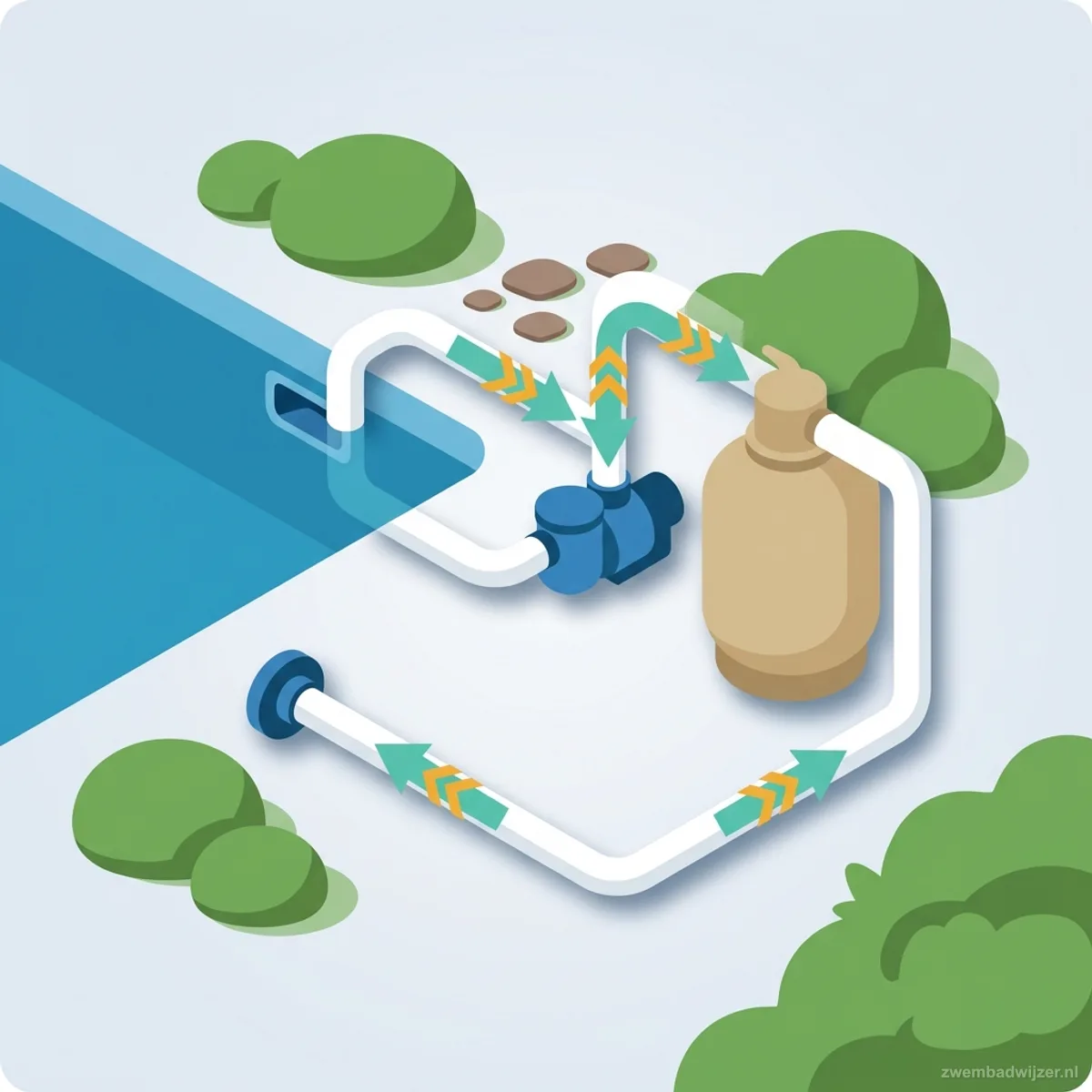
Installing a pool pump takes seven steps. Plan the layout so the suction line is as short and straight as possible. Every extra metre and every bend costs flow.
Step 1: Choose a location Place the pump as close to the filter as possible, ideally within 1.5 metres. Set it on a flat, stable surface — a concrete pad or solid paving slab works well.
Step 2: Connect the suction line Run a line from the skimmer and any main drain through a Y-fitting or valve to the pump inlet. Use 32 mm or 38 mm pipe — most pumps accept both.
Step 3: Pressure line to the filter Connect the pump outlet to the filter inlet using the same pipe size as the suction side. Include at least one union fitting so you can remove the pump or filter without cutting everything apart.
Step 4: Return line to the pool The filter outlet runs back to the return jets in the pool. For more on return jet positioning, read the article on pool plumbing .
Step 5: Electrical connection Connect the pump to a grounded outlet or a dedicated circuit. Outdoors, always use IP44-rated fittings and a 30 mA residual current device (RCD). Consult a licensed electrician if in doubt.
Step 6: Prime and bleed Fill the strainer pot with water before starting. Open all valves. Start the pump and check that water flows through the strainer pot sight glass. If you see air bubbles, stop, refill and repeat.
Step 7: Check for leaks After startup, inspect all joints for leaks. Working pressure in a domestic installation is typically 0.3 to 1.5 bar. Higher pressure points to a clogged filter or a closed valve.
What pipe sizes do you need for a pool pump?
The standard pipe sizes for residential pool installations are 32 mm and 38 mm inner diameter. These match the connections on most pumps and filters sold for home use.
For pumps above 15 m3/h, consider 50 mm or even 63 mm pipe. Undersized pipe creates high velocity and excessive pressure drop, which reduces pump efficiency.
Pipe types and fittings
Spiral hose (flexible): Easy to route around bends and short connections. The spiral prevents kinking. Rated to approximately 60°C and 2.5 bar.
Plain PVC hose: Cheaper but prone to kinking. Use kink protectors at bends. Suitable for straight, short runs.
Rigid PVC pipe: The most durable option for permanent installations. Use with 45° or 90° elbows, T-pieces and isolation valves. Join with PVC solvent cement or clamp rings.
Stainless steel clamps: Use DIN 3017 stainless clamps sized to the hose outer diameter. Don’t overtighten — that cuts into the hose material.
Which filter matches your pool pump?
The pump and filter work as a pair and must be matched in flow capacity. The filter’s maximum throughput must not be lower than the pump’s output.
A sand filter works best at a surface loading of 15 to 25 m3/m2/h. Check this against your filter diameter.
| Filter diameter | Filter area | Max flow at 25 m3/m2/h |
|---|---|---|
| 300 mm | 0.071 m2 | 1.8 m3/h |
| 400 mm | 0.126 m2 | 3.1 m3/h |
| 500 mm | 0.196 m2 | 4.9 m3/h |
| 600 mm | 0.283 m2 | 7.1 m3/h |
| 750 mm | 0.442 m2 | 11 m3/h |
Running a large pump through a small filter drives up pressure and pushes sand through. Always match flow to filter surface area.
Pump energy consumption
A single-speed 1.1 kW pump running 8 hours a day uses 8.8 kWh daily — around 800 kWh per season (90 run days). At €0.30/kWh that’s €240 per year.
A variable speed pump at 50% speed draws about 0.14 kW (power scales with the cube of speed). That’s 1.1 kWh per day — a saving of over €200 annually.
Set the pump on a timer so it runs during the hottest part of the day when algae grow fastest.
Pool pump maintenance
The strainer basket needs weekly attention. A blocked basket causes cavitation — the pump draws in air, loses pressure and damages the mechanical seal.
Weekly: Check the strainer basket. Empty it if more than 30% is blocked.
Monthly: Inspect the O-ring on the strainer lid. Lubricate with silicone grease (never petroleum or Vaseline). Check union connections for drips.
Start of season: Inspect the mechanical seal. Dripping at the shaft exit means wear — replace before permanent damage occurs.
Winterising: Drain all water from the pump body. Open the drain plug at the bottom. Store the pump dry and frost-free. A pump that freezes with water inside is beyond repair.
Frequently asked questions
How many m3/h does my pool pump need to move?
Divide your pool volume by 4 hours to get the minimum flow rate. A 40 m3 pool needs at least 10 m3/h. Also factor in resistance from your filter, pipes and elevation difference.
What pipe size should I use for my pool pump?
The most common sizes are 32 mm and 38 mm inner diameter. Always match the size on your pump and filter connections. Never switch sizes without a reducer — that causes leaks and pressure loss.
What is the difference between a self-priming and a non-self-priming pool pump?
A self-priming pump removes air from the suction line at startup. A non-self-priming pump must be fully filled with water before starting, or it runs dry and damages the mechanical seal.
How many hours a day should a pool pump run?
At least 8 hours per day in summer, ideally during daytime. Outside the main season, 4 to 6 hours per day is enough to keep the water clear.
Can I use a variable speed pump to save on electricity?
Yes — a variable speed pump saves up to 80% on electricity. Set it to 50 to 60% speed for daily circulation and 100% only for backwashing or vacuuming. It typically pays back in 1 to 2 seasons.