Add chlorine via a floating dispenser or by placing tablets in the skimmer. Never throw tablets directly onto pool surfaces: concentrated chlorine damages vinyl liners, foil and tile grout. Always check pH first - chlorine works best at pH 7.2 to 7.6.
What you need
- Test strips or DPD tester
- Chlorine tablets 200g
- Floating dispenser (or use the skimmer)
- Gloves
Step 1: Measure current water levels
Before adding chlorine, always check the current readings:
- Free chlorine: the chlorine still available for disinfection
- pH: determines how effective the added chlorine will be
Take the sample at 30 to 40 cm depth, 30 cm from the wall. Do not test immediately after swimming or after adding chemicals - wait at least 30 minutes.
Step 2: Check and correct pH if needed
Is pH above 7.6? Correct with pH decreaser first. Then wait at least 4 hours before adding chlorine.
| pH | Active chlorine (HOCl) |
|---|---|
| 7.0 | 73% |
| 7.4 | 48% |
| 7.6 | 33% |
| 8.0 | 21% |
At pH 8.0 you need 3.5 times as much chlorine for the same effect as at pH 7.0. Saving money starts with keeping pH in range.
Step 3: Calculate the dose
Rule of thumb for 200g chlorine tablets: One 200g tablet dissolves over a week and delivers an average of 0.3 to 0.5 mg/l chlorine per day in a 25,000-litre pool, depending on temperature and usage.
To maintain chlorine at 1.5 to 2.0 mg/l:
- 15,000-litre pool: 1 tablet per week
- 25,000-litre pool: 1 to 2 tablets per week
- 40,000-litre pool: 2 to 3 tablets per week
In hot weather (above 28 degrees) and with heavy use, increase the dose.
Step 4: Add chlorine
Via floating dispenser (recommended):
- Open the dispenser
- Place 1 to 3 tablets in the compartment
- Set the opening (start with half open)
- Float the dispenser in the water
- Always remove the dispenser before swimming
Via the skimmer:
- Place a tablet in the skimmer basket
- Run the pump - water dissolves the tablet gradually
- Remove the tablet if the pump will be off for an extended period
Warning
Never leave chlorine tablets in the skimmer when the pump is off for a long time. Concentrated chlorine in the skimmer pipe attacks fittings and liners.
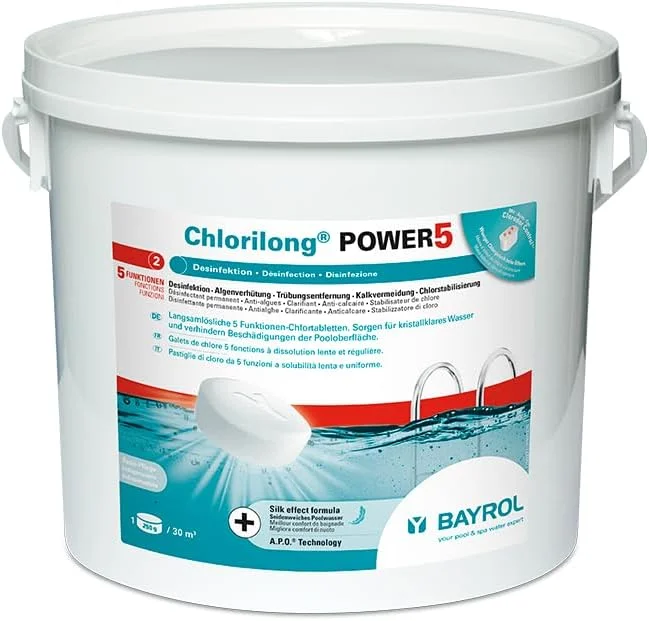
Chlorine Tablets 200g (5 kg)
BayrolSlow-dissolving chlorine tablets for use in skimmer or floating dispenser. 5 kg for a full season.
- Slow dissolving
- Easy to dose
- Good price per kg
- Slightly lowers pH over time
For accurate water readings, use test strips that also measure pH, alkalinity and other parameters.
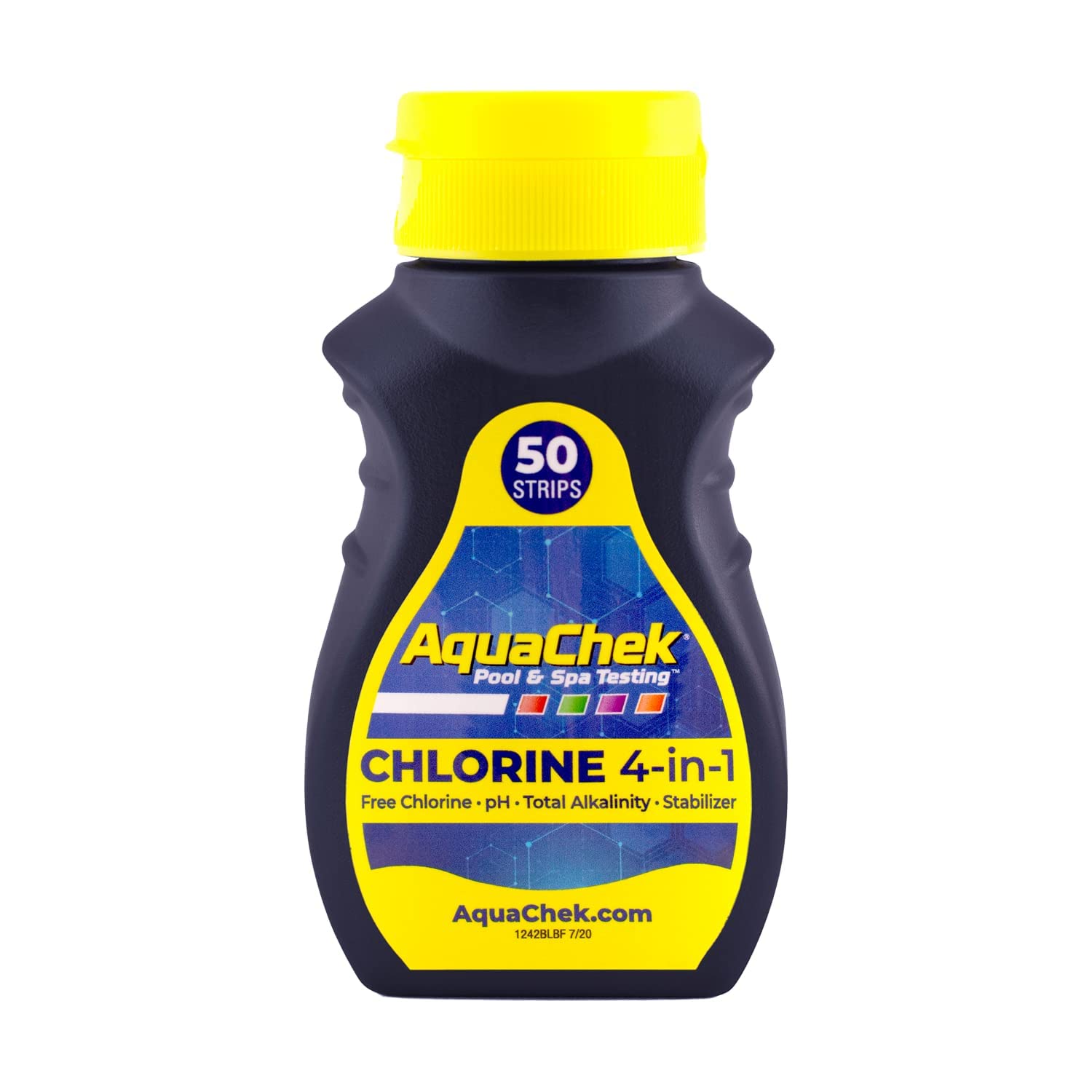
AquaChek 511244A Test Strips 6-in-1 (100 strips)
AquaChekTest pH, chlorine, alkalinity, hardness and more in one go. 100 strips per pack.
- Fast results
- 6 parameters in 1 strip
- Affordable
- Less accurate than digital testers
Step 5: Retest after 4 hours
After 4 hours of circulation, retest. If the reading is:
- Below 1.0 mg/l: add more tablets or open the dispenser further
- 1.0 to 3.0 mg/l: perfect, no action needed
- Above 3.0 mg/l: close the dispenser slightly and wait
- Above 5.0 mg/l: close the dispenser, do not swim until the level drops
Chlorine safety
- Store chlorine products dry, cool and separate from other chemicals
- Never mix two chlorine products: explosion risk
- Wear gloves when handling tablets
- Never pour water onto chlorine: always add chlorine to water, not the other way around
- Keep chlorine tablets out of reach of children
Wait at least 4 hours after adding chlorine tablets and keep the pump running during that time. Then test the water: if free chlorine is between 1.0 and 3.0 mg/l, it is safe to swim. Never rely on elapsed time alone: always confirm with a test before letting anyone in the water.
Can I add chlorine granules directly to the pool?
Liquid chlorine and granules can be added to the pool while the pump runs, but never pour them directly onto pool surfaces like vinyl liners, steps or tile grout. Always pre-dissolve granules in a bucket of water first, then pour the solution evenly around the perimeter. This prevents concentrated chlorine from bleaching or damaging surfaces.
What do I do if chlorine is too high?
Wait: chlorine breaks down naturally through UV light and use. Run the pump, remove any solar cover so sunlight can do its work, and avoid swimming. After 12 to 24 hours the level will typically drop to a safe range. Above 5 mg/l: do not swim until you have tested and confirmed it has come down.
How long does a 200g tablet take to dissolve?
At a water temperature of 24 to 28 degrees, a 200g tablet dissolves in roughly 7 to 10 days. It dissolves faster at higher temperatures and slower in cooler water. Check the dispenser every few days and refill as needed to keep a consistent chlorine level.