Lower a high pH (above 7.6) using pH decreaser (sodium bisulfate powder). Always dissolve in water first. Never add more than the calculated dose in one go. Wait 4 hours before measuring.
Why pH matters
At pH 8.0, chlorine is only 21% effective. Correcting the pH to 7.4 triples the effectiveness of your chlorine without adding a single gram more.
Dosage table
| Drop needed | Per 10,000 litres | Per 25,000 litres | Per 50,000 litres |
|---|---|---|---|
| 0.1 pH | 10 g | 25 g | 50 g |
| 0.2 pH | 20 g | 50 g | 100 g |
| 0.4 pH | 40 g | 100 g | 200 g |
| 0.6 pH | 60 g | 150 g | 300 g |
For drops larger than 0.4, split the total dose and add in two steps with 4 hours between.
Step by step
- Measure pH at 30 to 40 cm depth
- Calculate the required dose from the table
- Fill a bucket with 10 litres of water
- Add pH decreaser to the water (not the other way around)
- Stir until fully dissolved
- Pour evenly along the pool perimeter, preferably at the deep end
- Run the pump for 4 hours
- Retest and repeat if needed
Warning
Always wear gloves and eye protection when handling pH decreaser. It is mildly corrosive. Never pour it directly onto vinyl liners, steps or fittings.
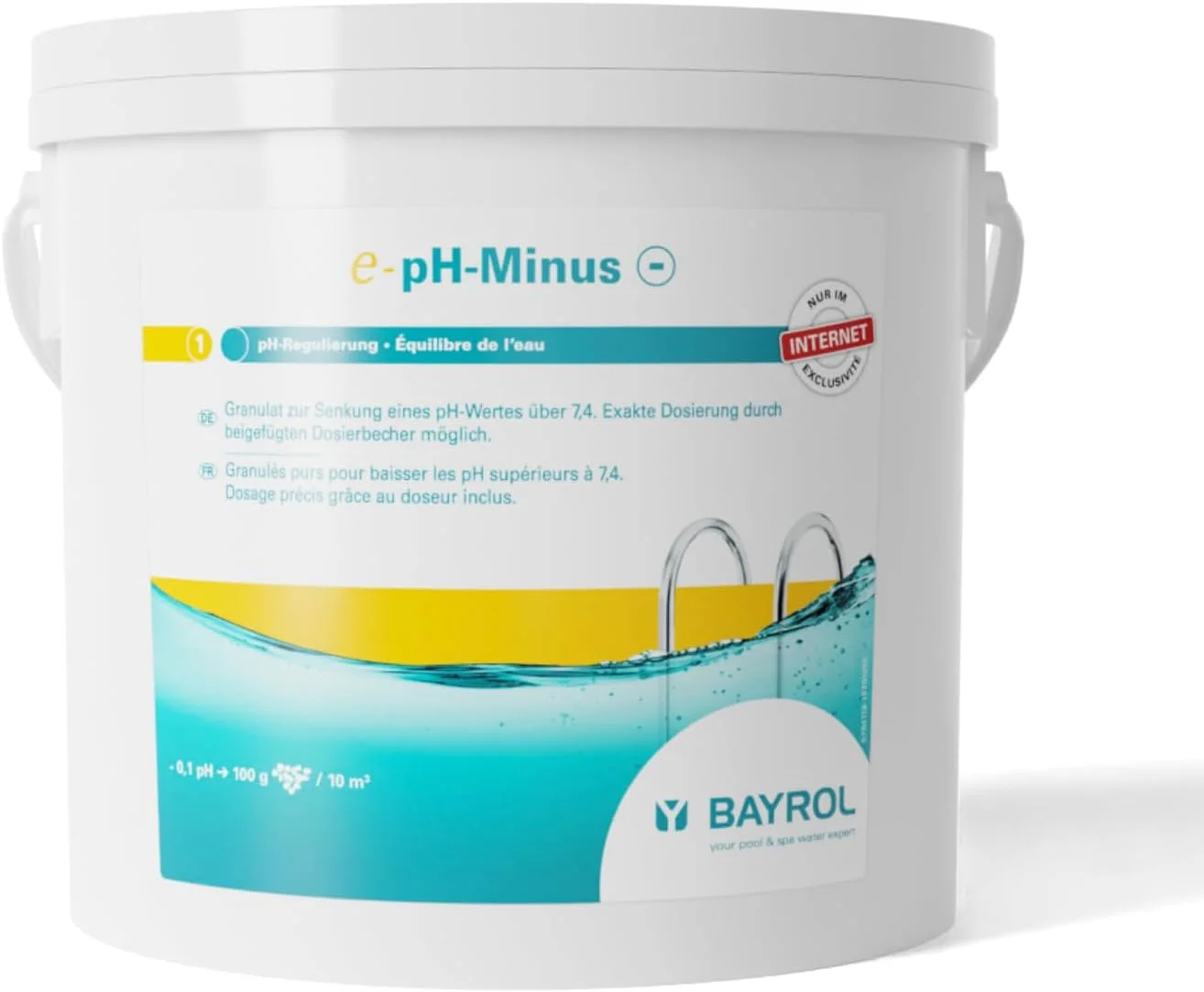
pH Decreaser Powder (5 kg)
Chloor.nlSodium bisulphate powder to lower pool pH. 5 kg for multiple treatments. Always dissolve in a bucket of water before adding.
- Fast-acting
- Good price per kg
- Easy to dose
- Creates dust when measuring, wear gloves
Test pH, chlorine and alkalinity simultaneously with reliable 6-in-1 test strips.
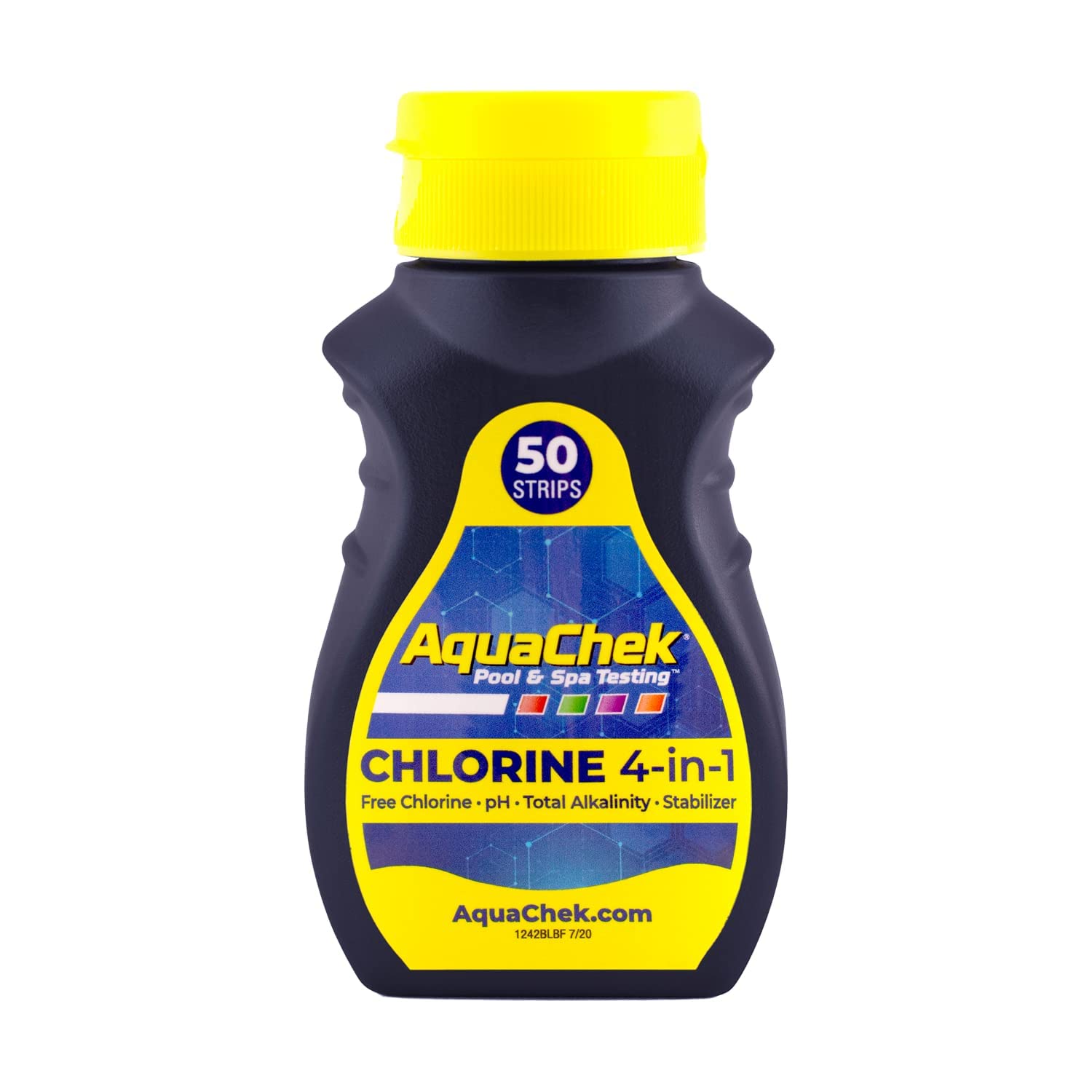
AquaChek 511244A Test Strips 6-in-1 (100 strips)
AquaChekTest pH, chlorine, alkalinity, hardness and more in one go. 100 strips per pack.
- Fast results
- 6 parameters in 1 strip
- Affordable
- Less accurate than digital testers
What causes high pH in a pool?
New plaster and freshly painted concrete walls leach lime for 2 to 6 weeks. Water can easily climb to pH 8.0 or above during this break-in period, even with correct dosing. This self-corrects over time.
Tap water in some Dutch regions has a pH of 7.5 to 8.5 because water companies add sodium hydroxide to protect metal distribution pipes. Every refill raises the pool pH slightly. In North Brabant and Limburg, tap water hardness and pH are particularly high.
Water features such as fountains, waterfalls and jets accelerate CO2 outgassing from the pool. CO2 acts as a weak acid; without it, pH climbs. A fountain running 2 hours a day can raise pH by 0.2 to 0.4 compared with still water. Calcium hypochlorite (shock chlorine) also raises pH with each dose, as does salt chlorination which produces hydroxide ions at the electrode.
The pH and chlorine efficiency connection
At pH 7.0, approximately 73% of pool chlorine exists as HOCl (hypochlorous acid), the active disinfecting form. At pH 7.4, that drops to 50%. At pH 8.0, only 21% is active HOCl.
In practical terms: if you measure 3.0 mg/l free chlorine at pH 8.0, only about 0.63 mg/l is actually available for disinfection. You would need 3.5 times as much chlorine to achieve the same sanitation as at pH 7.2. Correcting the pH is always cheaper than buying more chlorine.
Dosage table by starting pH
| Starting pH | Target | Per m3 | Per 20 m3 pool | Per 50 m3 pool |
|---|---|---|---|---|
| 8.0 | 7.4 | 60 g | 1,200 g | 3,000 g |
| 7.8 | 7.4 | 40 g | 800 g | 2,000 g |
| 7.6 | 7.4 | 20 g | 400 g | 1,000 g |
| 8.0 | 7.2 | 80 g | 1,600 g | 4,000 g |
For drops larger than 0.4, split the total dose: add the first half, wait 4 hours, measure, then add the second half only if needed.
Muriatic acid as an alternative
Pool professionals often use muriatic acid (hydrochloric acid, HCl, 33% solution) instead of sodium bisulfate. It is cheaper in bulk and works faster. Dosage: approximately 30 ml per m3 to lower pH by 0.2.
For residential owners, muriatic acid is significantly more hazardous. The fumes corrode lungs and eyes. The golden rule: always add acid to water, never water to acid (the reverse causes violent spattering). Work outdoors in a breeze and wear chemical-resistant gloves, eye protection and acid-resistant clothing.
Sodium bisulfate powder (pH decreaser) is safer, more forgiving and perfectly adequate for residential pools up to 100,000 litres.
Waiting time between doses
Never add a second dose less than 4 hours after the first. The first dose needs full circulation time to distribute evenly. Adding too soon can create a localised low-pH zone where vinyl bleaches, concrete is etched and metal fittings corrode.
Always measure at the same location: at least 30 cm from the wall, 30 to 40 cm deep, minimum 30 minutes after the last dose was added.
When to get a professional water test
If pH climbs back above 7.6 within 48 hours of correction, there is an underlying cause: alkalinity above 150 mg/l, a fresh plaster surface, a salt chlorinator running too high, or aggressive water features. A full mineral analysis at a pool shop or via a mail-in test kit costs EUR 15 to EUR 30 and identifies the root cause without guesswork.