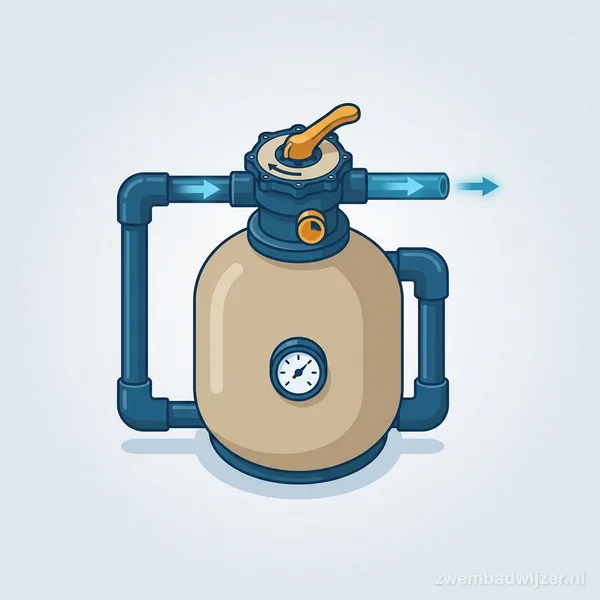
Raise a low pH (below 7.2) using pH increaser (sodium carbonate / soda ash). Low pH is corrosive: it irritates eyes and skin and attacks metal components. Always dissolve in water before adding to the pool.
Dosage table
| Rise needed | Per 10,000 litres | Per 25,000 litres | Per 50,000 litres |
|---|---|---|---|
| 0.1 pH | 10 g | 25 g | 50 g |
| 0.2 pH | 20 g | 50 g | 100 g |
| 0.4 pH | 40 g | 100 g | 200 g |
For rises larger than 0.4, split the dose across two additions with 4 hours between.
Step by step
- Measure pH at 30 to 40 cm depth
- Calculate the required amount
- Fill a bucket with 10 litres of lukewarm water
- Add pH increaser to the water and stir until dissolved
- Pour evenly along the pool perimeter
- Run the pump for 4 hours
- Retest and repeat if needed
Tip
If both your pH and alkalinity are low, start with sodium bicarbonate to raise alkalinity first. This stabilises the pH and makes future corrections easier.
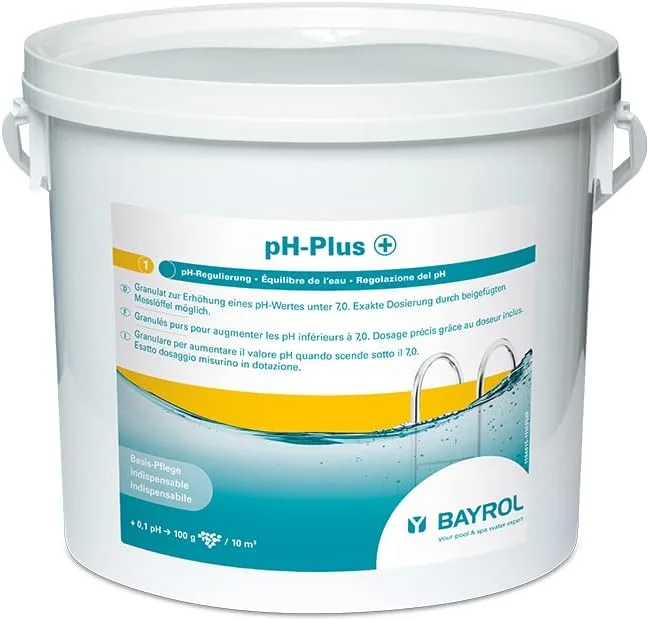
pH Increaser Granules (3 kg)
Chloor.nlSodium carbonate granules to raise pool pH. Always dissolve in water before adding. 3 kg for multiple treatments throughout the season.
- Effective
- Dissolves well
- Affordable
- Always pre-dissolve before adding to pool
Test pH accurately before and after treatment with reliable 6-in-1 test strips.
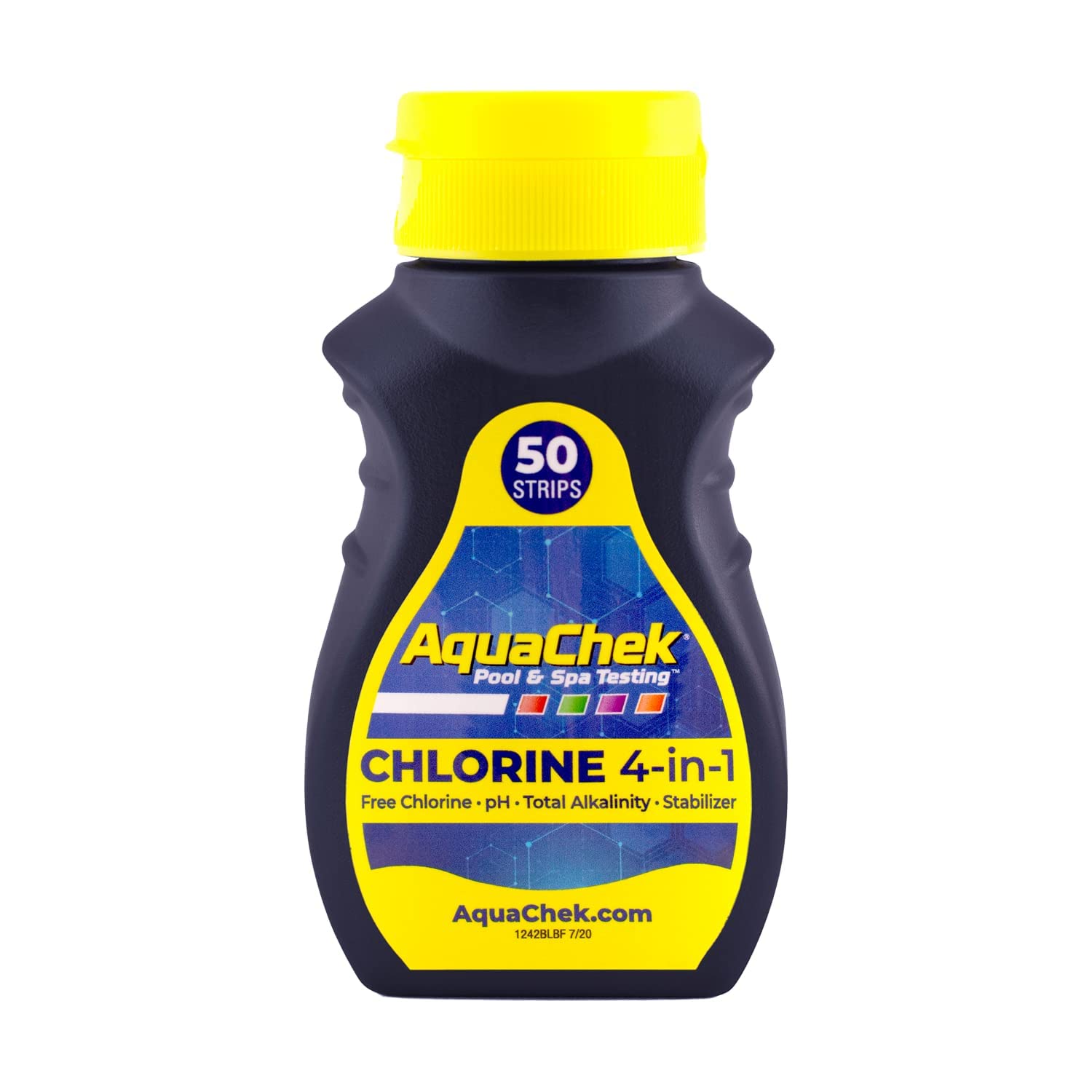
AquaChek 511244A Test Strips 6-in-1 (100 strips)
AquaChekTest pH, chlorine, alkalinity, hardness and more in one go. 100 strips per pack.
- Fast results
- 6 parameters in 1 strip
- Affordable
- Less accurate than digital testers
Why pH drops in a pool
Rainwater has a pH of 5 to 6. A 20 mm rainfall on a 25 m2 pool surface adds 500 litres of acidic water to the system. If your total alkalinity (TA) is below 80 mg/l, this dilution causes a measurable pH drop within hours.
Trichlor chlorine tablets are mildly acidic: their pH in solution is around 2.8 to 3.0. Each dissolving 200 g tablet nudges the pH slightly downward. In warm weather with high chlorine demand, this can contribute 0.1 to 0.2 pH units per week.
CO2 dissolves in pool water and forms carbonic acid. Heavy aeration from fountains, waterfalls or jets accelerates CO2 absorption and lowers pH. Swimsmer load adds organic acids through sweat and body oils.
Dosage table by starting pH
| Starting pH | Target | Per m3 | Per 20 m3 pool | Per 50 m3 pool |
|---|---|---|---|---|
| 6.8 | 7.4 | 36 g | 720 g | 1,800 g |
| 7.0 | 7.4 | 24 g | 480 g | 1,200 g |
| 7.2 | 7.4 | 12 g | 240 g | 600 g |
| 7.0 | 7.2 | 12 g | 240 g | 600 g |
Dosage assumes alkalinity is in the 80 to 120 mg/l range. At lower alkalinity, the pH swings more dramatically per gram added.
The alkalinity connection
If your pH drops back within 24 hours of correction, total alkalinity is likely below 80 mg/l. Alkalinity is the pH buffer: without it, every small acid input (rain, chlorine, swimmers) immediately shows in your pH reading.
Test TA using test strips or a drop test. Below 80 mg/l? Raise it first with sodium bicarbonate: 15 g per m3 raises TA by approximately 10 mg/l. For a 25 m3 pool going from TA 60 to TA 100: 25 x 4 x 15 g = 1,500 g (1.5 kg) of sodium bicarbonate.
Dissolve sodium bicarbonate in water and add it the same way as pH increaser: evenly around the perimeter, pump running, wait 4 hours. Raise in steps of no more than 30 mg/l per dose.
Exact procedure
- Measure pH at 30 to 40 cm depth, at least 30 cm from the wall, at least 30 minutes after the pump last ran
- Calculate the required amount from the dosage table
- Fill a bucket with 10 litres of lukewarm water
- Add pH increaser to the water (never sprinkle powder directly into the pool)
- Stir until fully dissolved, about 1 to 2 minutes
- Pour evenly around the pool perimeter, distributing across the full circuit
- Keep the pump running to circulate the chemical
- Wait a minimum of 4 hours before retesting
For large corrections above 0.4 pH: split the dose into two additions 4 hours apart. Adding too much at once can raise local pH above 10, causing calcium to precipitate as a white milky cloud.
Common mistakes
Pouring powder directly into the pool without dissolving first: pH increaser is alkaline and can bleach vinyl liner or gelcoat on contact. Always dissolve first.
Measuring too soon after adding: after 1 hour the chemical has not yet distributed evenly. A reading near the dosing point will be too high; a reading elsewhere will be too low.
Skipping the alkalinity check: correcting pH without fixing low alkalinity leads to rapid pH drift back down. Fix the root cause first.