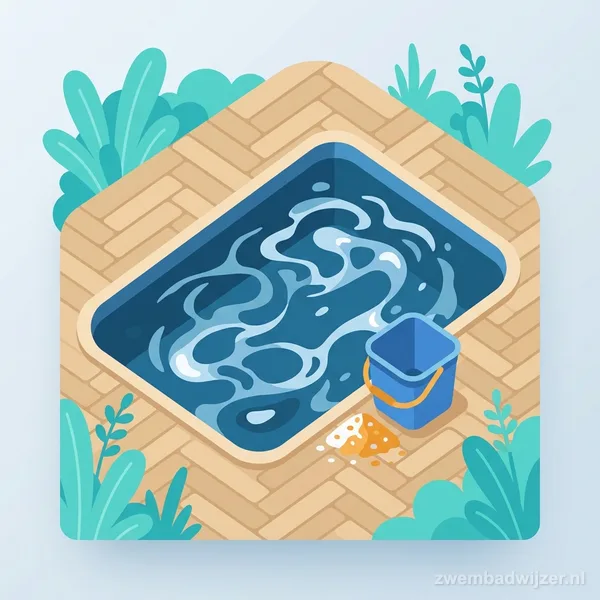
Flocculant clears cloudy pool water by causing fine particles to clump together into floc that sinks to the floor. Works only with a sand filter. After 12 to 24 hours, vacuum the floor and the water will be clear.
When to use flocculant
Flocculant is the right solution when:
- Water stays cloudy despite correct pH and chlorine
- Filter pressure is normal (the filter is not the bottleneck)
- Fine suspended particles are present that are too small for the sand filter to catch
Not suitable when cloudiness is caused by algae growth - use an algaecide and shock treatment instead.
What you need
- Liquid flocculant (150 ml per 10,000 litres)
- A manual pool vacuum (not an automatic robot cleaner)
- Sand filter installation (not a cartridge filter)
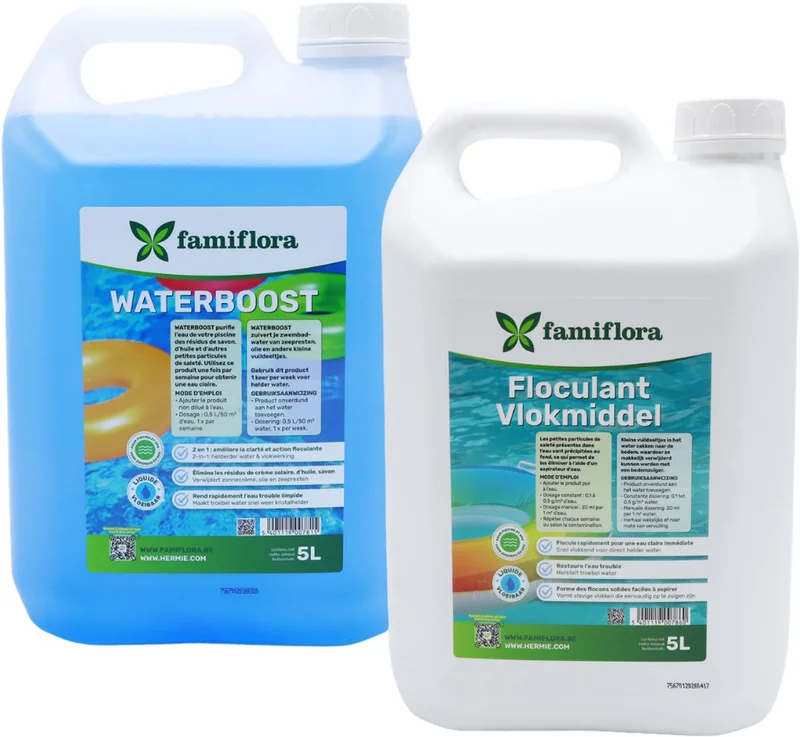
Famiflora Clearswim Pool Clarity Kit 5L
FamifloraLiquid flocculant for sand filters. Causes fine suspended particles to clump together and settle as floc on the pool floor. 1 litre for multiple treatments.
- Fast-acting
- Easy to dose
- Effective for severely cloudy water
- Sand filters only, not for cartridge filters
- Manual vacuuming required after treatment
For vacuuming the settled floc, you need a manual vacuum. An automatic robot will stir the floc back into suspension.
Manual Pool Vacuum Set
IntexManual pool vacuum with telescopic pole, hose and vacuum head. Connects to any standard filter pump. Suits pools up to 30,000 litres.
- Affordable
- Easy to use
- Works with standard filter
- Labour-intensive for larger pools
Step by step
Step 1: Check the filter type
Sand filters only. Cartridge filters are permanently damaged by flocculant.
Step 2: Check pH
Flocculant works best at pH 6.8 to 7.2. Above 7.6 it loses effectiveness. Adjust pH if needed.
Step 3: Add flocculant
Dose: 150 ml per 10,000 litres of liquid flocculant.
Pour it via the skimmer or evenly along the pool edge. Do not pour directly onto liners or surfaces.
Step 4: Circulate for 1 hour
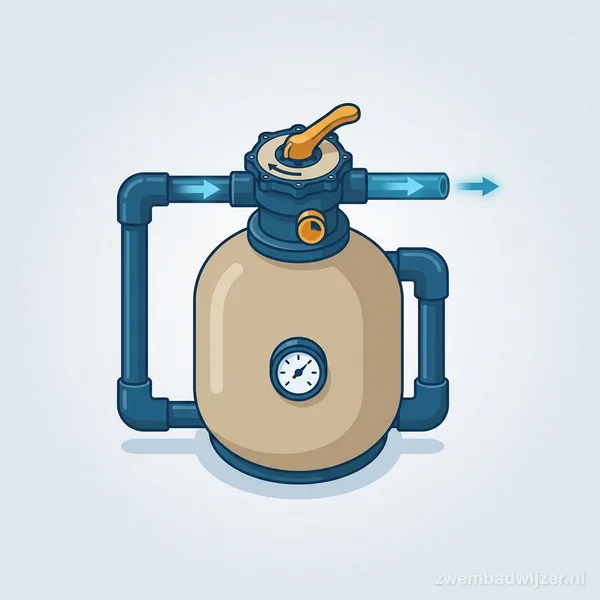
Set the multiport valve to FILTER and run the pump for 1 hour to distribute the product evenly.
Step 5: Wait 12 to 24 hours
Leave the pump on the normal filter setting. Wait 12 to 24 hours. The flocculant causes fine particles to clump together, settling as white floc on the pool floor.
Warning
Do NOT switch the pump to backwash or WASTE during the settling process. This will flush the flocculant away before it has done its job.
Step 6: Vacuum the floor
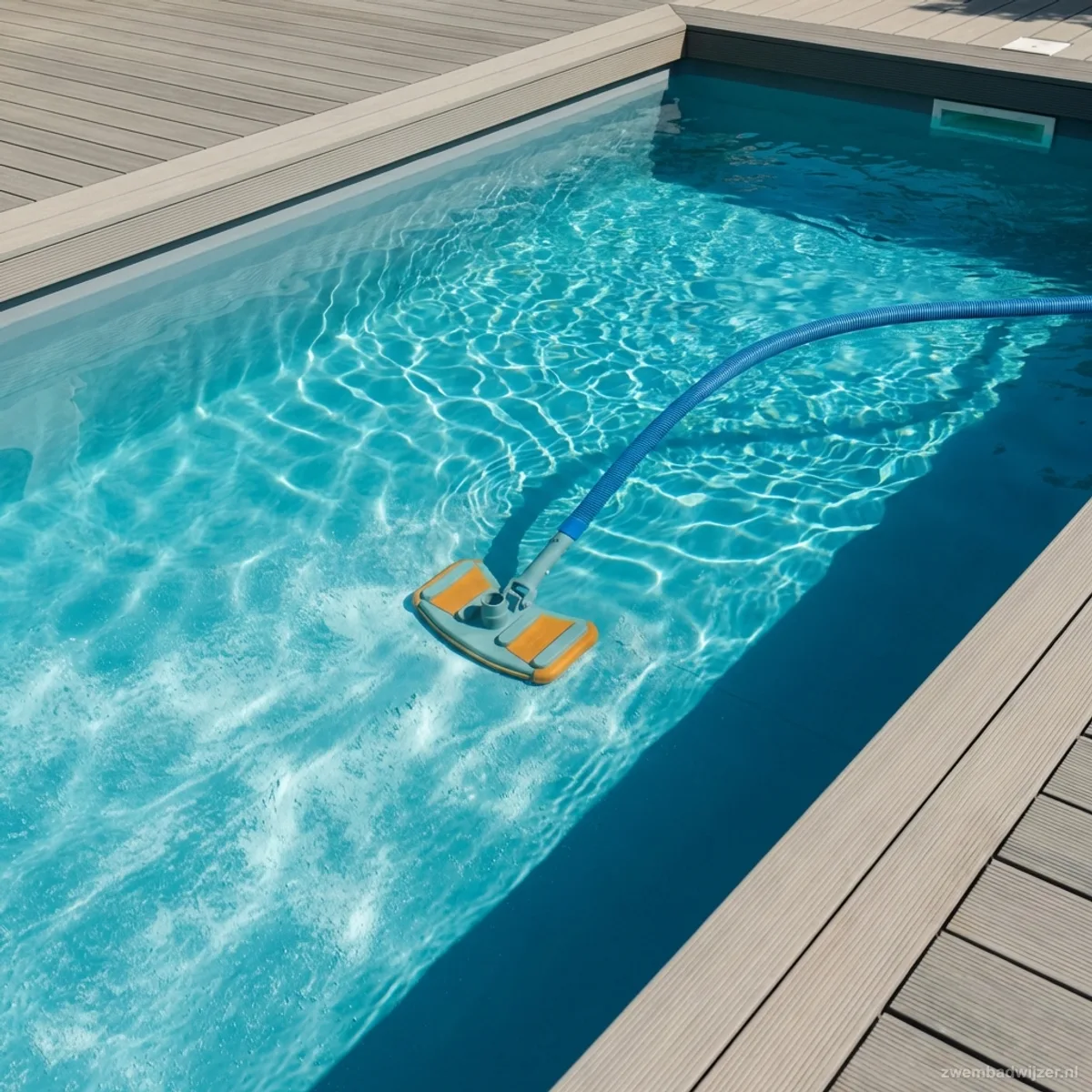
Use a manual vacuum (not an automatic robot - it will stir the floc back up). Vacuum slowly and systematically across the floor. The floc is fragile and disperses back into the water if disturbed quickly.
Set the multiport valve to WASTE (direct to drain) while vacuuming, so debris bypasses the filter. Note: you will lose water. Top up afterwards.
Step 7: Backwash
After vacuuming, thoroughly backwash the filter (3 to 5 minutes backwash + 30 seconds rinse). Any flocculant that entered the filter needs to be removed.
If flocculant does not work
If the water is still cloudy after 24 hours:
- pH was too high (above 7.4)
- Insufficient flocculant was used
- Water contains algae (living organisms, not suspended particles)
- Filter is too dirty to circulate effectively
Flocculant (flock) is a chemical product that causes fine suspended particles to clump together into larger floc that sinks to the pool floor. It captures particles too small to be caught by a sand filter, such as dead algae cells, fine silt and micro-debris left after a shock treatment. The result is clear water that can be restored in 12 to 24 hours.
Can I use flocculant with a cartridge filter?
No, absolutely not. Flocculant permanently clogs a cartridge filter element, and the damage cannot be reversed by cleaning. Flocculant is only suitable for use with a sand filter. If you have a cartridge filter, use a clarifier product instead: it works similarly but in much smaller doses that pass through the cartridge without clogging it.
How do I know if flocculant has worked?
After 12 to 24 hours you will see a white or grey layer of settled particles on the pool floor. The water above should be noticeably clearer or even crystal clear. If no sediment has formed and the water is still cloudy, the pH was likely too high (above 7.4) or insufficient flocculant was used. Check and correct both before trying again.
How often can I use flocculant?
Use flocculant only as a solution for severely cloudy water: not as a regular part of your maintenance routine. If you need it repeatedly, there is an underlying issue: insufficient chlorine, inadequate filtration time, poor backwashing habits, or an unresolved algae problem. Fix the root cause rather than relying on flocculant as a quick fix.