White scale along the waterline of your pool is calcium carbonate that has crystallised out of solution. It forms when calcium hardness exceeds 400 mg/L or when pH climbs above 7.8, and it builds up fastest in warm weather when evaporation is high. Removing it takes an acid-based tile cleaner and a stiff brush; preventing it means keeping your water chemistry in balance.
What Is Calcium Scale and Why Does It Form?
Calcium scale is a solid deposit of calcium carbonate (CaCO₃) and magnesium carbonate that builds up on pool surfaces. It looks white, grey-white, or cream-coloured and has a crusty, sometimes flaky texture. Scale almost always concentrates at the waterline — the narrow band where water surface meets pool wall — because this is where evaporation is most intense.
The chemistry is straightforward. Pool water contains dissolved calcium ions. As water evaporates, those ions become more concentrated. If pH rises above 7.8 or calcium hardness climbs above 400 mg/L, the point is reached where calcium carbonate can no longer stay dissolved. It precipitates out as a solid and sticks to whatever surface is nearby.
In Europe, tap water hardness varies widely by region. Parts of the Netherlands, Germany, Belgium, and southern England have hard tap water with calcium levels already at 200 to 300 mg/L. Top up your pool with that water repeatedly over a season and calcium hardness climbs fast.
What Is the Ideal Calcium Hardness for a Pool?
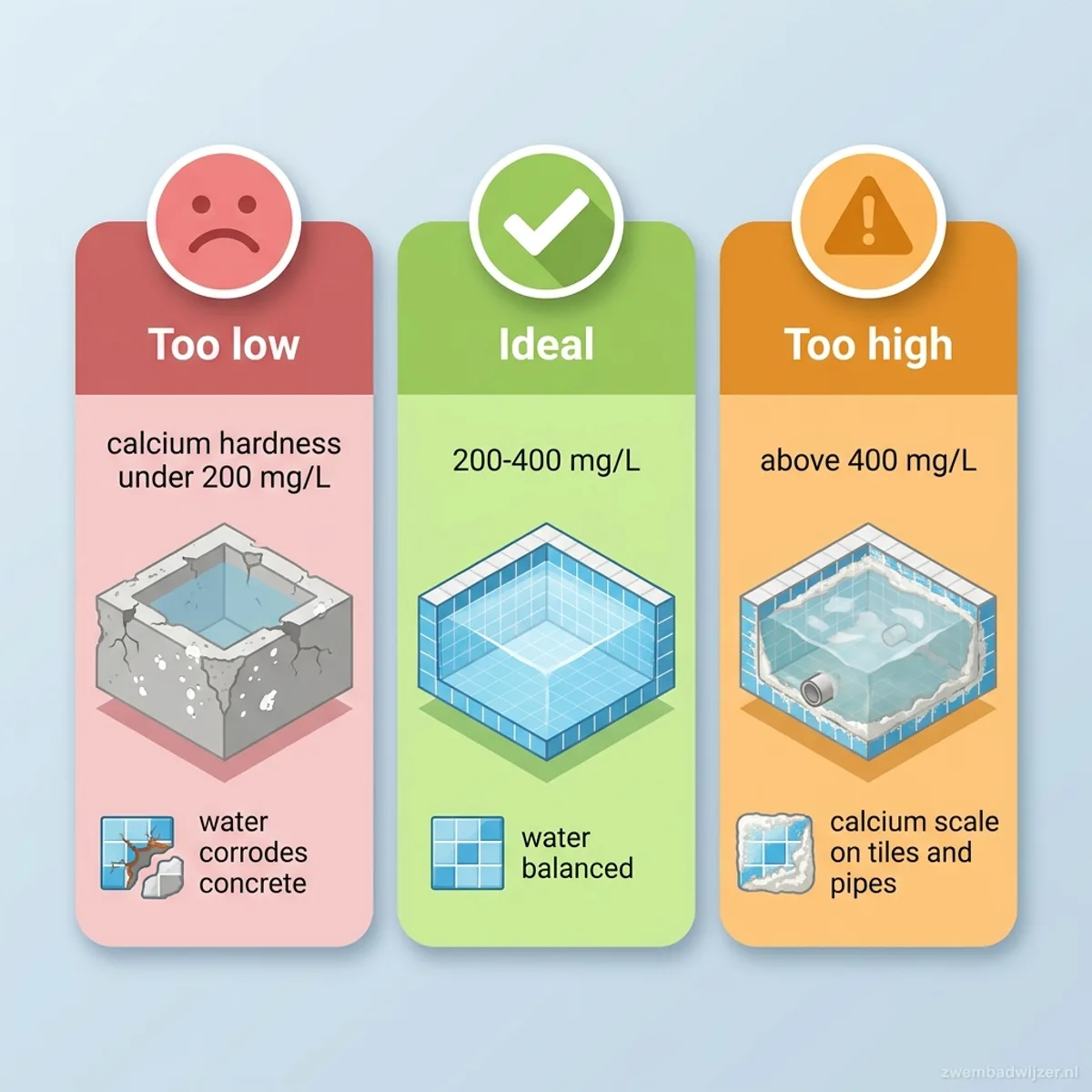
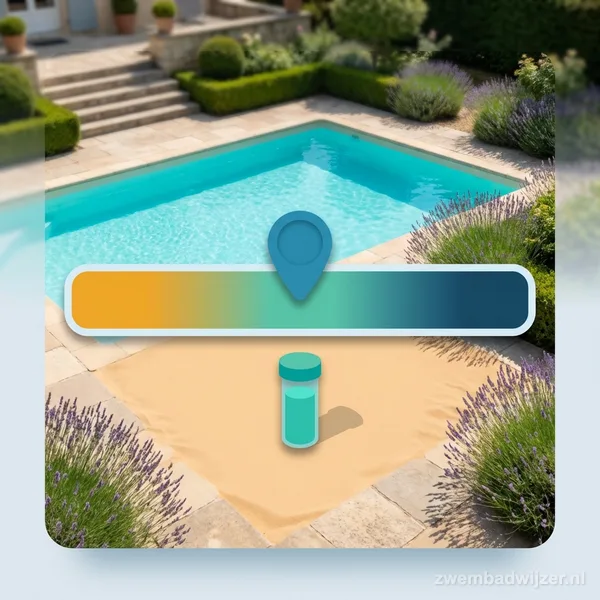
The target range for calcium hardness is 200 to 400 mg/L:
| Level | Value | Effect |
|---|---|---|
| Too low | Below 200 mg/L | Water becomes corrosive — attacks concrete, grout, metal fittings |
| Ideal | 200 to 400 mg/L | Water is balanced, no scale, no corrosion |
| Too high | Above 400 mg/L | Calcium scale on tiles, waterline, and heating element |
| Critical | Above 600 mg/L | Severe scale, cloudy water, pump and pipe blockage |
Measure calcium hardness with a hardness test strip or liquid test kit. Check it monthly during the swimming season, and after every significant top-up of water.
A useful rule of thumb: at pH 7.4 and alkalinity 100 mg/L, a calcium hardness of 250 mg/L gives a Langelier Saturation Index close to zero — the ideal balance point. Higher water temperatures (above 28°C) increase the likelihood of scale even within the normal range, because solubility of calcium carbonate decreases as temperature rises.
How to Remove Calcium Deposits: Step by Step
Fresh calcium scale that has built up over a week or two is relatively soft and responds well to a light acid treatment. Deposits that have been accumulating for months or years harden into a tough crust that requires significantly more effort.
What You Need
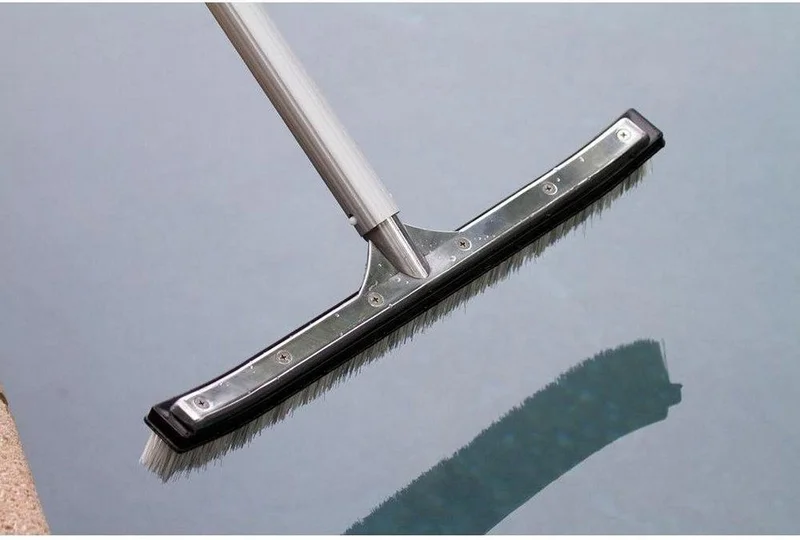
- A stiff nylon pool brush or scrubbing brush (not steel wool, not abrasive pads)
- Pool tile cleaner based on citric acid or phosphoric acid — or a DIY solution of one tablespoon of citric acid powder per 500 ml of water
- Rubber gloves and old clothes (acid cleaners can irritate skin and bleach fabric)
- A bucket of clean rinse water
Removing Scale Above the Waterline
- Wet the affected tiles with clean water.
- Apply the tile cleaner with a sponge or brush. Ensure good contact between the cleaner and the scale.
- Leave to work for 5 to 10 minutes. If the reaction is working, you may see light bubbling as the acid dissolves the calcium carbonate.
- Scrub in circular motions with firm, even pressure. Start lighter and increase pressure if the scale is stubborn.
- Rinse immediately and thoroughly with clean water. Never let acid cleaners dry onto tile — they can etch the glaze.
Removing Scale Below the Waterline
Calcium deposits below the waterline are less common but can occur after persistent water chemistry imbalances. Use a long-handled pool brush and scrub firmly. For stubborn below-water deposits, temporarily lower the water level so you can work on dry tiles.
Never pour acid-based cleaners directly into the pool water. This causes a sharp pH and alkalinity crash that damages pump components and throws off water balance.
Stubborn, Hardened Scale
If scale has been left untreated for years, household citric acid or vinegar will not make a dent. Use a professional tile cleaner with a higher acid concentration, applied and left for longer. In extreme cases, tiles may need to be professionally sandblasted or replaced entirely.
How to Prevent Calcium Scale: Water Balance Is the Key
Once you have removed existing scale, prevention comes down to consistent water management.
1. Keep pH in the Correct Range
A pH above 7.8 is the single biggest driver of rapid calcium scale formation. At higher pH, calcium carbonate is barely soluble and drops out of solution quickly. Target 7.2 to 7.4. Read our guide on lowering pool pH if your pH tends to drift upward.
2. Use a Sequestering Agent With Hard Water
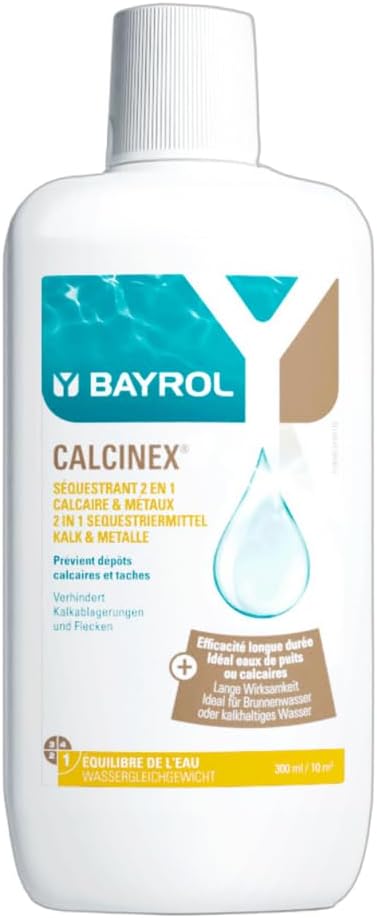
A liquid sequestering agent (calcium inhibitor) binds calcium and metal ions and keeps them suspended in the water rather than letting them settle on surfaces. It does not remove calcium — it prevents it from crystallising out. Dose at the start of the season and monthly thereafter according to product instructions, typically 200 to 500 ml per 50 m³.
3. Wipe Down the Waterline Weekly
New calcium deposits that have just begun to crystallise wipe off easily with a damp brush or sponge. Build this into your weekly pool maintenance. One minute of wiping per week prevents an hour of scrubbing per month.
4. Reduce Evaporation
Every litre of water that evaporates leaves its calcium behind. A pool cover reduces evaporation by 50 to 70%, which directly slows the rate of calcium accumulation. The bonus: you top up less often with hard tap water, so less new calcium enters the pool.
5. Check Your Tap Water Hardness
If your tap water already contains 300 mg/L calcium, you are starting close to the limit. Ask your water supplier for the water quality data, or test it yourself. If it is very hard, consider blending with collected rainwater to dilute the calcium before you fill the pool.
Does Water Temperature Affect Scale Formation?
Yes, significantly. At 30°C, calcium carbonate is less soluble than at 20°C — which means scale forms faster in summer even when all other parameters are within the recommended range. This is why the waterline always looks cleaner in spring when the water is cold and gets progressively worse through July and August.
For a full guide to how hardness, temperature, and pH interact, see our article on calcium hardness and water balance .
Calcium Scale vs. Algae vs. Biofilm: How to Tell the Difference
Scale is sometimes confused with algae or biofilm, particularly when it is grey or has a mottled appearance.
| Feature | Calcium scale | Green algae | Biofilm / mould |
|---|---|---|---|
| Colour | White, cream, grey-white | Green, yellow-green | Grey, brown, black |
| Texture | Hard, gritty, flaky | Slippery, soft | Smooth, slimy |
| Location | Waterline, above water | Walls, floor, everywhere | Grout lines, shaded areas |
| Test | Dissolves with acid | Dies with chlorine | Scrubs off with brush + chlorine |
Quick test: apply a small drop of diluted acid (muriatic acid or descaler) to the deposit. If it fizzes immediately, it is calcium carbonate. No reaction means you are probably dealing with biological growth rather than mineral scale.
Frequently Asked Questions
Why is there a white ring around my pool tiles?
The white ring at the waterline is calcium scale — a deposit of calcium and magnesium carbonate that crystallises as water evaporates. It forms when calcium hardness exceeds 400 mg/L, when pH climbs above 7.8, or when evaporation is high.
How do I remove calcium deposits from pool tiles?
Use an acid-based tile cleaner and a stiff nylon brush. Wet the tiles, apply the cleaner, leave for 5 to 10 minutes, scrub, then rinse thoroughly. Never use steel wool or abrasive pads on glazed tiles.
What is the ideal calcium hardness for a pool?
The ideal range is 200 to 400 mg/L. Below 200 mg/L the water becomes corrosive. Above 400 mg/L calcium precipitates as white scale on tiles, the waterline, and the heating element.
Can I use vinegar to remove pool scale?
Household vinegar works on light scale but is much weaker than a pool tile cleaner. Never pour it into the pool water as it crashes pH and alkalinity. Use it only on dry tiles above the waterline.
How do I prevent calcium scale in my pool?
Keep calcium hardness between 200 and 400 mg/L and pH between 7.2 and 7.4. Add a sequestering agent if your tap water is hard. Filter at least 8 hours per day. Wipe the waterline weekly before deposits harden.
My tap water is very hard. What should I do?
If tap water calcium exceeds 250 mg/L, either dilute with rainwater or use a sequestering agent that keeps calcium in solution. Check your water supplier’s quality data for the calcium content of your local water.