Your pool filter pump needs very little daily attention, but neglect leads to expensive repairs. Most pump failures are preventable with three simple habits: emptying the strainer basket weekly, preventing air ingestion and winterising the pump correctly.
How does a pool pump work?
The pump draws water from the skimmer and the main drain, pushes it through the sand or cartridge filter and returns it to the pool. Pump capacity is expressed in m3/h. A pump rated 4 m3/h moves 4,000 litres per hour. For a full technical explanation, see our article on pool filter pumps .
The pump has a strainer basket housing (also called the hair and lint trap or pre-filter basket) that catches coarse debris before it reaches the impeller. This basket must be emptied weekly.
Weekly: clean the strainer basket
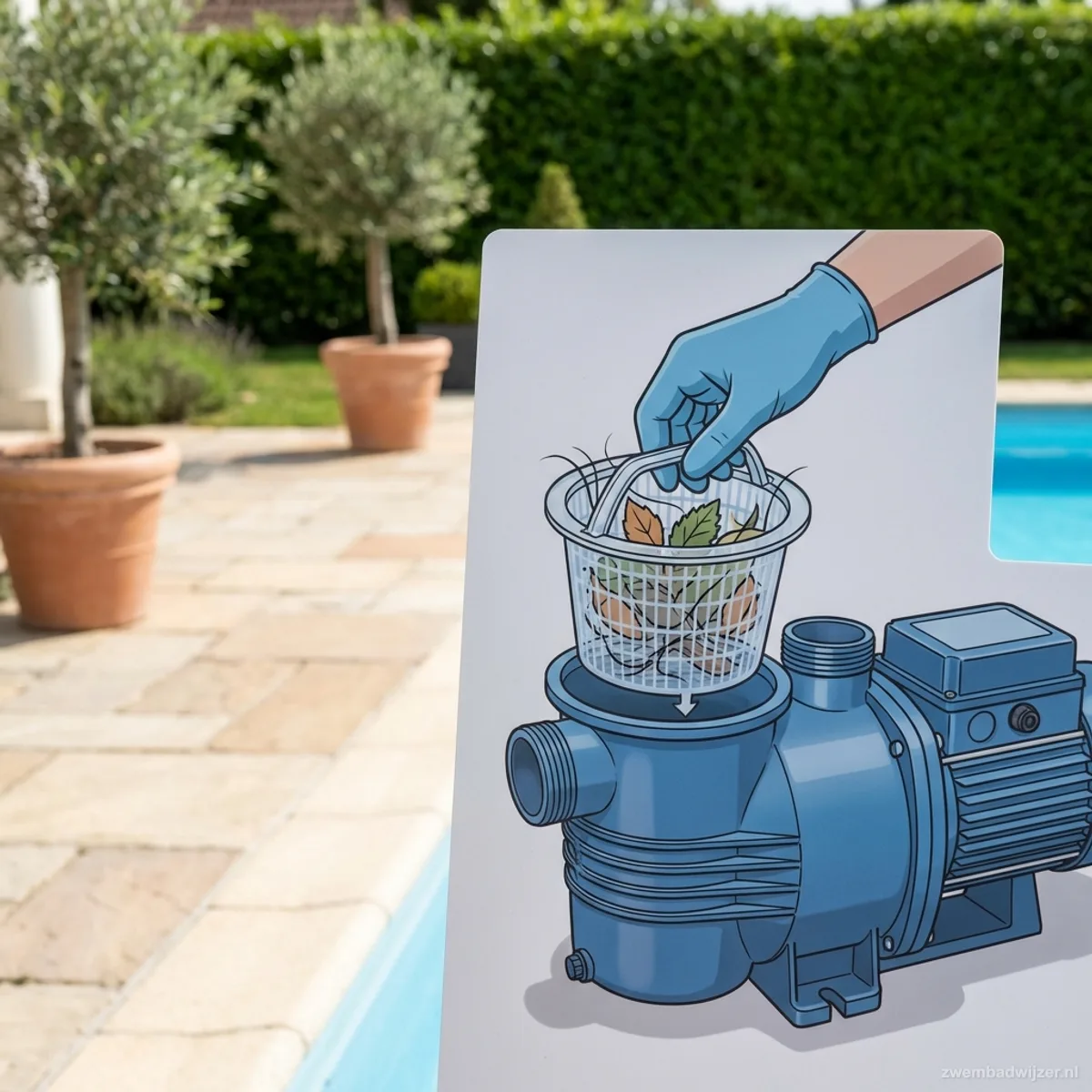
- Turn the pump OFF
- Close the isolation valves on the suction line
- Open the strainer basket lid
- Remove the basket and clear out hair, leaves and debris
- Rinse the basket under the tap
- Check the O-ring on the lid: apply a thin film of silicone grease (not petroleum-based lubricant)
- Refit the basket, close the lid, open the valves and start the pump
A clean strainer basket is the single simplest way to extend pump life and reduce energy consumption.
Annual: inspect the impeller
The impeller (rotor) is the spinning component that moves the water. Despite the strainer basket, fine hair strands, algae filaments and sand can reach the impeller and cause blockages.
Signs of a clogged impeller:
- Reduced water flow despite a clean strainer basket
- Pump is louder than usual
- Pump casing heats up faster than normal
Cleaning the impeller:
- Switch pump OFF and disconnect power (always do this first)
- Close suction and return line valves
- Drain the pump via the drain plug
- Remove the strainer basket
- Unscrew the pump housing cover
- Clean the impeller with a small brush or old toothbrush
- Remove all hair, threads and debris completely
- Reassemble in reverse order
O-rings and shaft seals
The pump has multiple O-rings: on the housing cover, the strainer basket lid and the pipe connections. Inspect them annually at the start of the season. Cracks or hardening mean replacement is needed.
Always use silicone grease on O-rings. Never use WD-40 or petroleum-based lubricants: these swell and degrade rubber O-rings over time.
The shaft seal (mechanical seal) sits between the motor shaft and the pump wet end. A leaking seal shows as water dripping from the base of the motor. Replace it immediately if this occurs: water entering the motor causes winding failure within days.
Frost protection
A frozen pump is a broken pump. At minus 5 degrees or lower, the pump housing cracks if water is left inside. Before winter, always drain the pump completely via the drain screw at the base and the drain plug on the filter vessel. For the full winter closing procedure, see our pool winterizing guide .
When to replace the pump
Replace the pump when:
- Repair costs exceed 50% of the replacement cost
- The pump is more than 10 years old and giving persistent problems
- Energy consumption has risen sharply (worn bearings increase draw)
Modern variable speed pumps (also called VS pumps) use up to 80% less energy than older single-speed models. At typical electricity rates of EUR 0.35 per kWh they pay back their price premium in 2 to 4 seasons. If your current pump is over 8 years old and due for replacement, a variable speed model is the economically rational choice.
Recommended products for filter pump maintenance
For cartridge filter systems, regular cartridge replacement is the most important maintenance step. For those considering an upgrade, a sand filter system offers greater capacity and lower long-term running costs.
Intex Type A Filter Cartridges (6-pack)
IntexReplacement filter cartridges for all Intex Type A/C filter pump systems. Replace every two weeks during the season for clean, clear water.
- Fits all Intex Type A/C pumps
- 6-pack covers the full season
- Tool-free swap takes under two minutes
- Replacing every two weeks costs more over time than a sand filter
Considering a long-term upgrade to a full sand filter system?
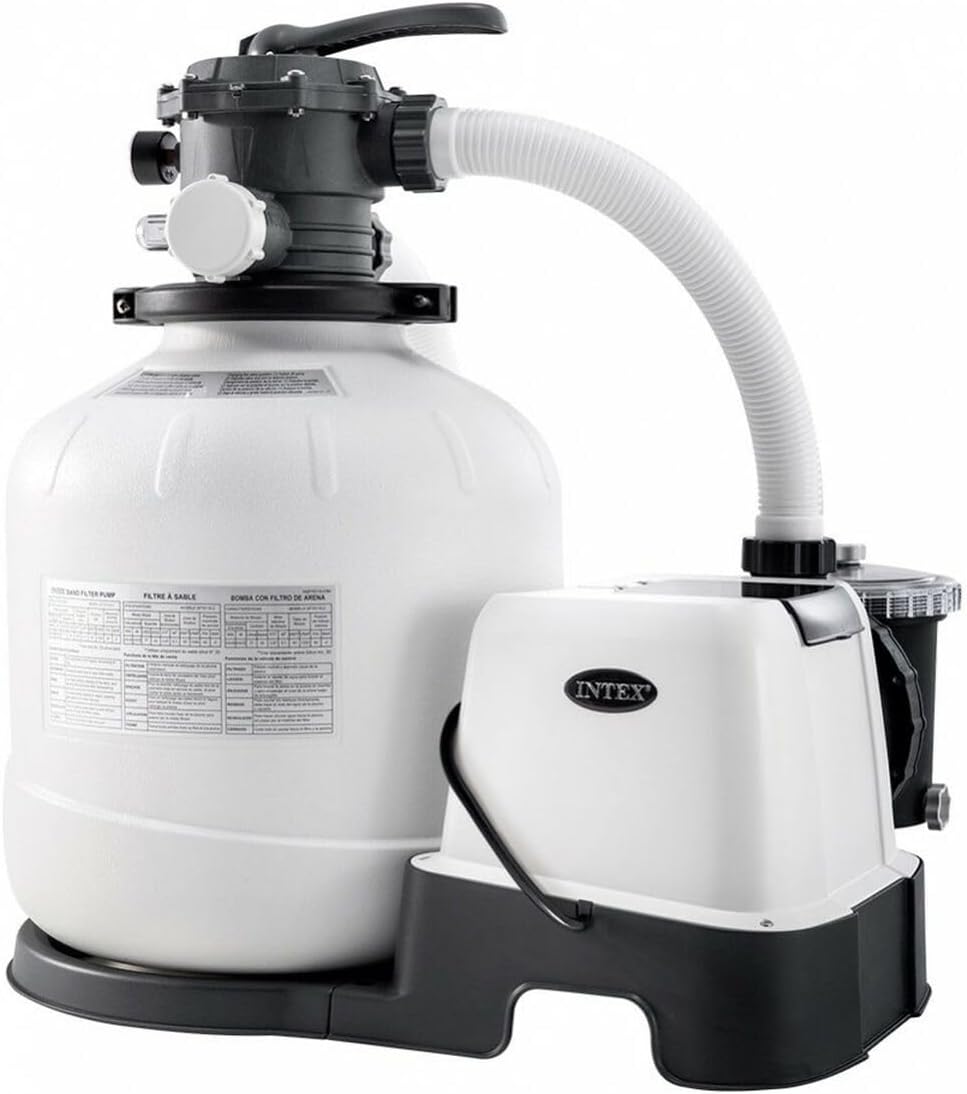
Intex Krystal Clear 26646GS SX2100 Sand Filter Pump 6 m3/h
IntexSand filter pump 6 m3/h (6,000 l/h) with 6-way valve for pools up to 19 m3. Requires 12 kg filter sand. Model 26646GS SX2100.
- Complete kit with 6-way valve
- Sand lasts 3 to 5 years
- Good filtration down to 20 microns
- Widely available Intex spare parts
- Pump is audible during operation
- Larger pools need the 6 m3/h model
Maintenance schedule overview
| Task | Frequency | Time required |
|---|---|---|
| Empty strainer basket | Weekly | 5 minutes |
| Check filter pressure | Weekly | 1 minute |
| Backwash sand filter | Weekly (peak season) | 5 minutes |
| Inspect O-rings and seals | Annually (opening) | 15 minutes |
| Clean impeller | Annually or as needed | 30 minutes |
| Drain and winterize pump | End of season | 15 minutes |
Common problems and causes
Low water flow: clogged strainer basket, clogged impeller, air leak on suction side or filter pressure too high. Check in this order.
Pump loses prime (will not stay self-primed): air leak in suction pipe joints or through a cracked strainer basket lid. Apply soapy water to all suction line joints while the pump runs and look for bubbles at the point of ingestion.
Pump runs but no flow: impeller clogged solid or turning backwards after incorrect rewiring. Check impeller first.
Loud humming but motor does not start: capacitor failure or seized shaft. A pump motor that hums but does not turn will burn out within minutes: switch it off immediately.
Water dripping from motor end: shaft seal failure. Replace immediately to prevent motor winding damage.