Keeping a pool clean takes 15 to 30 minutes a week with the right routines. The core: skim daily with a net, check the filter weekly, hold pH at 7.2 to 7.6 and chlorine at 1 to 3 ppm. This guide covers prevention and routines. Is your water already cloudy or dirty? Start with our pool cleaning guide instead.
The 7 core routines for a clean pool
Keeping clean is about consistency, not effort. Seven routines cover 95% of the work. Three are daily, two weekly and two monthly.
Routine 1: skim daily (2 to 5 minutes) Use a net on a telescopic pole. Scoop leaves, insects and pollen off the surface. Do it before every swim. After a windy stretch there is usually three times as much debris, so run the net twice that day.
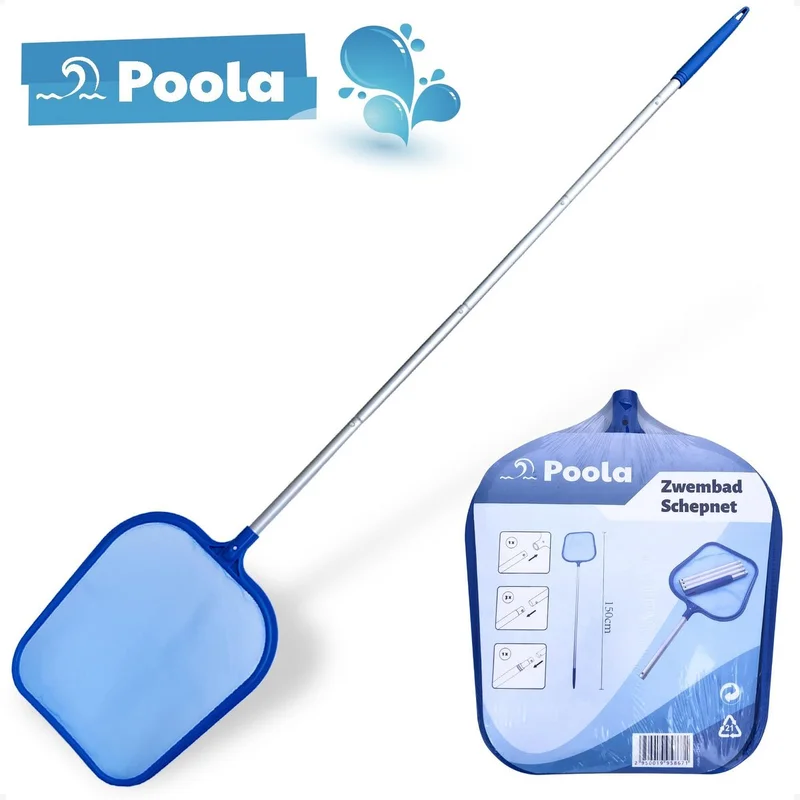
Poola pool skimmer net with 150 cm telescopic pole
PoolaFine-mesh nylon net on a 5-section aluminium telescopic pole up to 150 cm. Liner-safe and compact to store.
- Fine mesh catches insects and pollen
- Pole extends up to 150 cm
- Does not scratch the liner
- Pole flexes under heavy loads
Routine 2: empty the skimmer (1 minute) Your skimmer (or basket on an Intex-type pool) fills up after 2 to 3 days. A full skimmer stops filtering. Empty it every 2 days in season and daily during storms or autumn winds.
Routine 3: visual check of the surface Spend 10 seconds looking at the water. Clear, blue, smooth? Good. Cloudy, greenish or with floating foam? Act now. This mini-check stops you from noticing pH issues only after 3 days.
Routine 4: weekly testing (5 minutes) Test pH, free chlorine and alkalinity. Strips are fast, a digital meter is more accurate. Always dose to the reading, not by habit. Note it in a log book or app.
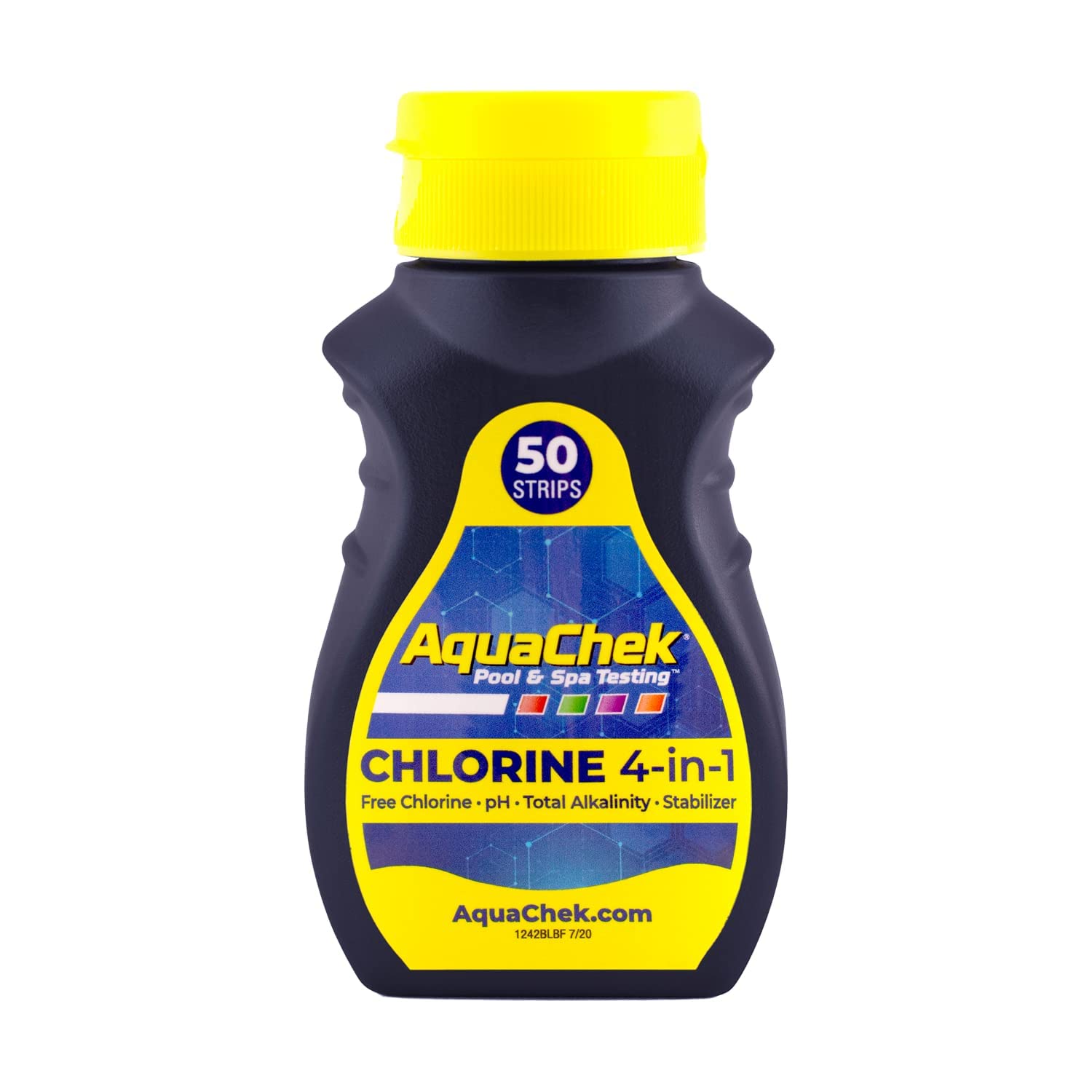
AquaChek 511244A Test Strips 6-in-1 (100 strips)
AquaChekTest pH, chlorine, alkalinity, hardness and more in one go. 100 strips per pack.
- Fast results
- 6 parameters in 1 strip
- Affordable
- Less accurate than digital testers
Routine 5: refill the floating dispenser A floating chlorine dispenser releases 1 to 2 ppm continuously. Refill it when the tablet is smaller than a 1-euro coin. A 30 m3 pool uses about one 200-gram tablet a week.
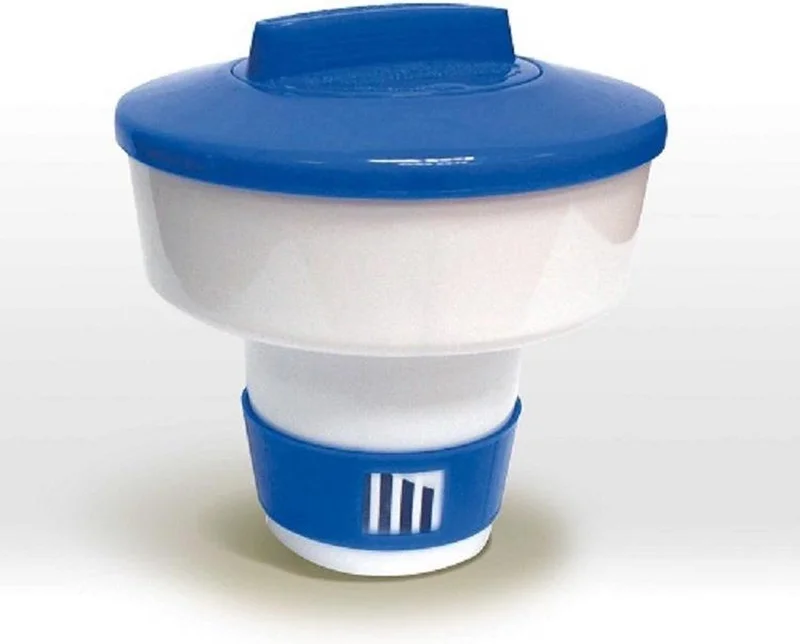
BSI floating chlorine dispenser for 200g tablets
BSILarge floating chlorine dispenser for 200-gram tablets. Adjustable release valve underneath. Suited for pools up to 50 m3.
- Fits 200-gram tablets
- Adjustable release rate
- Stable in surface chop
- Not suitable for 20-gram tablets
Routine 6: backwash or rinse the filter (10 minutes) Sand filter: backwash when pressure rises 0.3 bar above the clean baseline, usually every 2 weeks. Cartridge filter: rinse with the garden hose every 2 weeks and replace after one season.
Routine 7: monthly stabilizer and alkalinity Cyanuric acid (stabilizer) between 30 and 50 ppm, alkalinity between 80 and 120 ppm. These values shape how fast your chlorine disappears and how stable the pH stays.
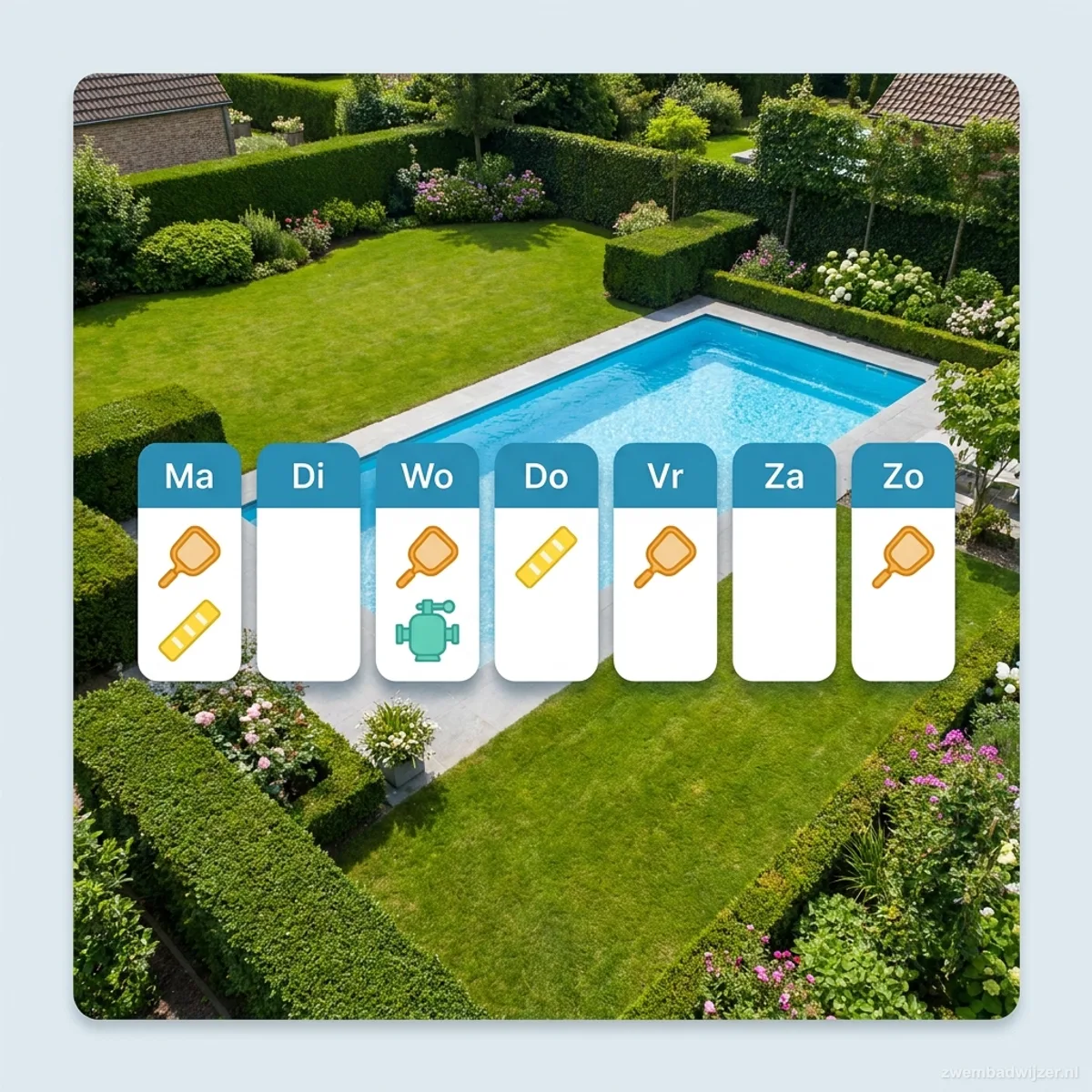
Time split per routine
| Routine | Frequency | Time per round |
|---|---|---|
| Skimming | Daily | 2-5 min |
| Empty skimmer | Every 2 days | 1 min |
| Test pH/chlorine | 2-3x per week | 5 min |
| Refill dispenser | Weekly | 2 min |
| Filter rinse | Every 2 weeks | 10 min |
| Alkalinity/stabilizer | Monthly | 5 min |
How do you keep an above-ground pool (Intex or Bestway) clean?
Above-ground pools come with their own issues: smaller filters, no bottom drain and often set up on grass or tiles. The routines are identical but you need to be more alert.
An Intex or Bestway pool of 3 to 5 metres usually has a cartridge filter. It fills up within 1 to 2 weeks depending on use. Rinse it more often (every 3 to 5 days) rather than waiting. A fresh cartridge every season costs 10 to 25 euros and saves trouble.
Put the pump out of direct sun if possible, that prevents overheating. Most above-ground pumps run a maximum of 8 hours per day before they need a cooling break. That is enough water turnover for a pool up to 15 m3.
A solar cover or pool tarp matters even more for above-ground than for inground. The surface-to-volume ratio is unfavourable, so evaporation and contamination happen faster.
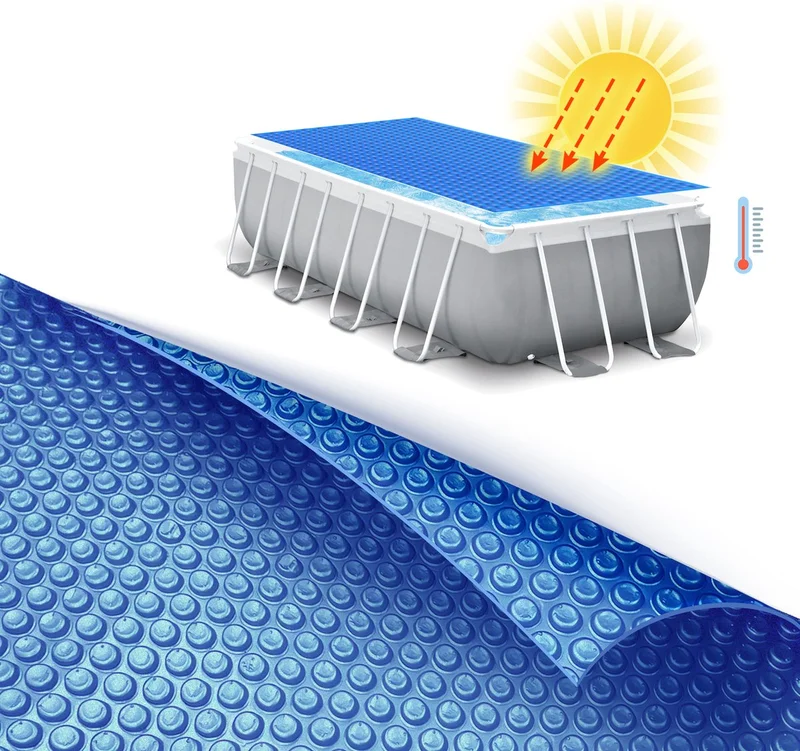
Comfortpool Solar Cover 549 × 274 cm (160μm)
ComfortpoolEntry-level 160-micron solar bubble cover for rectangular pools up to 549 × 274 cm. Warms water and cuts evaporation at a low price point.
- Low price per square metre
- Large 549 × 274 size
- Easy to trim to fit
- No-fuss entry option
- Only 160μm — short lifespan (2 to 3 years)
- Not suited for winter use
- Tears more easily at corners
Above-ground checklist
- Skim daily (twice on windy days)
- Rinse cartridge every 3 to 5 days
- Run pump 6 to 8 hours per day
- Cover after every use
- Test water quality twice a week
How do you keep an inground pool clean?
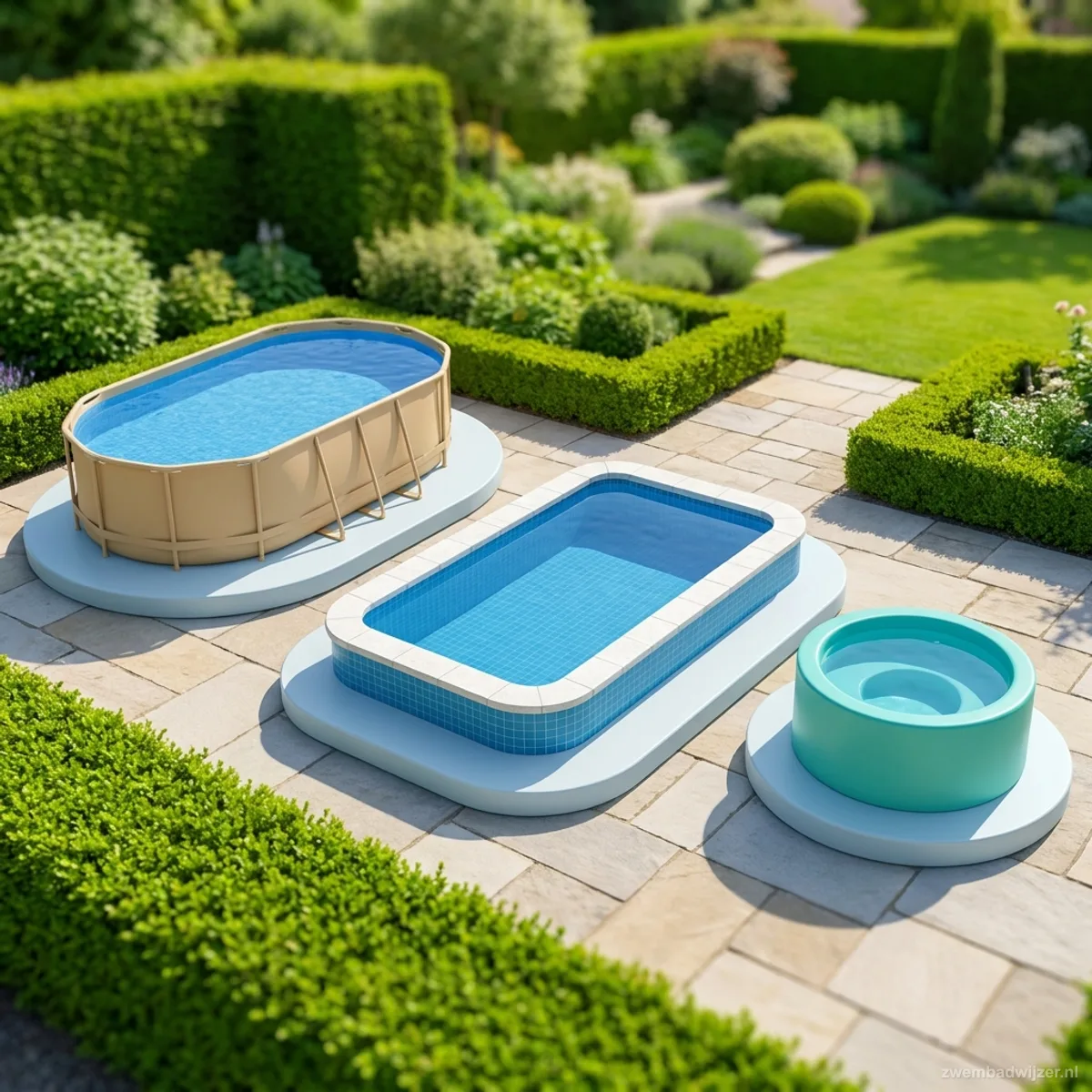
Inground pools (liner, tile or polyester) are bigger, run a sand filter pump and usually have a skimmer plus bottom drain. The volume works in your favour: readings drift more slowly.
For a 30 m3 or larger inground pool use an automatic pool robot. It runs 2 to 3 times a week for 2 hours and cleans bottom, walls and waterline. A robot saves 1 to 2 hours of manual work per week.
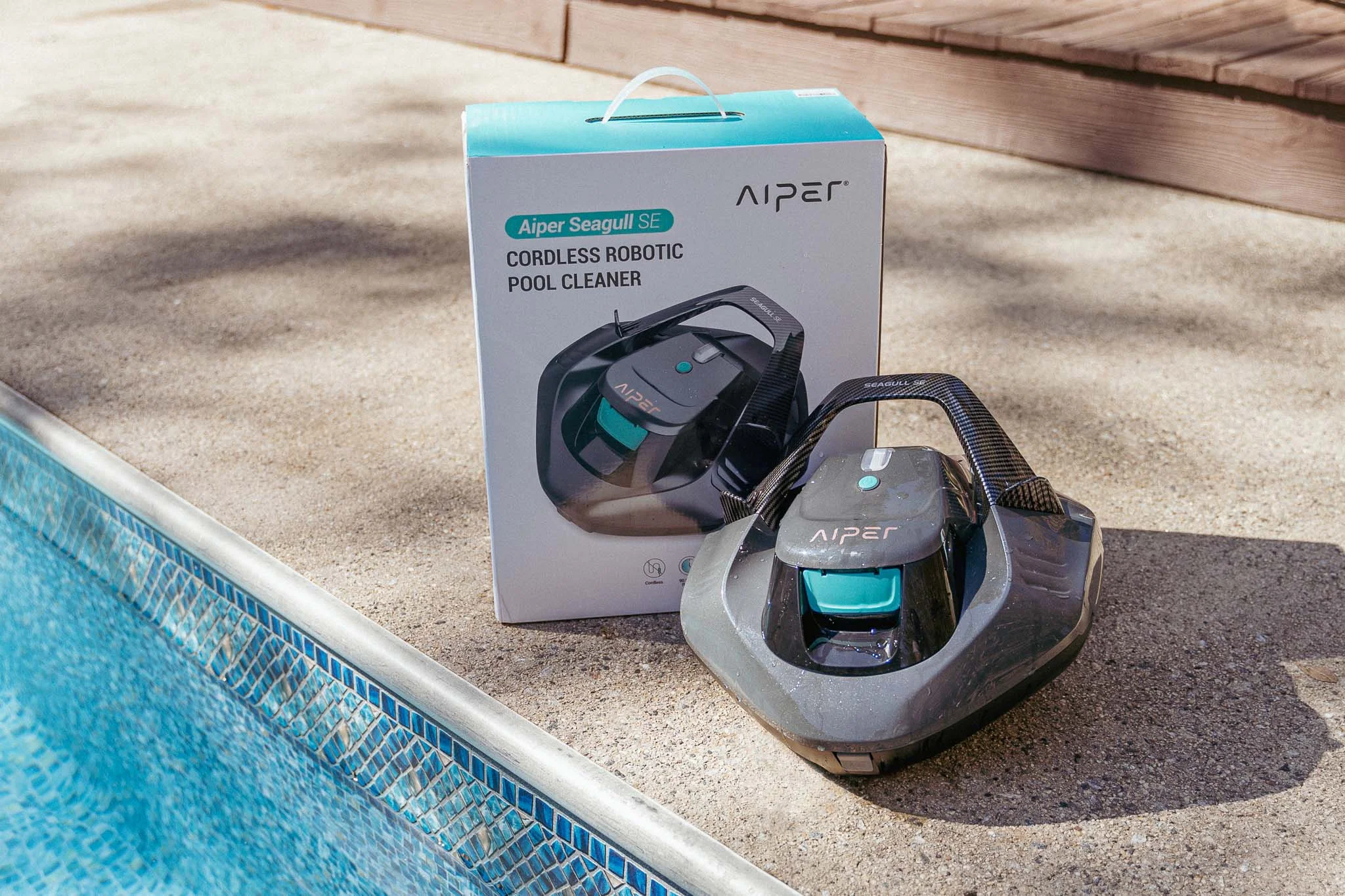
AIPER Seagull SE
AIPERAffordable cordless floor robot for above-ground pools up to 80 m2. 90-minute battery. Simple and effective.
- Very affordable
- Easy to use
- Lightweight (4.8 kg)
- Cleans floor only
- No app or cleaning programs
- 90-min battery can be tight
The pump on an inground pool runs 8 to 12 hours per day, split across cycles. With a variable-speed pump you can run 16 hours at low speed, which is quieter and more efficient. The waterline (10 cm below the rim) needs extra attention: wipe monthly with a sponge to control greasy film.
For a full monthly overview see the pool maintenance schedule with season-specific tasks.
How do you keep a hot tub clean?
A hot tub is not a mini pool. The small volume (50 to 400 gallons) and high temperature (90 to 104 F) make maintenance completely different. Bacteria grow 10 times faster and chlorine breaks down 3 to 5 times as fast.
Hot tub routines in brief:
- Test chlorine daily (target 3 to 5 ppm, higher than pool)
- Rinse or replace filter weekly
- Fully change water every 6 to 8 weeks
- Keep the cover closed when not in use
For full instructions read our hot tub water quality guide with dosing and product picks.
Can you keep a pool clean without chlorine?
Yes, but it takes more effort. The alternatives: salt electrolysis, UV treatment, active oxygen and ozone. None are maintenance-free. You trade chlorine dosing for electrode care or lamp replacement.
Salt electrolysis is the most popular choice. You add salt (3 to 5 kg per m3), a cell generates chlorine from the salt. Chlorine levels stay steadier but you still need pH correction and filter care. For details see pool without chlorine .
Without any disinfection, keeping clean is effectively impossible, even with a perfect filter. Bacteria, algae and biofilm take over within 2 weeks. Pure mechanical filtration is not enough for residential use.
How do you keep a pool clean without a pump?
This is a niche situation: a small above-ground pool without a filter pump, or a temporary pump outage. Without a pump water stagnates and algae grow fast. You have 2 to 4 days to react.
Short term (2 to 5 days): Manually stir 2 to 3 times per day with a brush or net pole to keep water moving. Raise chlorine to 3 ppm. Keep the cover on to block UV and debris.
Longer term (more than a week): Water change is unavoidable. For a 3,000-litre pool that is 3 to 5 euros of tap water. With a pump failure: repair or replace within 5 days. Pool electrical work gets expensive, call a pro if unsure.
Difference between keeping clean and cleaning
Site-wide distinction: keeping clean is prevention, cleaning is problem-solving. Read keeping-clean content while your water is still clear and you want the routines. Read cleaning content when you already see algae, cloudy water or scale.
Keeping clean (prevention) Daily and weekly routines that prevent problems. Skimming, testing, filtering, dosing. Time: 30 minutes per week. This article covers this topic.
Cleaning (reactive) Active intervention for algae, green water, cloudy water or scale. Pool shock, flocculant, acid cleaner. Time: 2 to 8 hours one-off. Read pool cleaning guide for those fixes.
Maintenance schedule Calendar with what, when and how often. This is the yearly plan under which both keeping-clean and cleaning sit. See pool maintenance schedule for a month-by-month view.