This article covers ongoing pool maintenance costs, not installation costs. For a breakdown of what a pool costs to build and install, see our pool installation guide .
Owning a pool costs more than most people expect when they first install one. The purchase price and installation get all the attention, but it is the ongoing running costs that determine whether pool ownership feels like a pleasure or a financial drain. The good news is that with honest numbers and a few smart choices, running a residential pool is entirely manageable on a reasonable budget.
This article gives you a complete, realistic breakdown of what pool maintenance actually costs per year - covering chemicals, electricity, filter media, water top-up, winterisation and professional services. All figures are based on a 30,000-litre residential pool and a 150-day swim season in Northern Europe, with electricity priced at approximately EUR 0.30 per kWh.
Annual pool maintenance cost overview
The table below covers the main recurring cost categories. Some items are annual; others recur every few years.
| Cost item | Annual cost (EUR) | Notes |
|---|---|---|
| Chlorine - tablets or granules | EUR 60 to 150 | Depends on pool volume and sun exposure |
| pH correction - pH minus and pH plus | EUR 20 to 60 | pH minus dominates; pH rises naturally |
| Shock treatment | EUR 20 to 50 | 3 to 6 treatments per season |
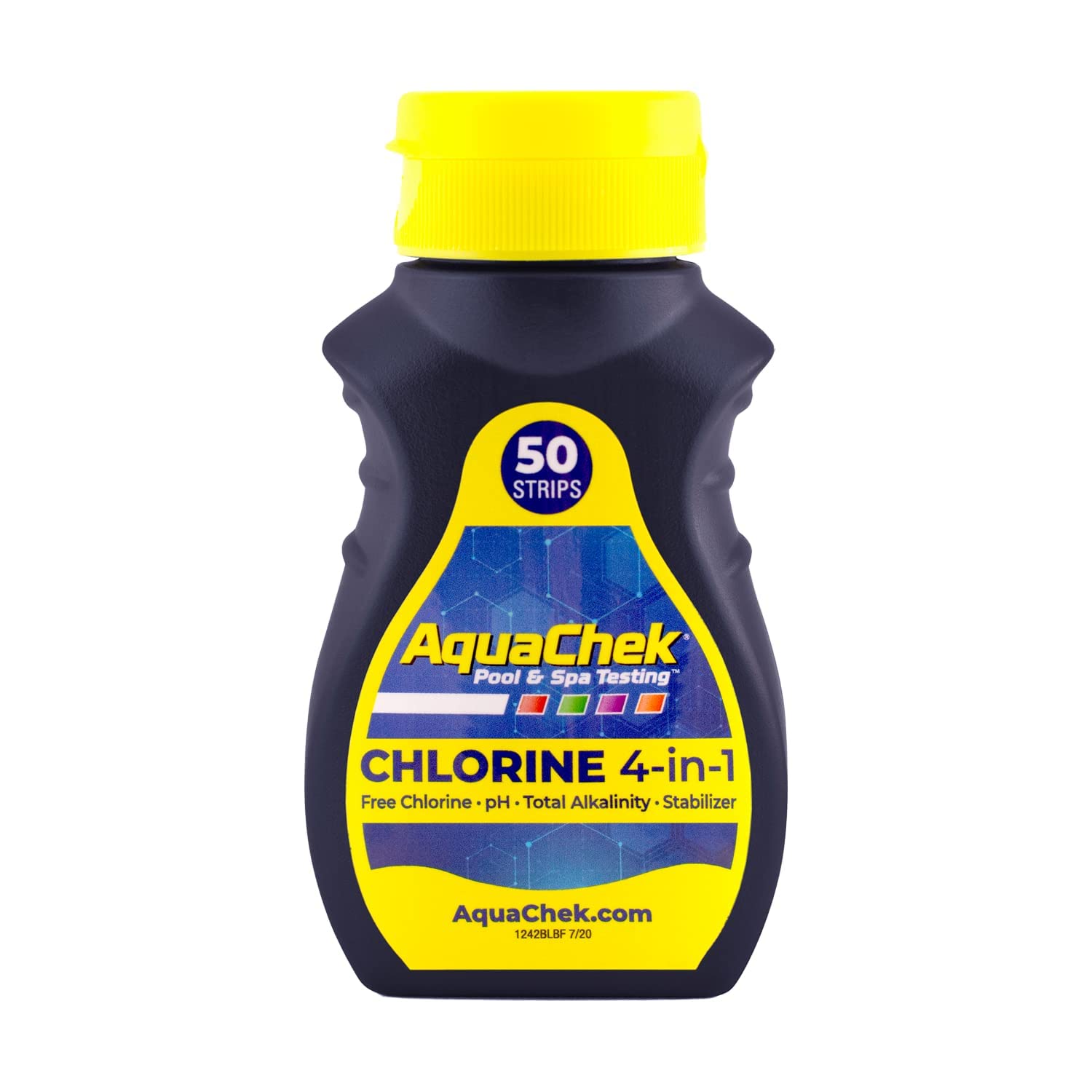
| Test strips or liquid tester | EUR 10 to 30 | Replace strips each season |
| Filter sand replacement | EUR 20 to 80 | Every 3 to 5 years; averaged annually |
| Filter cartridge replacement | EUR 20 to 60 | Annually for cartridge filters |
| Electricity - pump | EUR 80 to 200 | Single-speed pump, 8 h per day |
| Water top-up - evaporation and splash | EUR 10 to 30 | Varies with cover use and climate |
| Winterisation chemicals | EUR 30 to 80 | Algicide, shock, clarifier, antifreeze |
| Total | EUR 250 to 680 | 30,000-litre pool, no heating |
These numbers are for a pool you maintain yourself. Add EUR 500 to EUR 1,500 if you use a professional service for all routine maintenance and seasonal tasks.
What affects your pool running costs most
Not all pools cost the same to run. These five factors have the biggest influence on where your costs fall within the ranges above.
Pool size and water volume
Chemistry costs scale almost directly with water volume. A 10,000-litre paddling pool uses roughly one-third of the chemicals of a 30,000-litre pool. Electricity costs also scale with volume because larger pools need longer filter run times. If you are still choosing a pool size, know that each extra 10,000 litres adds roughly EUR 50 to EUR 100 in annual running costs, before heating.
Pump energy efficiency
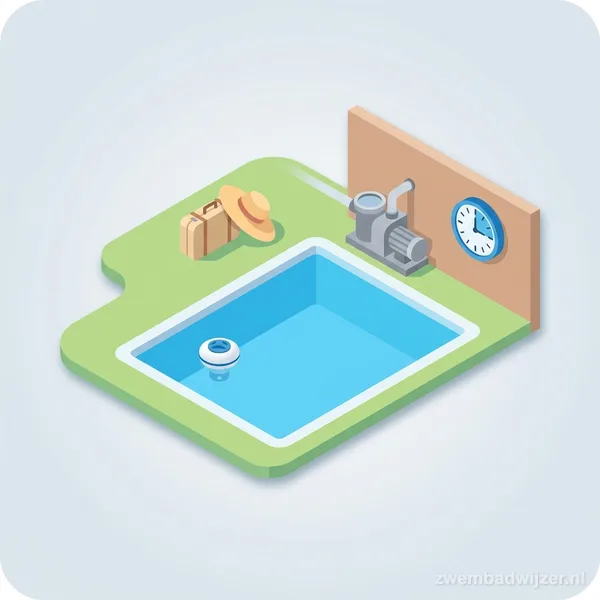
The pump runs every single day throughout the season. A standard single-speed pump of 500 to 750 watts running 8 hours a day over 150 days uses 600 to 900 kWh, costing EUR 180 to EUR 270 per season. A variable-speed pump running at low speed for the same period uses 200 to 300 kWh, costing EUR 60 to EUR 90. That is a saving of EUR 120 to EUR 180 every year - enough to pay back the price difference within 3 to 5 seasons. Variable-speed pumps run quieter and last longer as well.
Pool cover use
A pool cover is the single most effective tool for reducing ongoing costs. Uncovered pools lose 3 to 5 mm of water per day to evaporation in warm weather. That water carries dissolved chemicals with it. A solar cover reduces evaporation by up to 95 percent, which means less water top-up, less chemical dilution, and significantly lower heating costs if you heat your pool. Most pool covers pay for themselves within one season on chemical and water savings alone.
Local water hardness
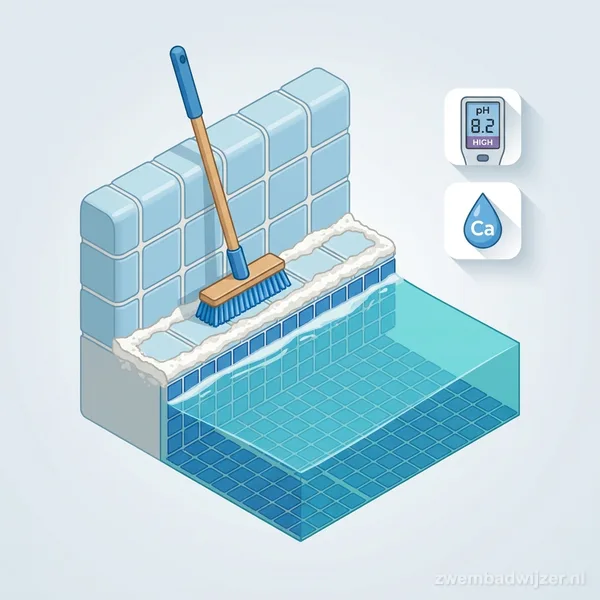
Hard tap water contains high levels of calcium and magnesium. These raise total hardness and accelerate pH drift upward, requiring more pH minus to correct. In very hard water areas, pH correction costs can reach the top of the EUR 60 range or beyond. If your water comes from a very hard source, a partial drain and refill with softer water at the start of each season can reduce your annual pH correction costs noticeably.
DIY versus professional maintenance
Doing your own pool maintenance is straightforward once you understand the basics of water chemistry. The cost of a test kit, chemicals and your own time is far less than a weekly service contract. For most residential pool owners, DIY maintenance is the right choice and the cost ranges in the table above assume you do it yourself. If you prefer a professional service, budget EUR 500 to EUR 1,500 per year on top of chemical costs.
How to reduce your pool running costs
Tip
Putting a solar or winter cover on your pool each evening reduces evaporation by up to 95 percent. On a typical 30,000-litre pool, this can save EUR 40 to EUR 100 in water and chemical costs per season - and significantly more if you heat your pool.
Tip
A variable-speed pump running at low circulation speed uses 60 to 80 percent less electricity than a standard pump. The upfront cost difference of EUR 300 to EUR 600 is typically recovered within 3 to 5 seasons. It is the most effective single upgrade for reducing long-term costs.
Tip
A 5 kg tub of chlorine tablets costs proportionally far less than a 1 kg pack. Buying your full season’s supply of chlorine, pH minus and algicide in March or April - before prices rise and stock runs low - can reduce your annual chemical spend by 20 to 30 percent.
Tip
Letting water chemistry drift and then correcting large imbalances uses significantly more product than catching small deviations early. Testing 3 times per week and making small corrections each time is cheaper and better for the pool than testing once a week and dealing with a pH of 8.2 or a chlorine crash.
Professional pool service costs
If you prefer to hand over routine maintenance to a professional, here is what to budget for.
| Service | Typical cost (EUR) |
|---|---|
| Weekly service visit (testing, dosing, skimming) | EUR 40 to 80 per visit |
| Fortnightly service visit | EUR 50 to 90 per visit |
| Pool opening - spring start-up | EUR 100 to 200 |
| Pool closing - winterisation | EUR 100 to 200 |
| One-off problem visit - algae, chemistry correction | EUR 80 to 150 |
| Full annual service contract - all of the above | EUR 500 to 1,500 |
Professional service makes the most sense if you travel frequently, if your pool has complex equipment that benefits from expert oversight, or if you have struggled to maintain water quality consistently on your own. For a straightforward above-ground or modest inground pool, the DIY approach saves EUR 400 to EUR 1,000 per year.
A good middle ground is to handle routine weekly maintenance yourself and hire a professional for the seasonal opening and closing only. This keeps costs to EUR 200 to EUR 400 for the professional visits while keeping the rest of the season under your own control.
For a complete overview of what to do each week, see our pool maintenance schedule . If you plan to open the pool yourself this spring, the spring pool opening guide covers every step.
Pool renovation costs
Beyond routine annual maintenance, larger one-off renovation expenses occur every 10 to 20 years. Planning for these prevents financial surprises.
| Renovation item | Estimated cost | Typical frequency |
|---|---|---|
| Liner replacement (above-ground) | EUR 300 to EUR 800 | Every 8 to 15 years |
| Liner replacement (inground) | EUR 800 to EUR 2,500 | Every 10 to 15 years |
| Filter sand replacement | EUR 30 to EUR 80 | Every 3 to 5 years |
| Filter pump replacement | EUR 200 to EUR 600 | Every 8 to 15 years |
| Sand filter replacement | EUR 150 to EUR 500 | Every 10 to 20 years |
| Skimmer or fitting repair | EUR 100 to EUR 400 | As needed |
| Tile or coping repair | EUR 200 to EUR 2,000 | As needed |
| Full inground pool renovation | EUR 3,000 to EUR 15,000+ | Every 20 to 30 years |
Liner replacement is the most common renovation for above-ground and steel-wall pools. A liner typically lasts 10 to 15 years but can deteriorate earlier from UV damage, sharp objects or sustained pH imbalance. Inspect the liner annually for small tears or discolouration.
Pump replacement is needed when the pump fails, runs excessively loud or delivers noticeably lower water pressure. Replacing a pump before it fails completely avoids water quality issues from inadequate filtration.
Most major renovations are postponed or avoided by consistent preventive maintenance. Stable pH extends liner and equipment life significantly.
Recommended products
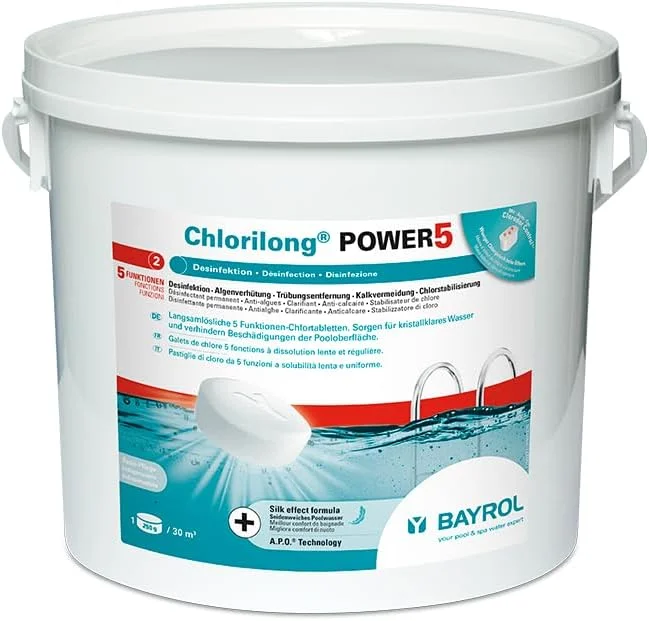
Chlorine Tablets 200g (5 kg)
BayrolSlow-dissolving chlorine tablets for use in skimmer or floating dispenser. 5 kg for a full season.
- Slow dissolving
- Easy to dose
- Good price per kg
- Slightly lowers pH over time
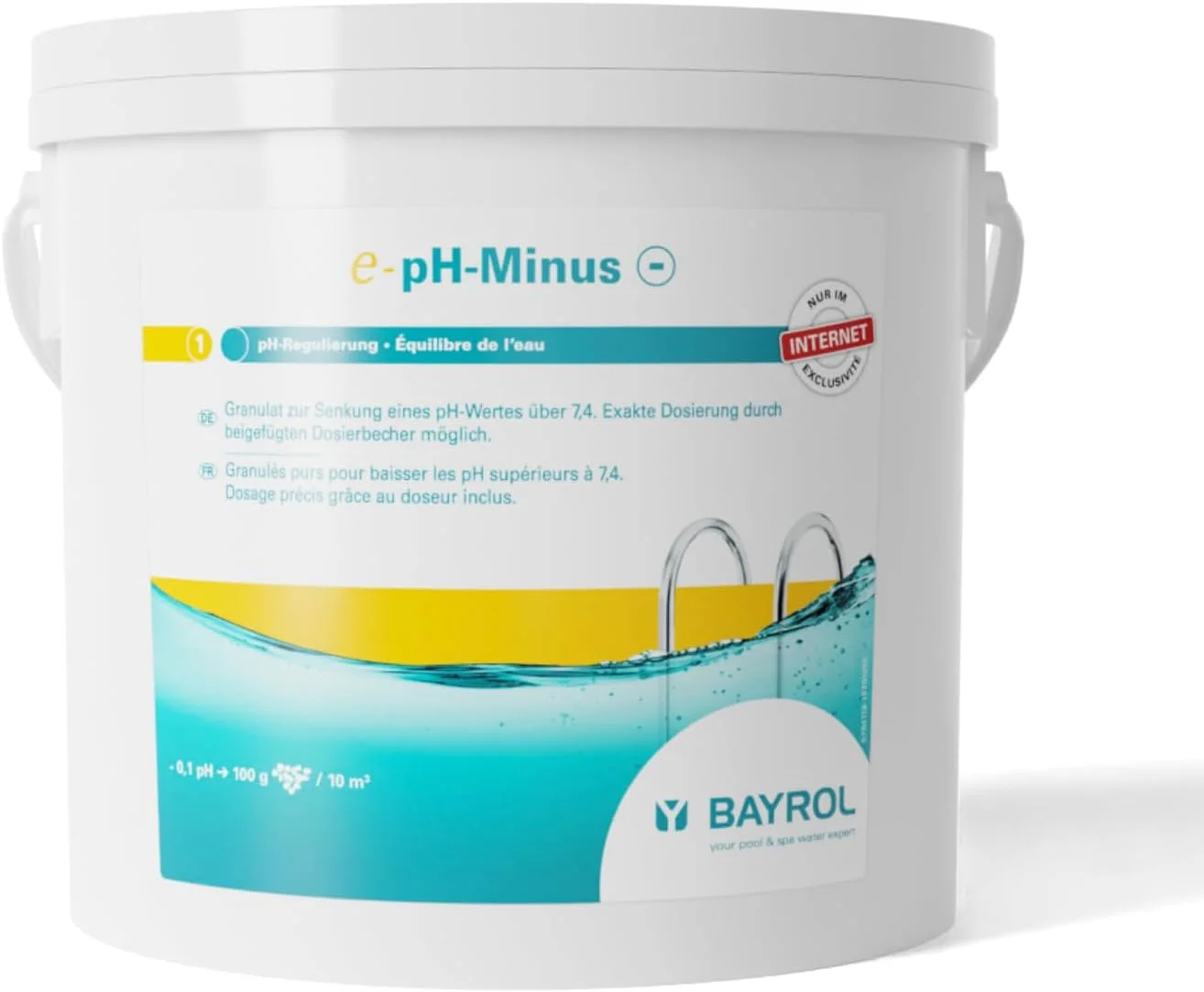
pH Decreaser Powder (5 kg)
Chloor.nlSodium bisulphate powder to lower pool pH. 5 kg for multiple treatments. Always dissolve in a bucket of water before adding.
- Fast-acting
- Good price per kg
- Easy to dose
- Creates dust when measuring, wear gloves