Good seasonal pool maintenance takes an average of 30 to 60 minutes per week. With a consistent schedule you do the right tasks at the right time and prevent 90% of all problems before they start: from daily skimmer checks to monthly filter inspections.
This guide covers pool maintenance tasks and timing. For what pool maintenance costs, see pool maintenance costs: realistic annual overview .
Empty the skimmer
Check water level
Verify pump and filter are running
Test pH and chlorine (7.2–7.6 / 1.0–3.0 mg/l)
Add chemicals as needed
Brush pool walls and floor
Vacuum the pool floor
Backwash the sand filter
Test alkalinity (80–120 mg/l)
Test calcium hardness (200–400 mg/l)
Inspect filter medium
Spring: open pool and start water treatment
Summer: test and treat more often in heat
Autumn: winterize and cover the pool
Daily maintenance (5-10 minutes)
Empty the skimmer: the skimmer catches leaves, insects and floating debris before they sink. A full skimmer basket reduces pump flow and increases energy costs. Empty it every day.
Check water level: the water level should be halfway up the skimmer opening. Too low and the pump draws air. Too high and the skimmer does not work properly.
Check the pump: is it running? Does it sound normal? Good flow at the return jets? A silent pump or reduced flow can indicate a blockage in the skimmer, filter or pressure line.
Weekly maintenance (30-45 minutes)
Test the water: test pH, free chlorine and alkalinity. Use test strips for a quick check and a DPD kit or digital tester for the weekly accurate measurement.
Target values:
- pH: 7.2 to 7.6
- Free chlorine: 1.0 to 3.0 mg/l
- Total alkalinity: 80 to 120 mg/l
Add chemicals if needed: correct in order: alkalinity first (if far outside range), then pH, then chlorine. Wait at least 4 hours between each addition.
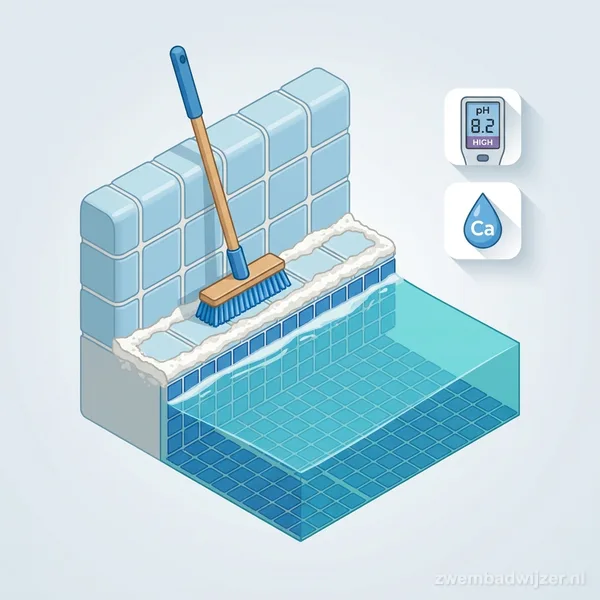
Brush walls and floor: brush the walls from top to bottom. Pay extra attention to corners, steps, the waterline and shallow areas where algae grow first.
Vacuum the floor: vacuum slowly and methodically with a manual pool vacuum or automatic floor cleaner.
Backwash the sand filter: check the filter pressure. Has it risen by more than 0.5 bar? Backwash. As a preventive measure: backwash weekly.
Monthly maintenance
Extended water test: test calcium hardness and cyanuric acid in addition to the standard parameters.
Check filter media: inspect the sand in the filter. Pool filter sand needs replacing every 3 to 5 years.
Seasonal pool maintenance: what to do and when
Pool maintenance demands vary by season. Here is a month-by-month breakdown.
Spring (March-April): opening the pool
| Month | Tasks |
|---|---|
| March | Inspect equipment, reconnect pump and filter, fill water level |
| April | Test and correct pH, perform chlorine shock, start routine |
Full step-by-step: opening your pool in spring .
Summer (May-August): intensive maintenance
Summer demands more attention due to high temperatures, UV radiation and heavy bather load. Chlorine breaks down 2 to 3 times faster at 28°C than at 20°C.
| Month | Extra tasks |
|---|---|
| May | Set up routine schedule, pump 8 hours per day |
| June | Test daily in hot weather, add preventive algicide |
| July | Pump 12 hours per day, shock after heavy-use weekends |
| August | Check cyanuric acid (limit 75 mg/l), top up water as needed |
After heavy rain, always retest: pool after rain .
Autumn pool maintenance (September-October)
Autumn is when you prepare for winter. Water temperature drops, algae slows, but chemistry must stay balanced while you’re still swimming.
September:
- Test weekly rather than daily
- Backwash filter before closing down
- Clean the skimmer thoroughly
October:
- Reduce pump run time to 4 to 6 hours
- Final chlorine shock of the season
- Inventory equipment (what needs replacing?)
- Begin winterizing procedure
Full guide: winterizing your pool .
Winter (November-March): pool in hibernation
- Check water level monthly
- Inspect the winter cover after storms
- Protect against frost damage to the skimmer and pipes
Maintenance schedule for inground pools
An inground pool (fibreglass, concrete or liner) requires a stricter routine than a frame pool. The investment is larger, the installation more complex, and the consequences of neglect more expensive.
Extra focus areas for inground pools:
- Inspect pump and filter gaskets and O-rings annually
- Visually inspect the liner and seals when opening in spring
- Correct winterization (partial drain or antifreeze block in skimmer)
- pH correction is especially important: low pH etches concrete walls and cement joints
- Check calcium hardness (ideal 200 to 400 mg/l) to prevent scaling or etching
Inground pool inspection frequency:
- Monthly: full water analysis (pH, chlorine, alkalinity, calcium hardness, cyanuric acid)
- Annually: professional inspection of filter media, pump and seals
- Every 3 to 5 years: replace filter sand, check gaskets, liner inspection
For the full cost breakdown of inground pool maintenance, see pool maintenance costs .
What does pool maintenance cost?
For a detailed breakdown of chemicals, electricity, filter media and renovation costs, see pool maintenance costs: realistic annual overview .
Recommended products
Reliable water testing is the foundation of every good maintenance schedule.
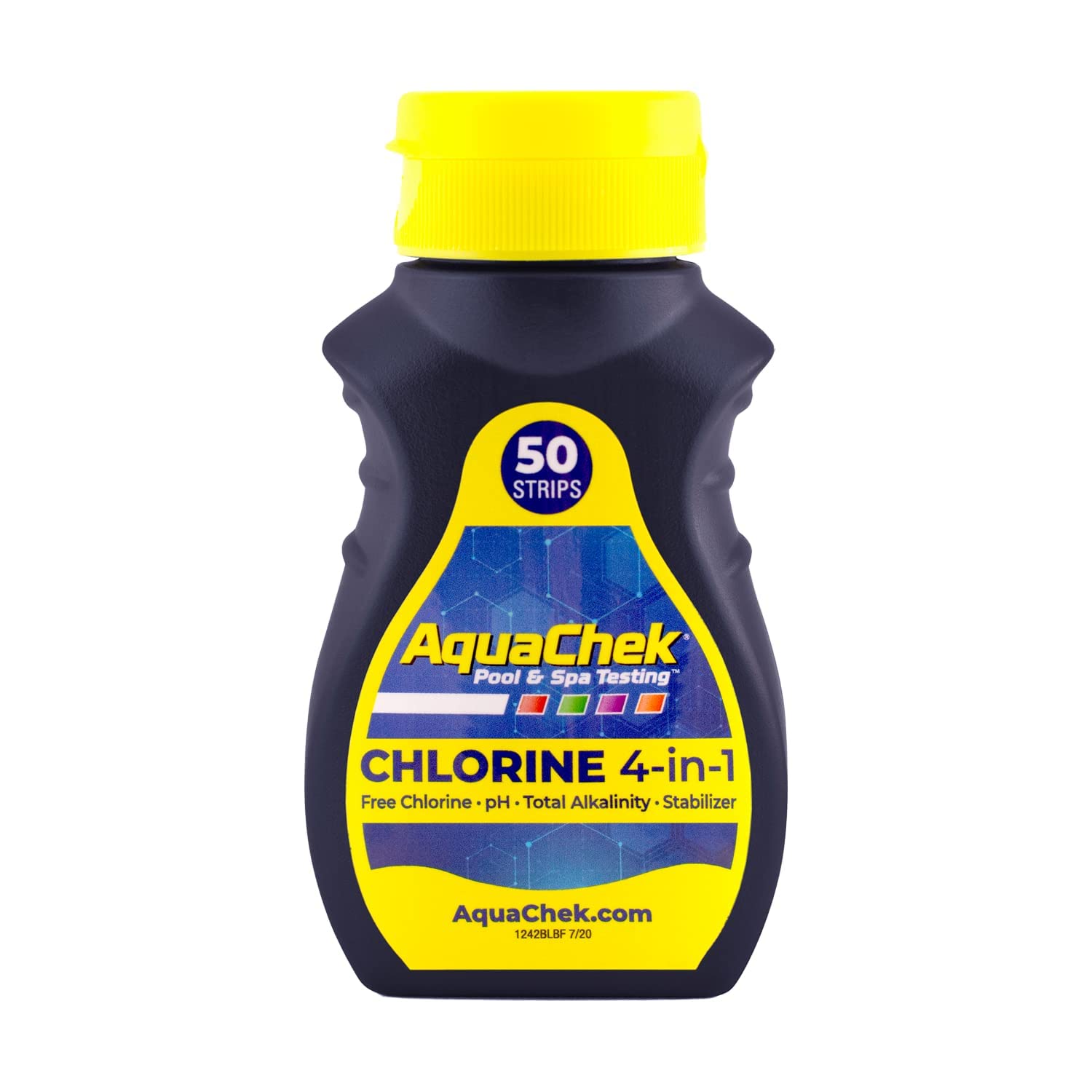
AquaChek 511244A Test Strips 6-in-1 (100 strips)
AquaChekTest pH, chlorine, alkalinity, hardness and more in one go. 100 strips per pack.
- Fast results
- 6 parameters in 1 strip
- Affordable
- Less accurate than digital testers
For a residential pool of 15,000 to 25,000 litres, good maintenance takes an average of 30 to 60 minutes per week. This includes testing, dosing, emptying the skimmer, brushing and vacuuming. Spreading tasks across the week makes this manageable: daily skimmer checks take 2 minutes, and the heavier vacuuming and brushing can be combined into one 30-minute session.
How long should the filter pump run per day?
The rule of thumb is that the full pool volume should pass through the filter at least once per day. A 4 m3/h pump on a 25,000-litre pool needs to run at least 6.25 hours per day. In hot weather, increase this to 8 to 12 hours: warmer water consumes chlorine faster and algae grows more quickly, so more filtration time is needed to keep the water clean and safe.
When should I backwash the sand filter?
Backwash the sand filter when the pressure has risen by 0.5 bar above normal working pressure, or weekly as a preventive measure. During peak season (June to August) weekly backwashing is the standard recommendation. After an algae treatment, backwash daily until the water is completely clear again.