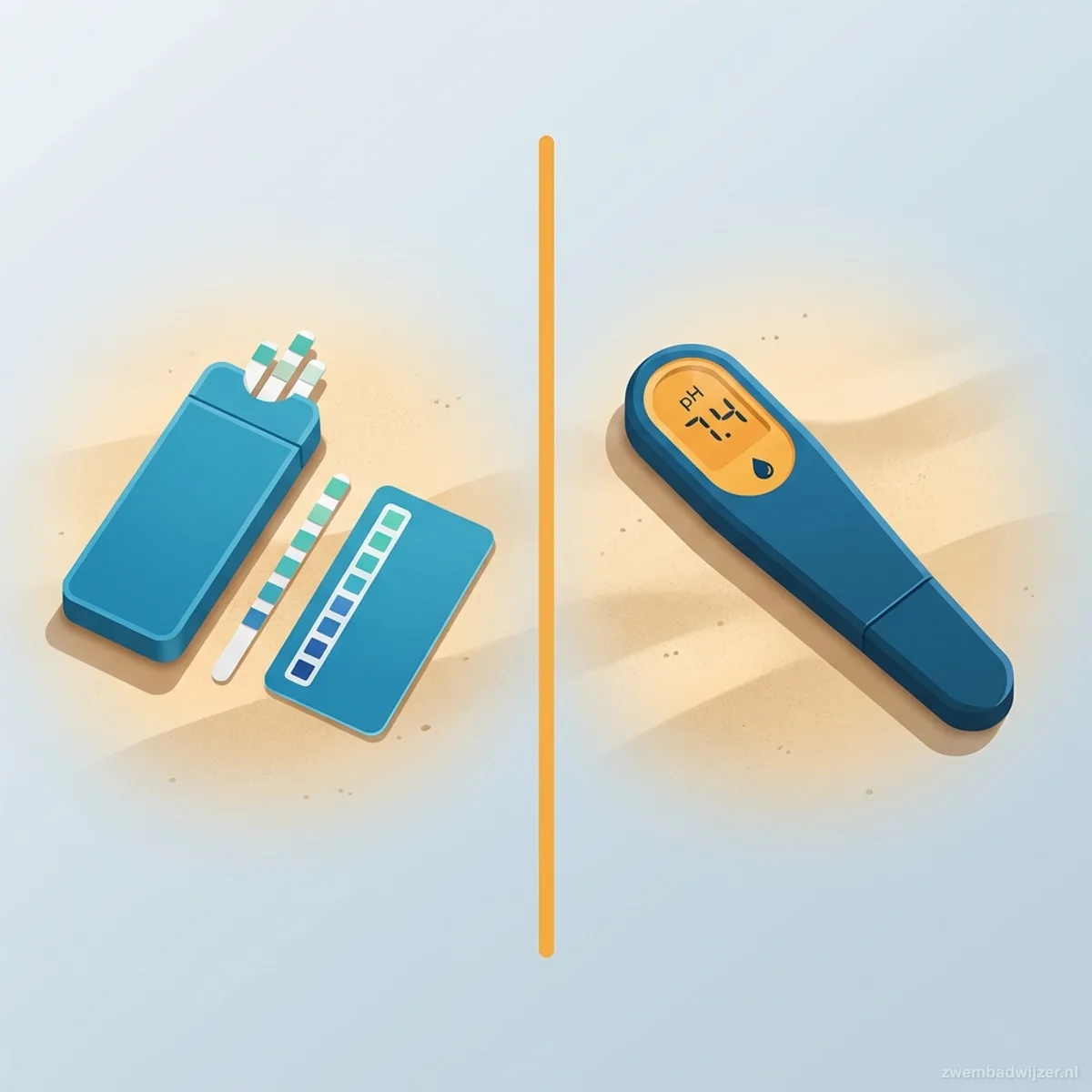
For daily checks, test strips are the fastest and cheapest option: 15 seconds, 6 parameters at once, for around EUR 0.13 per strip. For accurate pH correction, a digital tester reading to 0.01 gives you more control over dosing. The best approach: use both.
Side-by-side comparison
| Method | Parameters | Accuracy | Cost per test | Best for |
|---|---|---|---|---|
| 6-in-1 test strips | 6 | ±0.2 pH | EUR 0.10–0.20 | Daily checks |
| 5-in-1 strips (budget) | 5 | ±0.2 pH | EUR 0.07–0.10 | Daily checks, budget |
| Digital pH tester | pH | ±0.01 pH | EUR 0.01–0.05* | Accurate pH correction |
| DPD drop test | pH + chlorine | ±0.1 pH | EUR 0.30–0.60 | Weekly accurate check |
| Photometric tester | 5–10 | ±0.05 pH | EUR 0.15–0.30 | Professional use |
*After upfront cost of EUR 20–40, calibration solution EUR 5/year.
The digital tester becomes cheaper than strips for pH measurement alone after about 2 seasons. But it only measures pH — for chlorine, alkalinity and hardness you still need strips or a drop test.
When to choose test strips
Test strips are the standard choice for home pool owners. They measure six parameters in 15 seconds in a single motion. No calibration, no batteries, nothing to rinse.
Choose test strips when:
- You want a quick broad check 2 to 3 times a week
- You want to see chlorine, pH and alkalinity in one go
- You’re new to pool maintenance
- You want a budget-friendly daily routine
Watch out for:
- Colour blindness can make it hard to match the colour chart accurately
- Expired strips give false readings — always check the expiry date
- Store the tube dry and sealed; damp storage destroys the reagents
The AquaCheck 511244A 6-in-1 strips are the best choice for most home pool owners. They measure pH, free chlorine, total chlorine, alkalinity, calcium hardness and cyanuric acid. The colour scale is well differentiated and the tube includes a desiccant sachet.
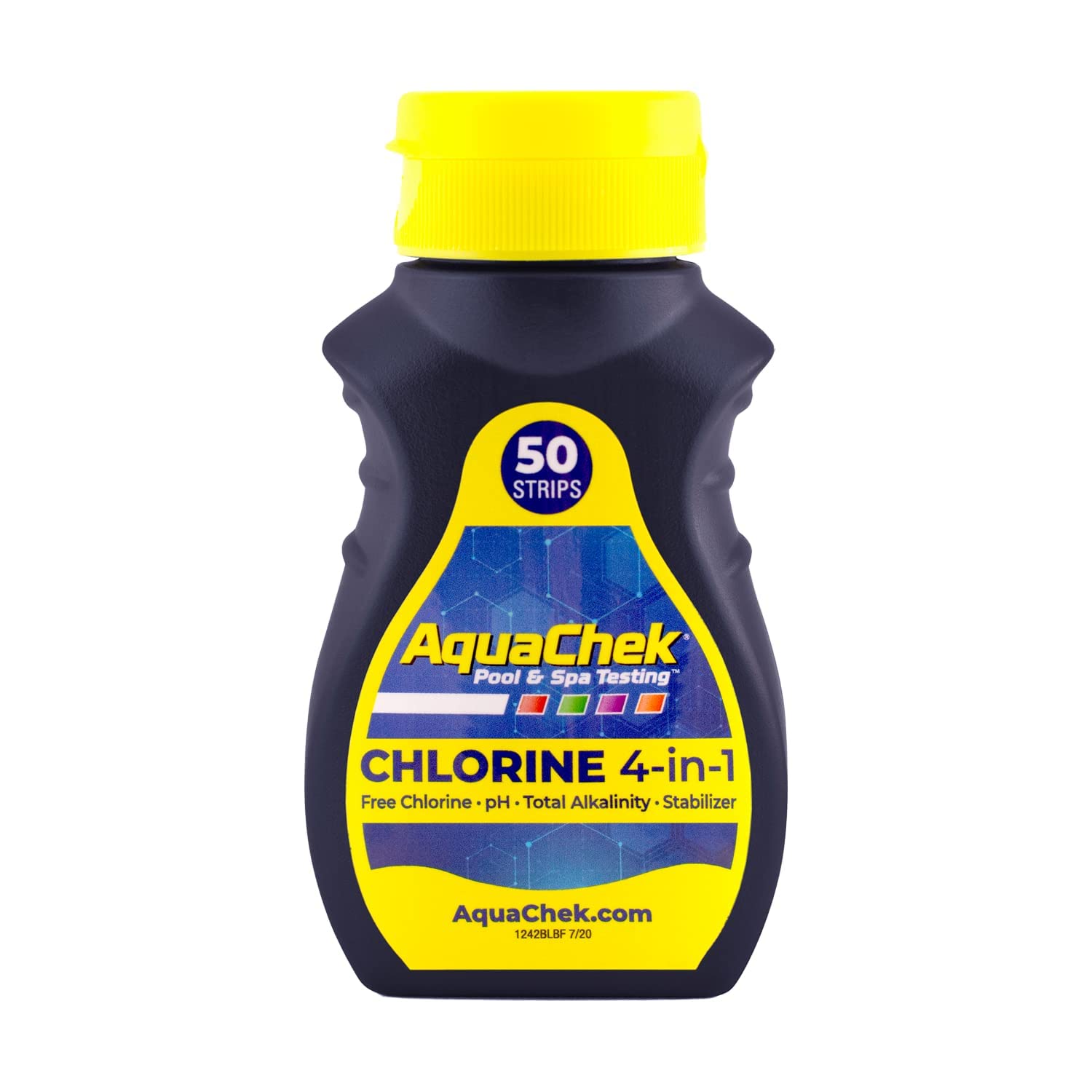
AquaCheck 511244A Test Strips 6-in-1 (100 strips)
AquaCheckTest pH, chlorine, alkalinity, hardness and more in one go. 100 strips per pack.
- Fast results
- 6 parameters in 1 strip
- Affordable
- Less accurate than digital testers
For better value per strip, the Easytest 5-in-1 strips cover fewer parameters but give you more strips per euro. They work well as a daily driver alongside a weekly digital pH check.
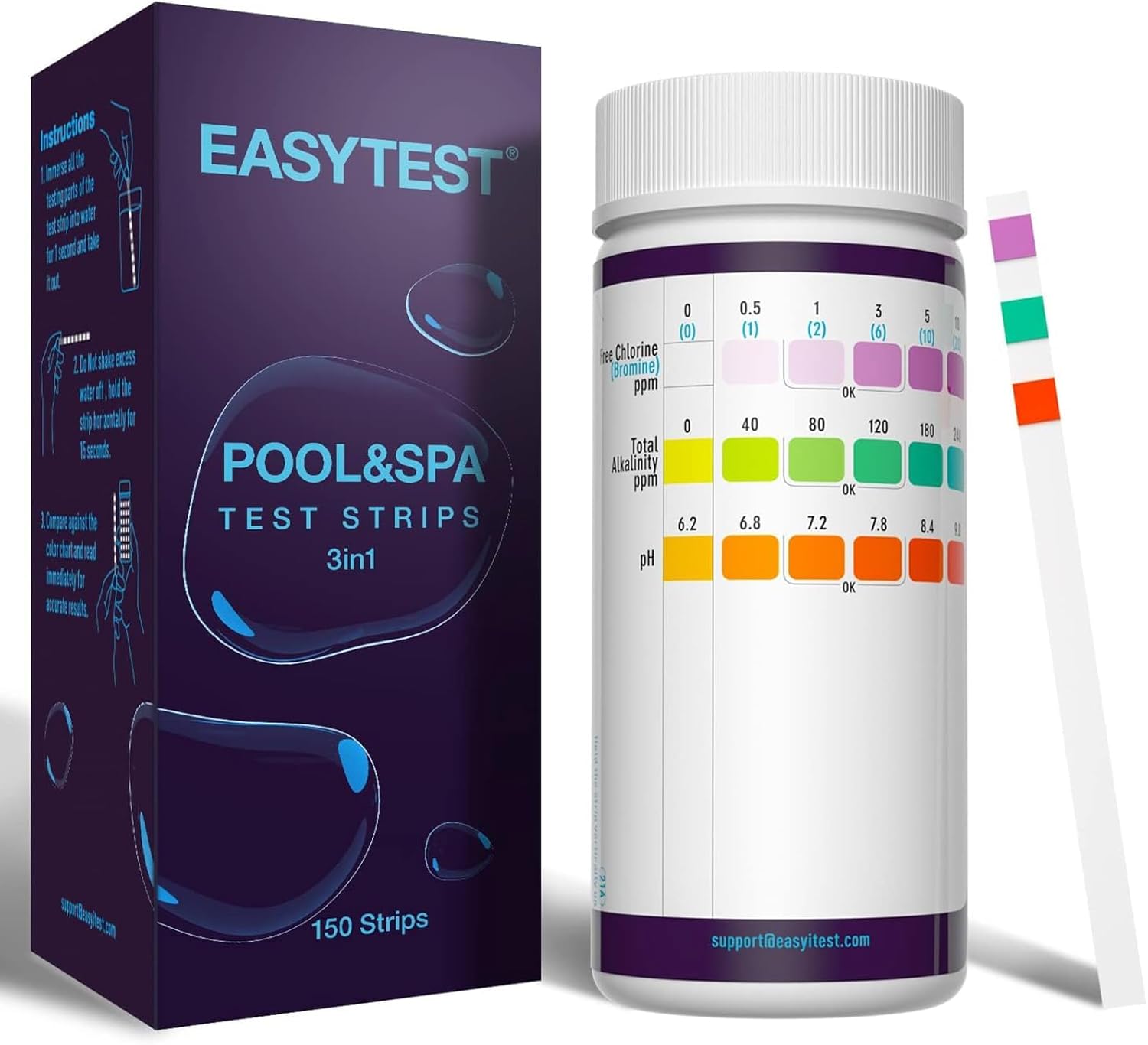
Easytest Test Strips 5-in-1 (150 strips)
EasytestSimple test strips for basic pH, chlorine and alkalinity checks. 150 strips for a full season.
- Large pack for the price
- Easy to use
- Covers basic parameters
- Fewer parameters than 6-in-1
- Lower colour accuracy
When to choose a digital tester
A digital pH tester measures to a precision of 0.01 pH units — 20 times more accurate than a test strip. The difference matters when correcting pH: knowing the reading is 7.38 rather than “somewhere between 7.2 and 7.4” means you dose less and waste less.
Choose a digital tester when:
- You want to dose pH correction products accurately without overdosing
- You have colour blindness or measure in artificial light
- You correct pH twice a week or more
- You have a large pool (25,000 litres or more) where overdosing is expensive
Watch out for:
- Measures pH only — you still need test strips for chlorine and alkalinity
- Requires monthly calibration or whenever readings seem unreliable
- Always store the electrode wet in the protective cap
The Apera Instruments PH20 is the best digital pH tester in its class for home pools. It measures to ±0.01, has automatic temperature compensation, and comes with two calibration buffer solutions (pH 4.0 and pH 7.0). Batteries last around 2,000 hours.
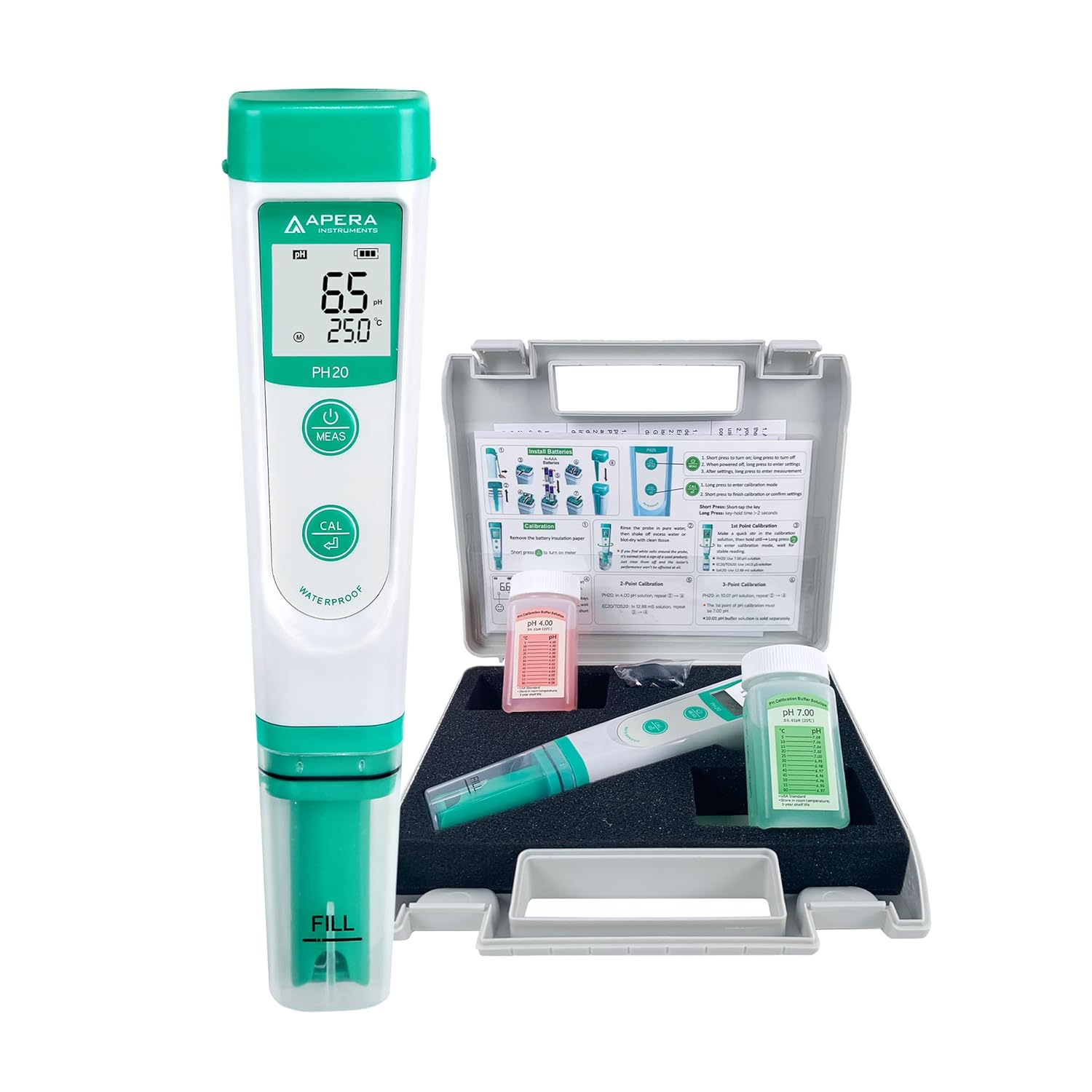
Apera Instruments PH20 pH Meter
Apera InstrumentsAccurate digital pH measurement to 0.01 precision. Includes calibration solution.
- High accuracy
- Fast readings
- Reusable
- Higher upfront cost
- Needs regular calibration
Accuracy in detail
Test strips work by comparing a chemical colour reaction against a printed colour scale. Accuracy depends on:
- Light conditions — always compare in daylight. Fluorescent and LED light shift colours, making a 7.4 reading look like 7.6
- Reading time — read exactly 15 seconds after removing from the water. After 30 seconds, colours shift
- Expiry — expired strips consistently read chlorine levels as lower than they actually are
A digital tester is not affected by any of these variables. It reads an electrical potential from the pH electrode. Properly calibrated, the reading is reproducible to 0.01 pH.
Practical difference: with a 25,000-litre pool at pH 7.5 (just above the 7.4 upper target), a test strip reads “somewhere around 7.4–7.6” and you might not bother to correct. A digital tester reads 7.52 and you know: add 50 g of pH reducer.
Season cost comparison
One season = 20 weeks at 3 tests per week = 60 tests.
| Product | Purchase price | Cost per test | Season cost |
|---|---|---|---|
| Test strips 100 pack | EUR 12–15 | EUR 0.13–0.15 | EUR 8–9 (60 tests) |
| Test strips 150 pack (budget) | EUR 10–12 | EUR 0.07–0.08 | EUR 4–5 |
| Digital pH tester + calibration solution | EUR 25–30 | EUR 0.01–0.02 | EUR 1–2 + EUR 25 upfront |
The digital tester pays for itself after 3 to 4 seasons compared to 6-in-1 strips for pH measurement alone. But since it only measures pH, you need strips alongside it for complete water management.
Bottom line: buy both. Use strips for the daily broad check (pH, chlorine, alkalinity), use the digital tester for the weekly accurate pH reading before adding any pH correction product.
Tips for reliable measurements
With test strips:
- Dip the strip for exactly 1 second at 30 cm depth — no longer
- Hold the strip horizontal after removing it from the water
- Read after exactly 15 seconds in daylight
- Test at the same time each day: early morning gives the most stable readings
With a digital tester:
- Calibrate monthly with pH 7.0 buffer solution
- Rinse the electrode with clean water before and after each use
- Submerge the sensor at least 3 cm below the water surface
- Wait until the display stabilises, typically 5 to 15 seconds