Water Quality
Everything about pool pH, chlorine, alkalinity and water hardness. Learn how to test, correct and maintain the perfect balance for clear, safe pool water.
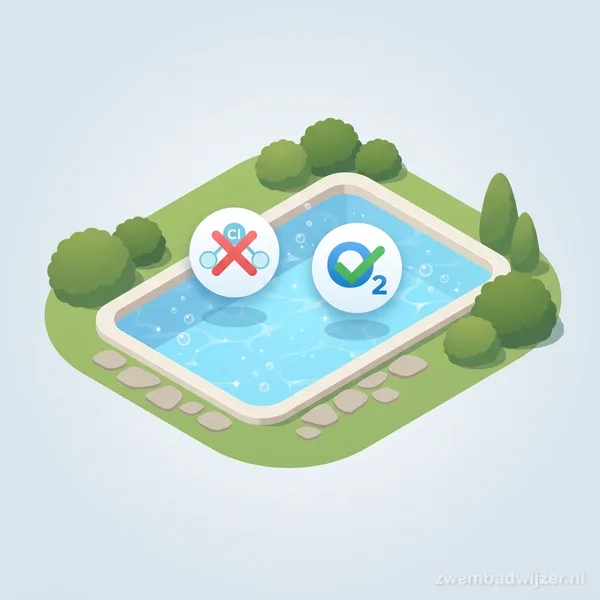
Non-Chlorine Shock for Pools: How MPS Works, When to Use It, and Dosage
Non-chlorine shock (MPS / active oxygen) oxidises organic waste without raising chlorine levels. You can swim again in 30 minutes. Learn when it works, when it doesn't, and how to dose it correctly.
Read more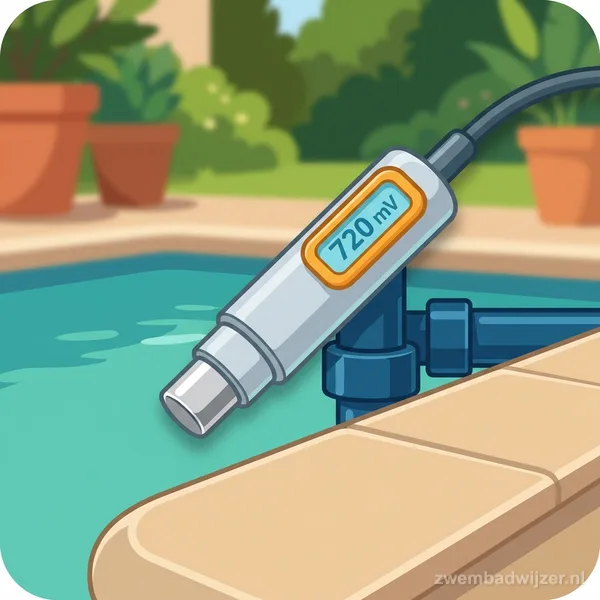
Pool ORP/Redox Value: What's the Ideal Range?
Pool ORP redox value: what mV means, ideal ranges by pool type, how it differs from measuring chlorine in ppm, and how to maintain the sensor.
Read more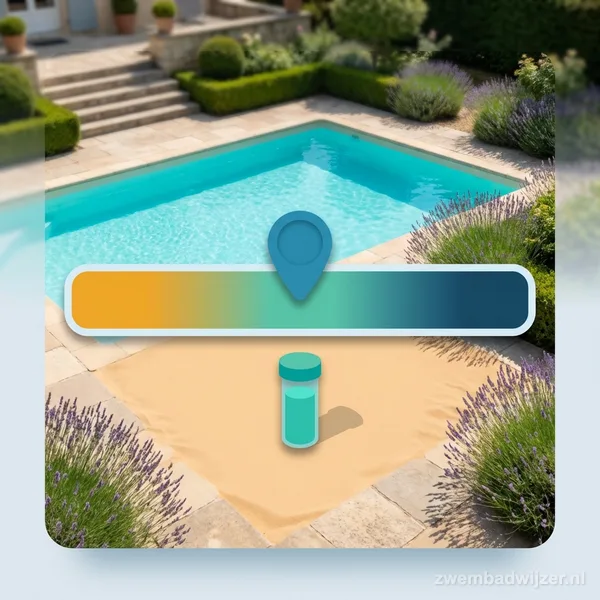
Pool pH levels: ideal 7.2-7.6 (fix high or low pH)
Pool pH levels: the ideal range is 7.2-7.6. Too high or too low? Fix it with pH decreaser (sodium bisulfate) or pH increaser (sodium carbonate). Dosage table and step-by-step guide included.
Read more
Pool Chlorine: Dosing Chart, Tablets, and Levels (Complete Guide)
Chlorine dosing for pools: ideal 1-3 ppm. Chart for tablets, shock, and liquid chlorine per cubic meter. What to do with too much or too little chlorine.
Read more
Cyanuric acid in pools (CYA): ideal level, too high and how to lower it
Cyanuric acid (CYA) protects chlorine from UV breakdown, but above 80 ppm it blocks chlorine from working. Ideal level: 30–50 ppm. Learn how to test, adjust, and when a water change is needed.
Read more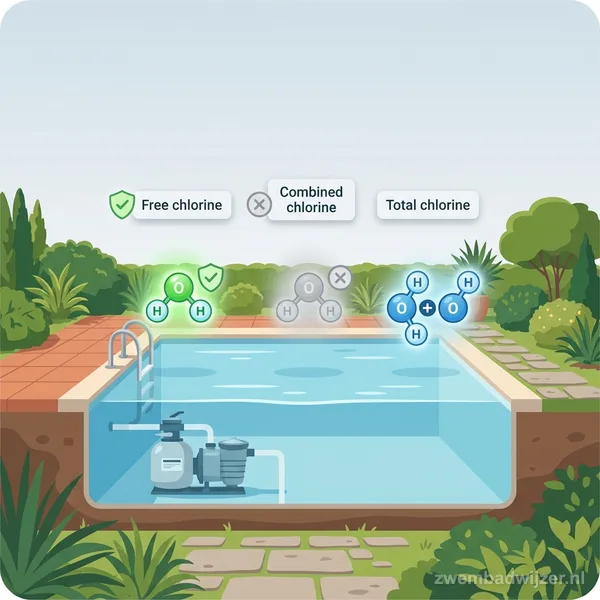
Free Chlorine vs Total Chlorine: What's the Difference?
Free chlorine sanitizes your pool. Total chlorine is the sum of free and combined chlorine. Learn which value to test for, what the ideal levels are, and when to shock.
Read more
Saltwater pool: water values, start-up and maintenance
Saltwater pool guide: which water values to monitor, how to start up your system and why algae can still appear. Complete guide to saltwater pool care.
Read more
Chlorine Too High in Pool: How to Lower It Fast
Chlorine too high in your pool? Above 3 ppm you need to lower it by aeration, dilution or sodium thiosulphate. Learn symptoms, risks and the fastest fix.
Read more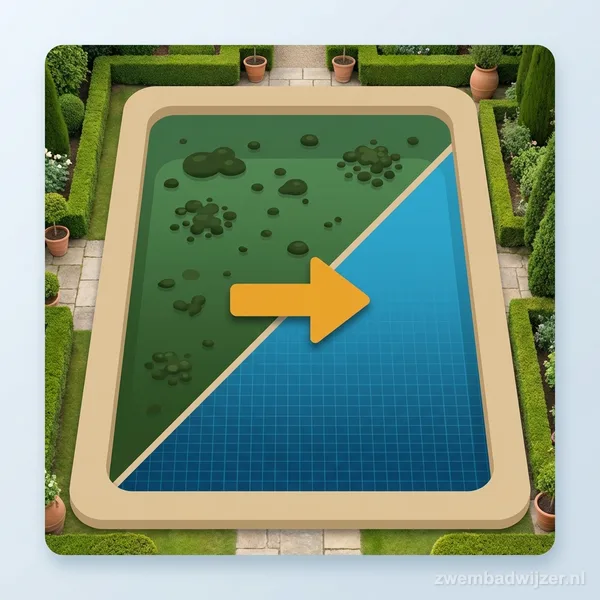
Green Pool Water: Remove Algae Step by Step (When Shock Doesn't Work Too)
Green pool water? Shock to 10-30 mg/l, brush walls and backwash daily. Shock not working? Check your CYA level. Pool clears in 3-5 days, including persistent algae cases.
Read more
Pool Water Temperature: Ideal Range Per Use (26-28°C Guide)
Ideal pool water temperature: 26-28°C for recreation, 24-26°C for fitness, 36-38°C for spa. How temperature affects chlorine consumption and algae growth: with heating options compared.
Read more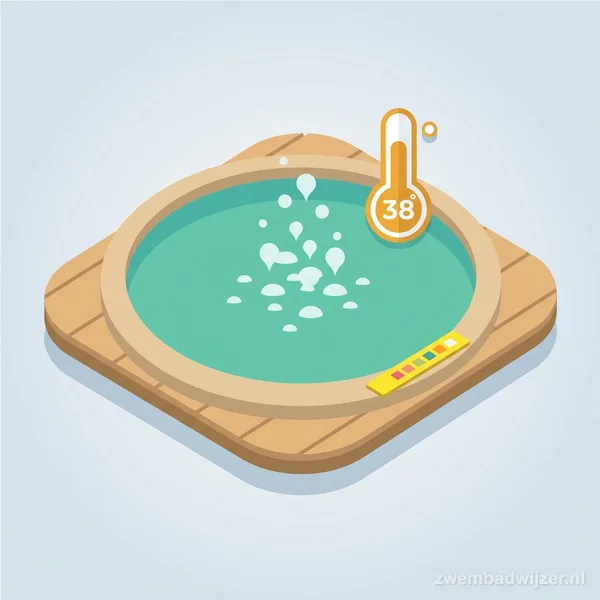
Hot Tub Water Quality: Chlorine, pH and Maintenance Guide
Hot tub water quality care: chlorine 3-5 ppm, pH 7.2-7.6, weekly testing. Complete guide covering dosing, maintenance and fixing common problems.
Read more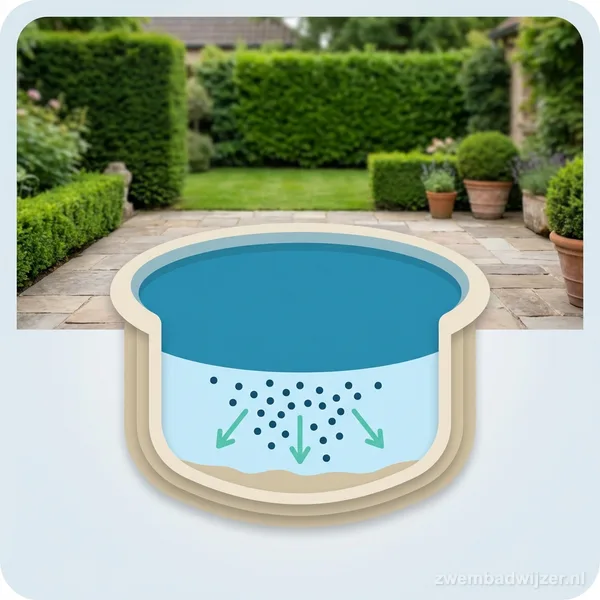
Pool Flocculant: When and How to Use It
Pool flocculant clumps microscopic particles into sinkable flocs that settle on the bottom. Learn when to use it, how to dose it and how it differs from pool clarifier.
Read more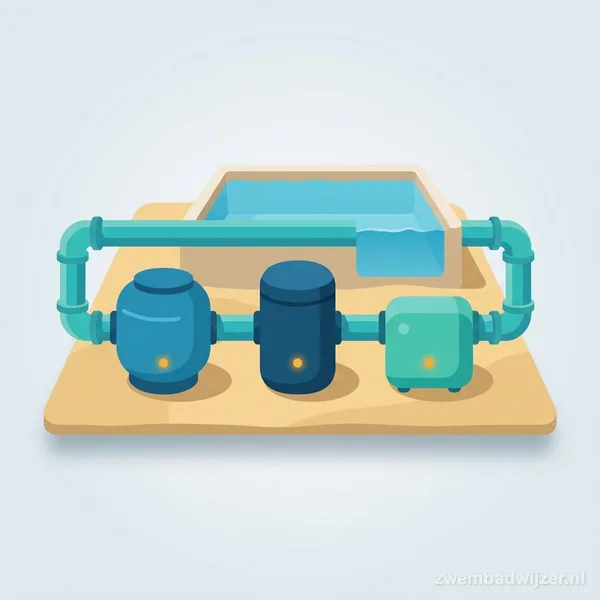
Pool without chlorine: the best alternatives compared
Looking for a chlorine-free pool? Compare saltwater, UV, ozone, bromine and other systems. Honest overview of costs, maintenance and effectiveness.
Read more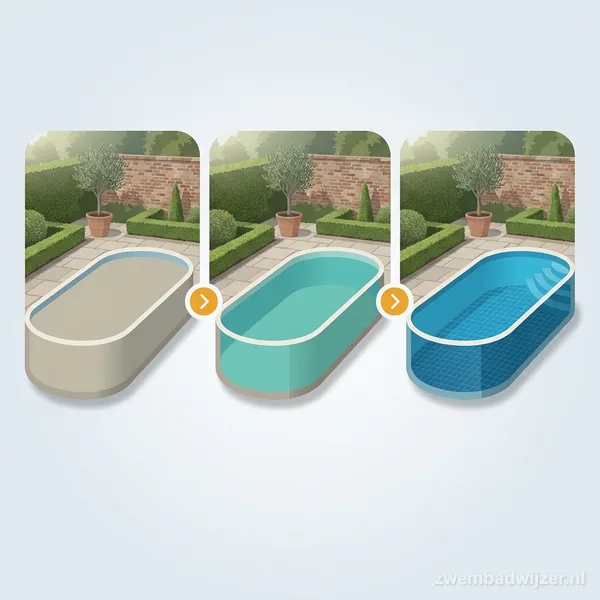
How to get clear pool water: 7 proven methods
Pool water not clear? Discover the 7 most effective methods to clear cloudy, green or foamy pool water, with causes and solutions.
Read more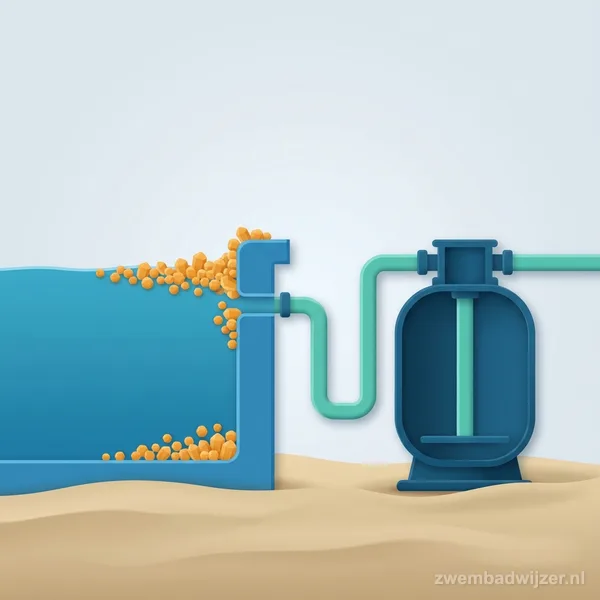
Pool water hardness: calcium hardness explained and how to adjust it
Ideal calcium hardness for a pool: 200-400 mg/l. Too low attacks pool surfaces, too high causes white scale. How to measure and correct it step by step.
Read more
Pool alkalinity: ideal range and how to adjust it
Total alkalinity in your pool should be 80-120 mg/l. Too low causes pH swings. Raise with sodium bicarbonate, lower with pH decreaser. Complete guide.
Read more
pH and chlorine in your pool: the complete guide
How pH and chlorine work together in pool water: ideal values, how to measure, what goes wrong and how to correct it. Practical guide with tables.
Read more
How to test pool water: methods, timing and best kits
Test pool pH and chlorine 2 to 3 times per week. Use test strips for daily checks, a digital tester for accurate readings. Best kits compared.
Read more
Cloudy pool water: causes and how to fix it
Cloudy pool water causes: low chlorine, pH off, clogged filter or algae. Identify the cause and apply the right fix. Clears in 24 to 48 hours.
Read more
Pool after rain: what to do when it rains on your pool
Heavy rain can throw off pool chemistry in hours. Learn what to check and correct after rain, including pH, chlorine, and phosphate levels.
Read more