Did you know
Looking for information on chlorine that is too low? That is a different problem. Read pool chlorine: dosing, levels and topping up for causes of low free chlorine and how to bring it back up.
Chlorine in your pool is too high when free chlorine climbs above 3.0 ppm. Telltale signs include a strong chlorine smell, stinging eyes, dry skin and sometimes white scale on the liner. The fix: let it aerate off, dilute with fresh water, or add a chlorine neutralizer based on sodium thiosulphate. Wait before swimming until the value is back between 1.0 and 3.0 ppm.
When is chlorine too high in a pool?
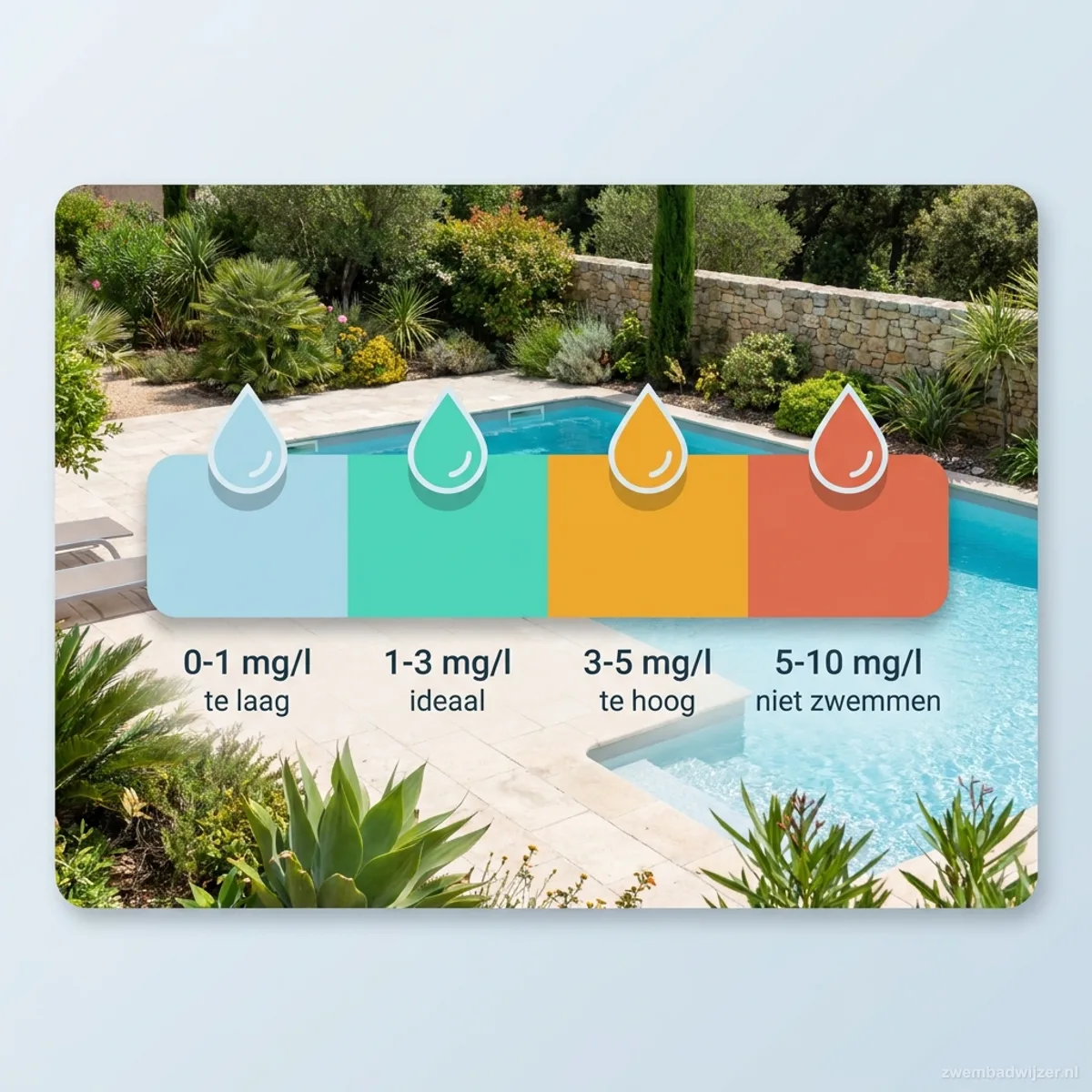
The ideal free chlorine for a residential pool sits between 1.0 and 3.0 ppm. Anything above that is “too high”. From 3.0 ppm swimming starts to feel uncomfortable. Above 5.0 ppm water quality standards say to stay out of the pool entirely.
The WHO guideline for recreational water sets 3 ppm as the upper limit. US CDC standards for commercial pools allow up to 5 ppm, but those pools are constantly refreshed. In a home pool of 8,000 to 13,000 gallons chlorine hangs around much longer.
Always check pH and cyanuric acid alongside free chlorine. At a low pH (below 7.0) even 2 ppm already irritates. At a high pH (above 7.6) chlorine loses effectiveness, which can trick you into dosing more than needed.
Critical values per scenario
| Situation | Free chlorine | Action |
|---|---|---|
| Normal use | 1.0-3.0 ppm | None, swim freely |
| Slightly high | 3.0-5.0 ppm | Uncomfortable, remove cover |
| Too high | 5.0-10.0 ppm | No swimming, lower actively |
| Very high (post-shock) | 10.0-20.0 ppm | Wait 24-48 h or neutralize |
What are the symptoms of too much chlorine?
You notice high chlorine through three types of signals: physical, in the water, and on your equipment. The intensity depends on ppm.
Physical symptoms hit first. Red or burning eyes show up around 4 ppm. A dry, tight skin feeling after a 20-minute swim points to elevated chlorine. People with sensitive skin may flare up with eczema. Hair becomes brittle and bleaches faster.
In the water you sometimes see a greenish tint or unusually clear look from intense oxidation. A sharp chlorine smell that lingers on a windless day often signals a problem, though it can also mean chloramines (more on that below).
On equipment you spot white scaly buildup on the liner or on stainless steel parts. Rubber seals lose elasticity. Even the paint on poolside furniture in the splash zone may turn matte.
Why chlorine smell does not always mean “too much chlorine”
A common misconception: that typical pool smell does not come from free chlorine, it comes from combined chlorine. Combined chlorine (chloramines) forms when free chlorine reacts with nitrogen from sweat, urine and skin cells. More chloramines means a stronger smell.
In a well-balanced pool combined chlorine stays below 0.5 ppm. After busy days it can reach 1.0 or 2.0 ppm. The paradox: to clear chloramines you actually need to add more chlorine through a shock. Not less.
Always measure both free chlorine and total chlorine. Calculate combined chlorine as total minus free. If combined chlorine is above 0.5 ppm, the pool smells “chlorinated” while the problem is a deficit, not a surplus.
What are the short and long term effects?
Short term, the health effects come first. Eye, skin and respiratory irritation start above 4 ppm. For people with asthma symptoms worsen already at 3 ppm. Swimming 30 minutes at 8 ppm or more can trigger tightness in the chest and headaches even in healthy adults.
Longer term, pool materials suffer. A liner exposed to chlorine above 5 ppm for months becomes porous and loses elasticity. Replacement runs from 800 to 2,000 euros depending on pool size. Metal trim oxidizes 2 to 3 times faster, especially 304 stainless (less resistant than 316).
Costs add up another way too: chlorine itself is cheap, but consistently overdosing uses 30 to 50% more chemicals than needed. Over a full season that is 50 to 120 euros wasted. A full reset (drain and refill) adds another 100 to 250 euros in water and rebalancing chemicals.
How do you lower too much chlorine?
There are four proven ways to bring chlorine down. The fastest works within the hour, the cheapest within 24 to 48 hours. Choose based on how fast you want to swim again.
Method 1: Let it aerate off (cheapest) Remove the cover, set circulation to max and let sun and wind do the work. Per 24 hours free chlorine drops about 1 to 2 ppm. From 6 ppm to 3 ppm takes 2 to 3 days. No cost, just patience.
Method 2: Dilute with fresh water Drain 10 to 30% of the pool water through the waste setting on your sand filter and refill from the tap. At 30% dilution chlorine drops from 8 to 5.6 ppm (a 30% drop). Downside: you have to rebalance pH, alkalinity and stabilizer too. Tap water costs roughly 1 to 2 euros per cubic metre.
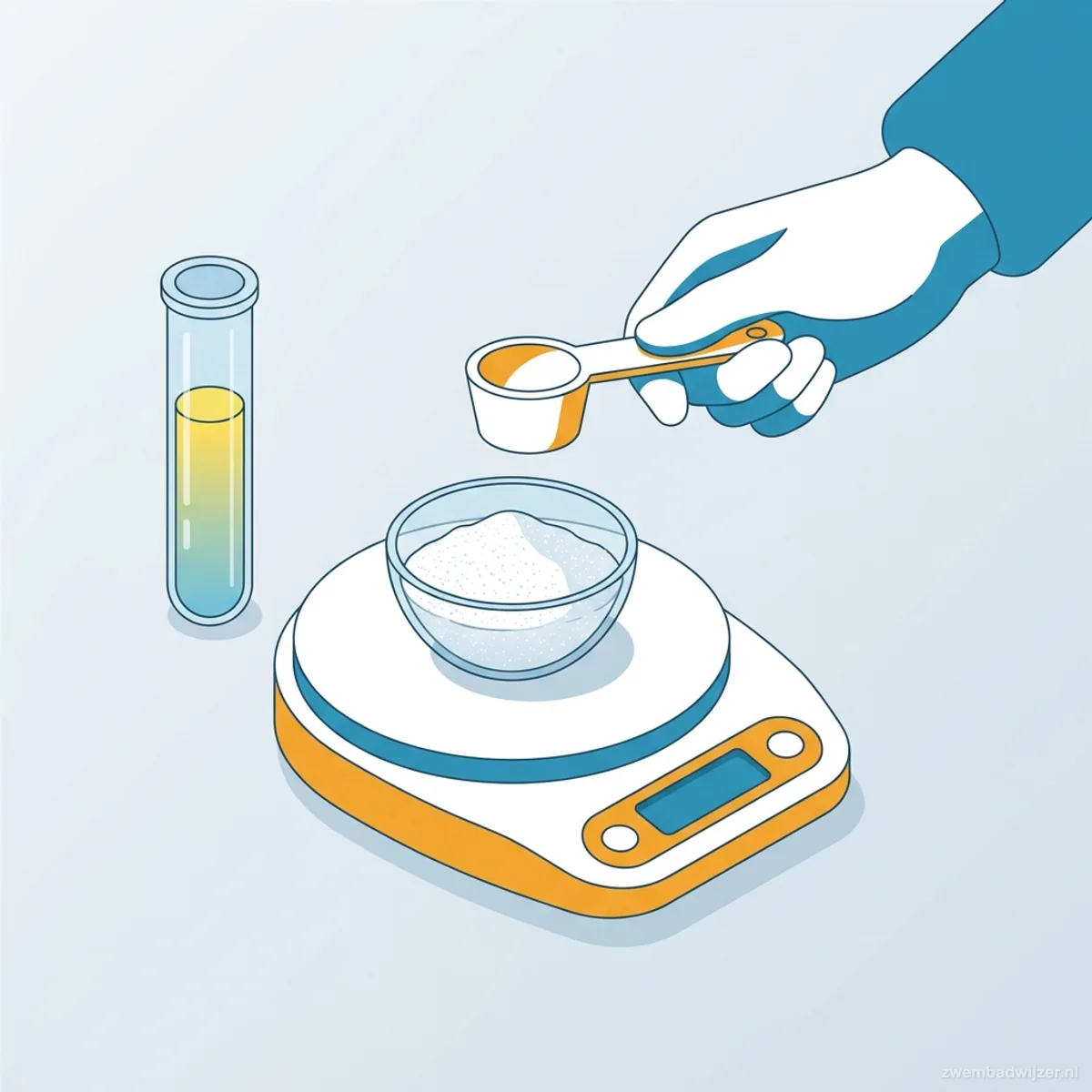
Method 3: Sodium thiosulphate (fastest) A chlorine neutralizer like sodium thiosulphate works within 30 to 60 minutes. Dosage: 2 grams per cubic metre lowers free chlorine by about 1 ppm. Sprinkle the powder evenly in front of the inlet and run the pump for 30 minutes. Retest and add more only if needed.
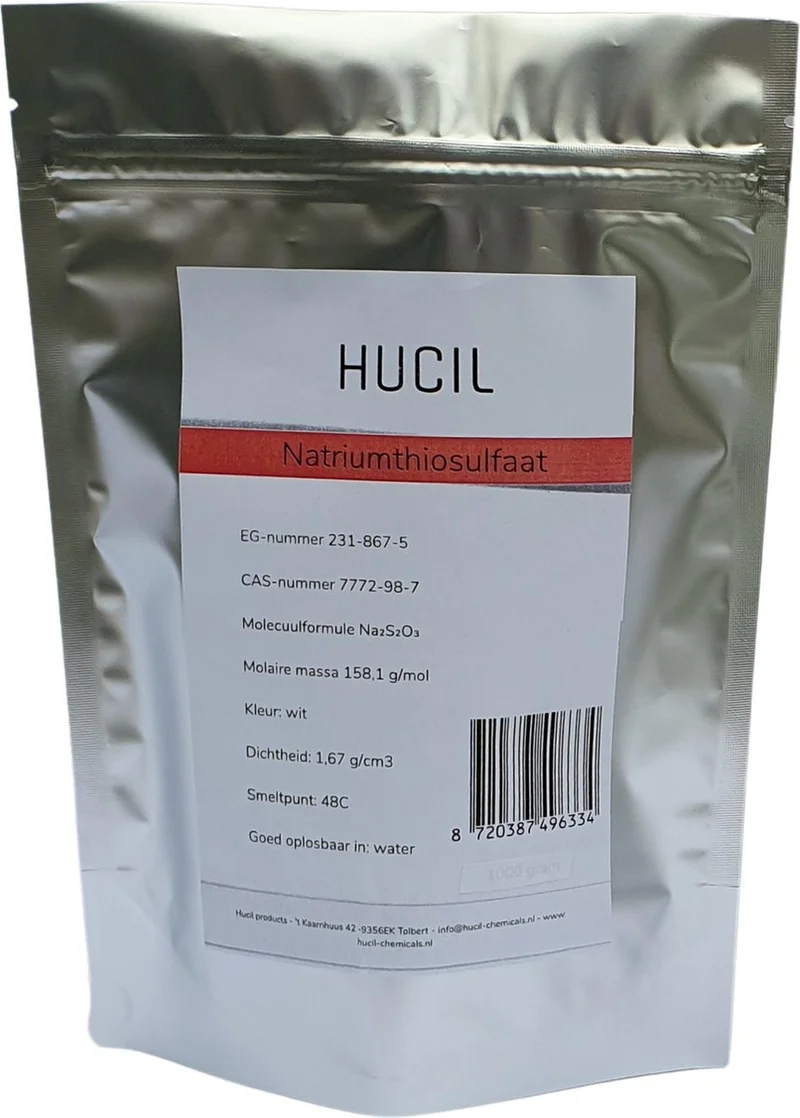
Sodium thiosulphate (chlorine neutralizer) 1 kg
GenericSodium thiosulphate (Na2S2O3) crystals quickly bring down high chlorine levels in pools or hot tubs. The 1 kg bag lasts multiple seasons.
- Neutralizes chlorine within 30 minutes
- 2 g per m3 removes 1 ppm of free chlorine
- Safe for liner and filter system
- No preventive effect
- Minor pH drop after dosing
Method 4: Check stabilizer If chlorine stays high week after week, cyanuric acid (stabilizer) may be too high. Above 75 ppm chlorine stays active far longer, mimicking overdosing. The only cure: dilute (see method 2). Prevention: avoid stabilized trichlor tablets once stabilizer exceeds 50 ppm.
Which method when?
| Situation | Best method | Time until swim |
|---|---|---|
| Chlorine 3-5 ppm, no rush | Aeration | 24-48 h |
| Chlorine 5-8 ppm, weekend | Neutralizer | 1-2 h |
| Chlorine 8+ ppm post-shock | Dilute + wait | 4-12 h |
| Chronically high | Check stabilizer | Depends |
Can you swim with high chlorine per level?
The threshold for “can I swim” shifts per ppm. Here is the practical guideline for a private pool.
At 3.0 to 4.0 ppm a short swim (under 30 minutes) is possible but comfort is low. Kids and sensitive skin types should skip. At 4.0 to 5.0 ppm it is unpleasant for everyone: rinse off quickly after and use a moisturizer. Above 5.0 ppm we recommend no swimming until the value is back in the ideal range.
Wait time after a shock is a common question. A standard shock takes you to 10 to 20 ppm briefly. In an open pool on a sunny day this drops below 3 ppm after 8 to 12 hours. With the cover on overnight it takes 24 to 36 hours. Always retest before you swim.
For more on testing itself, read our guide on how and when to test pool water with the right intervals.
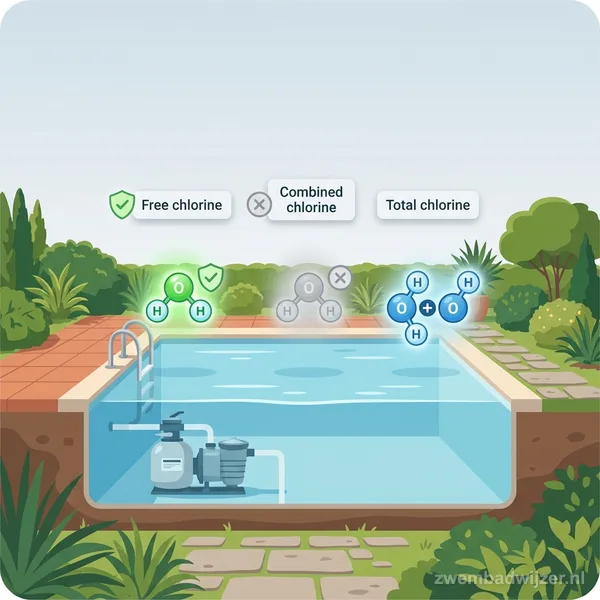
What is the difference between free, combined and total chlorine?
This distinction matters for interpreting “too much chlorine” correctly. Three terms, three different readings on your strip or digital meter.
Free chlorine (FC) The active, sanitizing form. Target: 1.0 to 3.0 ppm. When FC rises above 3.0 you have “too high chlorine” in the classic sense. A strip shows this as the primary reading.
Combined chlorine (CC) Free chlorine that has reacted with sweat, urine and dirt. Also called chloramines. Target: below 0.5 ppm. High CC causes the classic chlorine smell and eye sting but is not “too much chlorine” strictly speaking.
Total chlorine (TC) Sum of free and combined: TC = FC + CC. A 6-in-1 strip usually measures TC and FC, from which you calculate CC. Example: FC 2.0 ppm and TC 3.5 ppm means CC 1.5 ppm. Total chlorine looks fine, but chloramines are too high.
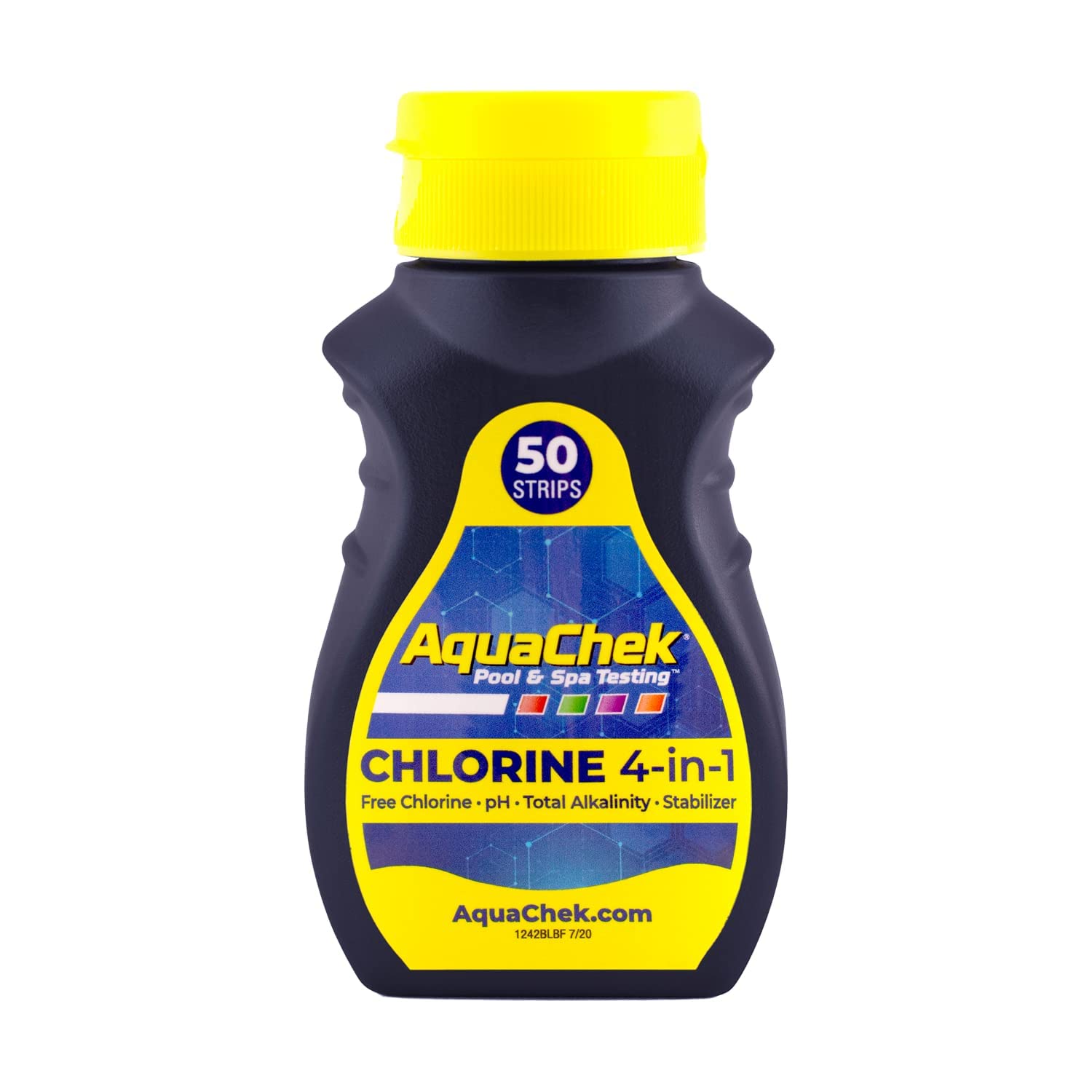
AquaChek 511244A Test Strips 6-in-1 (100 strips)
AquaChekTest pH, chlorine, alkalinity, hardness and more in one go. 100 strips per pack.
- Fast results
- 6 parameters in 1 strip
- Affordable
- Less accurate than digital testers
Which value is “too high”?
For daily decisions: look at free chlorine (FC). That sets dosing and swim safety. Total chlorine only matters when it runs well above FC, which indicates a combined-chlorine problem. The fix there is pool shock treatment to break down the chloramines.
How do you prevent high chlorine in the future?
Prevention is easier than correction. Three routines cover 90% of high-chlorine situations.
Routine 1: test weekly Check free chlorine and pH two to three times a week, stabilizer monthly. In warm weather (above 25 C) test daily. That way you spot a chlorine buildup before it passes 3 ppm.
Routine 2: dose on readings, not on habit Many pool owners throw in the same tablet amount every week. That only works when consumption is constant. After rain, with a full cover, or with low use, chlorine builds up. Adjust dosing to your latest reading.
Routine 3: watch cyanuric acid Stabilized chlorine tablets add cyanuric acid over time. Above 75 ppm it locks up your chlorine and forces you to dilute. Once a month use a non-stabilized alternative like calcium hypochlorite to control the stabilizer curve.
Lovibond Scuba II Digital Chlorine Tester
LovibondDigital photometer tester for free chlorine, combined chlorine and pH. More accurate than test strips for daily water quality monitoring.
- Accurate to 0.01 mg/l
- Measures free and combined chlorine
- Reusable, low cost per test
- Reagent tablets are consumables
- Higher upfront cost than test strips
For your complete dosing strategy read the full chlorine in pool guide with schedules per pool type.