Free chlorine is the only form of chlorine that actively sanitizes your pool. Total chlorine is the combined sum of free chlorine and combined chlorine — a used-up form that does nothing. Your test strip may show both values, but you should always act on free chlorine. The ideal range is 1 to 3 mg/L.
Why Does Your Test Strip Show Two Different Chlorine Readings?
You dip your test strip into the water and see two color patches for chlorine — or you only see one and wonder which value it represents. This is one of the most common points of confusion for pool owners.
The answer lies in how chlorine actually behaves in water. Chlorine doesn’t exist in your pool as a single substance. It takes multiple forms, each with a different role. Once you understand the distinction, you can immediately trace problems like chlorine smell, red eyes, and cloudy water to their actual cause.
How Does Chlorine Work in Your Pool?
When you add chlorine to pool water, it dissolves and forms hypochlorous acid (HOCl). This is the active molecule that destroys bacteria, viruses, and algae by breaking through their cell walls. HOCl acts fast and is highly effective, which is why chlorine has been the standard pool sanitizer for decades.
HOCl is not permanent, though. It reacts continuously with contaminants introduced by swimmers — sweat, urine, skin oils, sunscreen, and other organic matter. Each reaction consumes a molecule of HOCl and converts it into a chlorine compound that can no longer sanitize. This is how free chlorine disappears from your pool even when no one is swimming.
The amount of HOCl available at any given moment to tackle new contaminants is what we measure as free chlorine. The higher the reading, the better your pool is protected.
What Is Free Chlorine?
Free chlorine (FC) is the amount of active, sanitizing chlorine immediately available in your pool water. It consists primarily of hypochlorous acid (HOCl) and the hypochlorite ion (OCl-). Together they form the frontline defense against bacteria and algae.
The ideal free chlorine range is 1 to 3 mg/L (ppm). In hot weather, after heavy rain, or with a high bather load, free chlorine gets consumed faster. On warm summer days, aim for the upper end of the range — 3 mg/L — so you have enough buffer. When free chlorine drops below 1 mg/L, your pool is no longer adequately protected and algae can take hold within hours.
If free chlorine falls too low, you need to either add chlorine or perform a shock treatment to bring levels back into range quickly.
What Is Combined Chlorine?
Combined chlorine (CC) forms when free chlorine reacts with nitrogen-containing compounds from sweat, urine, and other organic bather waste. The resulting compounds are called chloramines.
Chloramines are the main culprit behind the “pool smell” most people associate with heavily used swimming pools. They also cause red, irritated eyes and skin irritation in swimmers. Here is the counterintuitive part: a strong chlorine smell is actually a sign that your pool water quality is poor, not that it has been heavily chlorinated. A well-maintained pool has almost no smell at all.
Combined chlorine should never exceed 0.3 mg/L. Once it crosses that threshold, a shock treatment is the only way to break down the chloramines and restore water quality.
What Is Total Chlorine and How Do You Calculate It?
Total chlorine (TC) is simply the sum of free chlorine and combined chlorine:
TC = FC + CC
To work backwards and find combined chlorine, subtract free chlorine from total chlorine:
CC = TC - FC
If your test strip or photometer shows the same reading for both free and total chlorine, there is no combined chlorine in your pool — the ideal situation. If total chlorine is higher than free chlorine, the difference is your combined chlorine level.
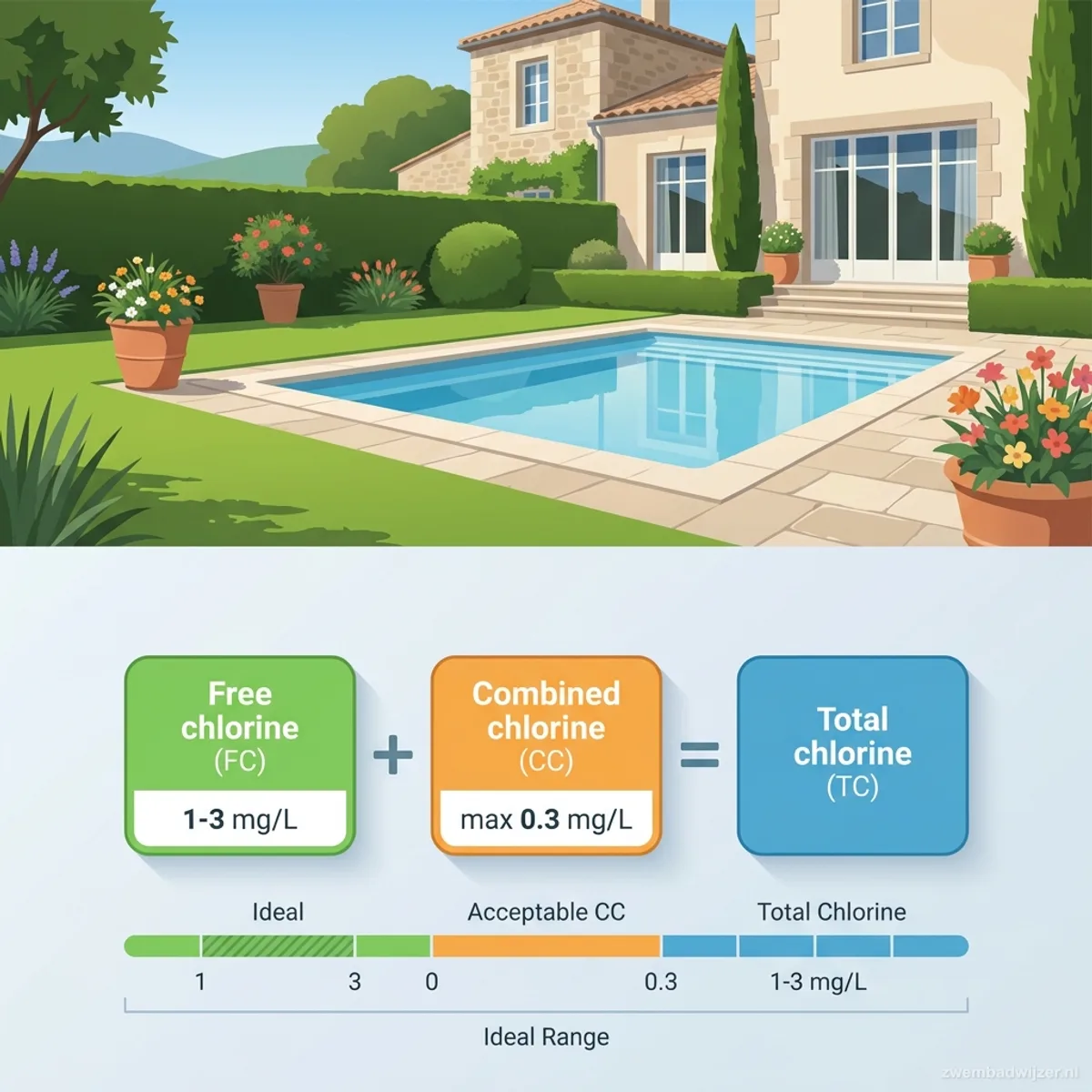
Summary of the Three Chlorine Forms
| Chlorine form | Abbreviation | Ideal level | Function |
|---|---|---|---|
| Free chlorine | FC | 1 to 3 mg/L | Actively sanitizes bacteria and algae |
| Combined chlorine | CC | Max 0.3 mg/L | Used-up chlorine, no sanitizing power |
| Total chlorine | TC | FC + CC | Measurable sum of both forms |
A practical example: you measure free chlorine at 2.0 mg/L and total chlorine at 2.6 mg/L. Combined chlorine is therefore 0.6 mg/L — double the limit. You need to shock your pool.
When Should You Shock Your Pool Based on Chlorine Levels?
Shock your pool whenever combined chlorine exceeds 0.3 mg/L. The calculation is straightforward: total chlorine minus free chlorine. A threshold that is easy to remember — if total chlorine is more than 0.3 mg/L higher than free chlorine, it is time to take action.
During a shock treatment, you raise the free chlorine level to 10 mg/L or higher to destroy the chloramines through a process called breakpoint chlorination. After shocking, wait until free chlorine drops back into the normal range of 1 to 3 mg/L before swimming again. The waiting time depends on how much shock you added and how long you run the filter — typically 8 to 24 hours.
How to Measure Free Chlorine and Total Chlorine Accurately
Not all testing methods give you both values. The tool you use determines how much information you actually get.
Test Strips
Basic test strips with three or four pads typically measure only free chlorine, pH, and alkalinity. They do not measure total chlorine. Multi-parameter strips with five to seven pads sometimes include total chlorine, but accuracy varies significantly between brands.
Test strips are practical for quick daily checks. If you want to calculate combined chlorine, you need a strip that explicitly measures both free and total chlorine and does so with reasonable precision.
Digital Photometer
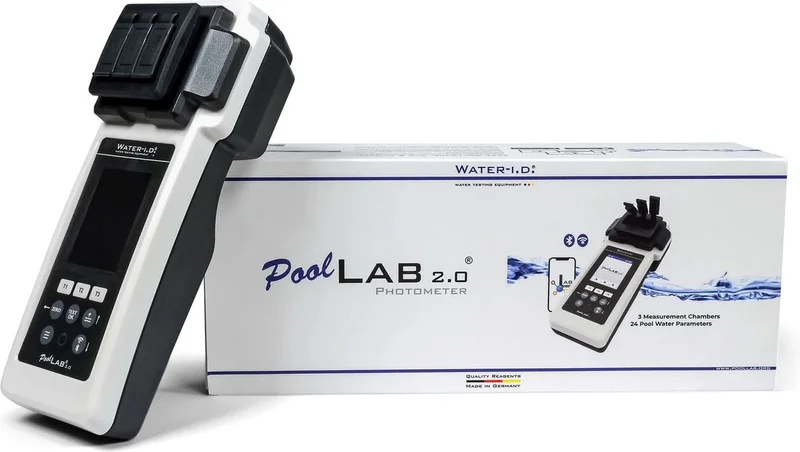
A digital photometer measures free and total chlorine separately with an accuracy of approximately 0.05 mg/L. You add a reagent to a water sample and the device calculates the concentration using light absorption. This is the most reliable method for tracking combined chlorine and is recommended whenever you suspect a chloramine problem.
For a full comparison of pool water testing methods, see our guide on how to test pool water .
Which Value Should You Monitor Every Day?
In practice, you manage free chlorine. That is the reading that tells you whether your pool is safe right now. Measure free chlorine at least two to three times per week, and daily during hot weather or periods of heavy use.
Use total chlorine as a diagnostic tool. Measure it when you suspect combined chlorine is building up — when the water smells, your eyes sting, or the water looks hazy without an obvious reason. Subtracting free chlorine from total chlorine immediately tells you whether chloramines are the problem.
Together, the two readings give you the full picture. Free chlorine tells you how well your pool is protected right now. Combined chlorine tells you how heavily the water has been used and whether a shock treatment is overdue.
The Role of Cyanuric Acid in Free Chlorine Effectiveness
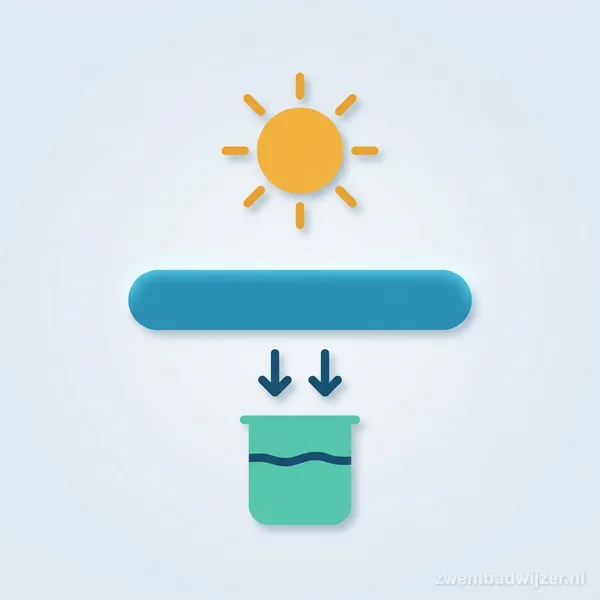
One additional factor has a major impact on how effectively free chlorine works: cyanuric acid (CYA), also called pool stabilizer. CYA protects HOCl from breaking down under UV light, which is essential for outdoor pools. Without it, sunlight can destroy 90% of your free chlorine within two hours.
However, high CYA levels above 50 mg/L reduce the sanitizing activity of HOCl. The chlorine is still there on a test strip, but it reacts more slowly. This means you effectively need higher free chlorine levels to achieve the same result. Keep cyanuric acid between 30 and 50 mg/L. Read more in our article on cyanuric acid and chlorine stabilizer .
Frequently Asked Questions
What is the difference between free chlorine and total chlorine?
Free chlorine is the active chlorine that kills bacteria and algae. Total chlorine is the sum of free chlorine and combined chlorine — used-up chlorine that no longer sanitizes. Always monitor and adjust based on free chlorine levels.
What is the ideal free chlorine level for a pool?
The ideal range is 1 to 3 mg/L. In warm weather or with a heavy bather load, aim for the higher end near 3 mg/L. If free chlorine drops below 1 mg/L, your pool cannot sanitize properly.
What is combined chlorine and is it harmful?
Combined chlorine (chloramines) forms when free chlorine reacts with sweat, urine, and sunscreen. It no longer sanitizes but causes the characteristic chlorine smell and red, irritated eyes. Combined chlorine should stay below 0.3 mg/L.
My test strip only shows one chlorine reading — which one is it?
Most basic test strips only measure free chlorine. Multi-parameter strips sometimes include total chlorine. To calculate combined chlorine accurately, use a digital photometer that measures both values separately.
When should I shock my pool based on chlorine levels?
Shock your pool when combined chlorine exceeds 0.3 mg/L. Calculate it by subtracting free chlorine from total chlorine. If the difference is more than 0.3 mg/L, you have too many chloramines and need to shock.
Does cyanuric acid affect how free chlorine works?
Yes. Cyanuric acid protects free chlorine from UV breakdown, but levels above 50 mg/L reduce the effectiveness of hypochlorous acid. Keep cyanuric acid between 30 and 50 mg/L for optimal performance.