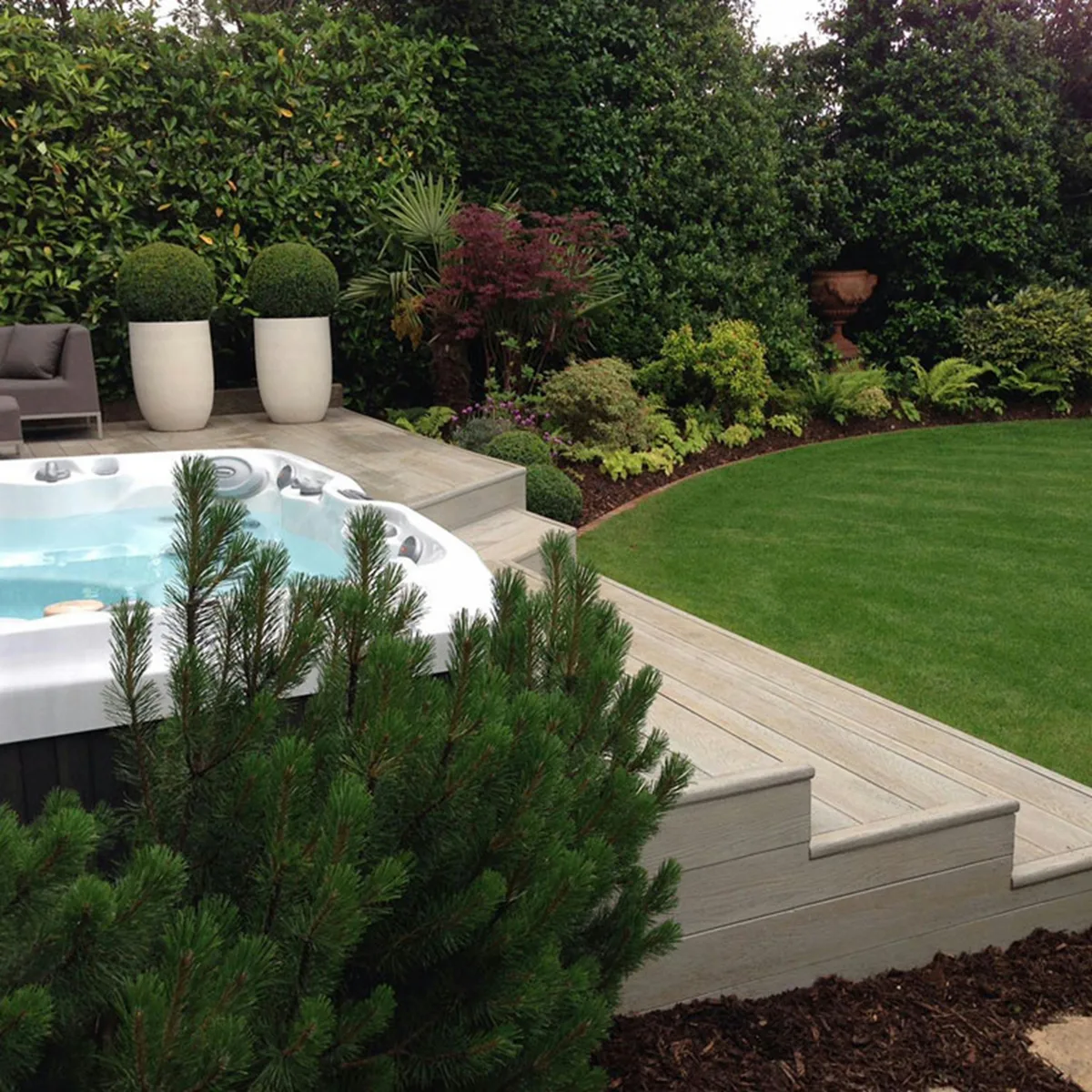
Hot tub water quality demands more attention than a pool: higher water temperature (90 to 104 F) means bacteria grow faster and chlorine breaks down quicker. Ideal values: chlorine 3 to 5 ppm (higher than pool), pH 7.2 to 7.6 (same as pool) and total alkalinity 80 to 120 ppm. Below, everything by topic: testing, dosing, fixing problems, and how often to change the water.
How does hot tub water differ from pool water?
A hot tub looks like a mini pool, but physically and chemically it is almost a different world. Three factors drive the difference: volume, temperature and aeration.
Volume: a hot tub holds 50 to 400 gallons, a pool averages 8,000 to 16,000 gallons. Any small imbalance shows up 20 to 60 times faster in a hot tub. A dosing error that stays invisible in a pool spikes chlorine or crashes pH in a hot tub.
Temperature: hot tubs run at 90 to 104 F, pools at 72 to 82 F. Bacteria double every 20 to 30 minutes at 95 F. Chlorine degrades 3 to 5 times faster from UV and heat. The rule of thumb: for every 18 F of temperature rise, the half-life of free chlorine halves.
Aeration: at full jets you add up to 30% air to the water. Those bubbles off-gas chlorine and raise oxygen levels. This speeds up oxidation of skin oil and soap residue but also speeds up chlorine loss.
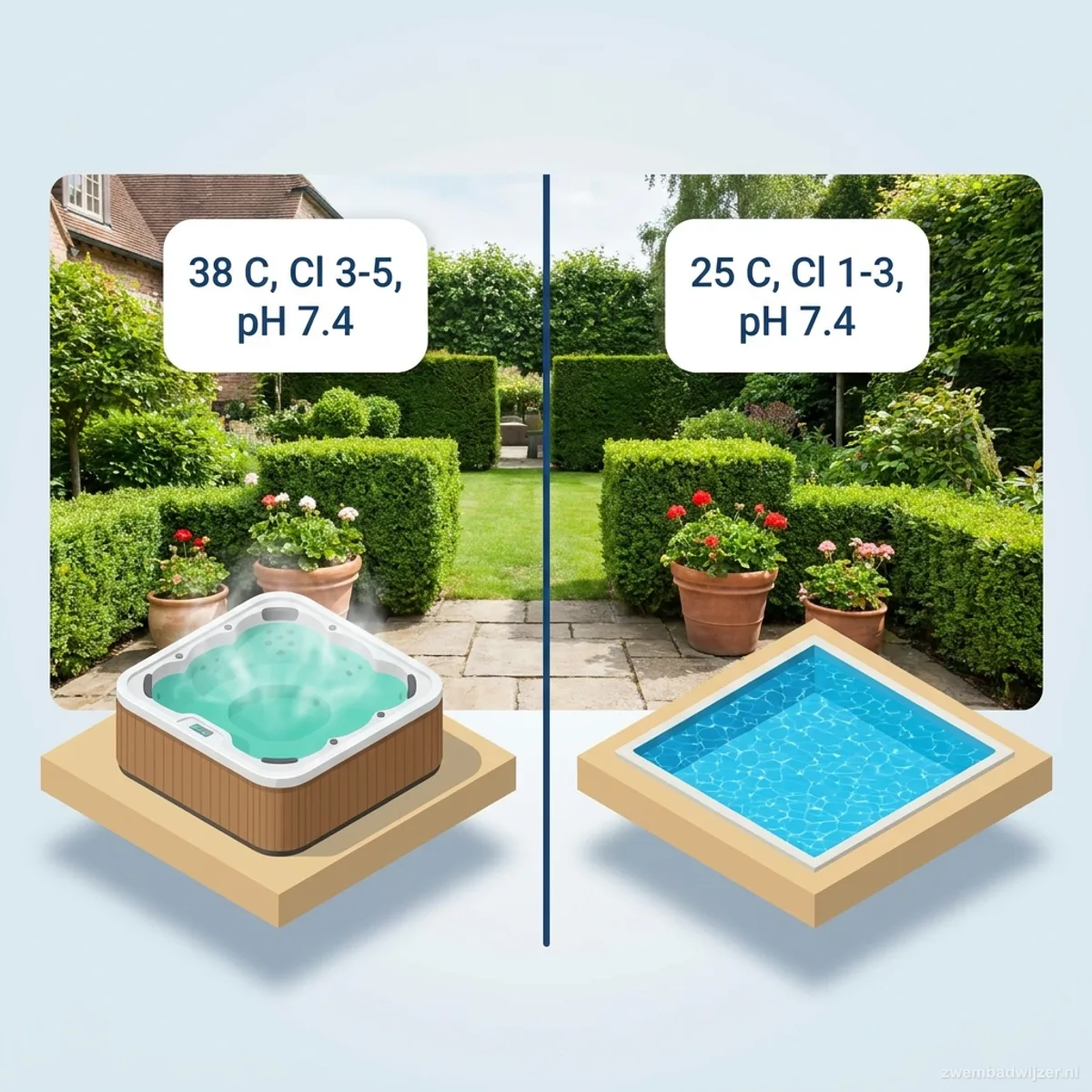
Value comparison
| Parameter | Hot tub | Pool |
|---|---|---|
| Free chlorine | 3-5 ppm | 1-3 ppm |
| pH | 7.2-7.6 | 7.2-7.6 |
| Total alkalinity | 80-120 ppm | 80-120 ppm |
| Water temperature | 90-104 F | 72-82 F |
| Cyanuric acid | 10-30 ppm | 30-50 ppm |
| TDS (dissolved solids) | max 2,000 ppm | max 2,500 ppm |
| Water change | Every 6-8 weeks | Yearly |
How much chlorine in a hot tub and how do you dose it?
Ideal free chlorine in a hot tub is 3 to 5 ppm held constant. Below 3 ppm bacterial growth starts, above 5 ppm you get skin and eye irritation. Test daily in peak season.
Always use 20-gram mini chlorine tablets, never the 200-gram pool variety. A 200-gram tablet dissolves too slowly in a small volume and spikes chlorine to 20 ppm or higher. A 20-gram mini dissolves in 1 to 2 days and adds 2 to 3 ppm to a 1,000-litre hot tub.
Mini tablet dosing (20 grams):
- Hot tub 200-500 litres: 1 tablet every 5 days in a floating dispenser
- Hot tub 500-1,000 litres: 1 tablet every 3 days
- Hot tub 1,000-1,500 litres: 1 tablet every 2 days
After any session with 2+ bathers: shock dose of 5 ppm for 30 minutes. Use fast-dissolving chlorine granules for this. Wait 30 minutes before closing the cover, otherwise evaporated chlorine condenses on the underside.
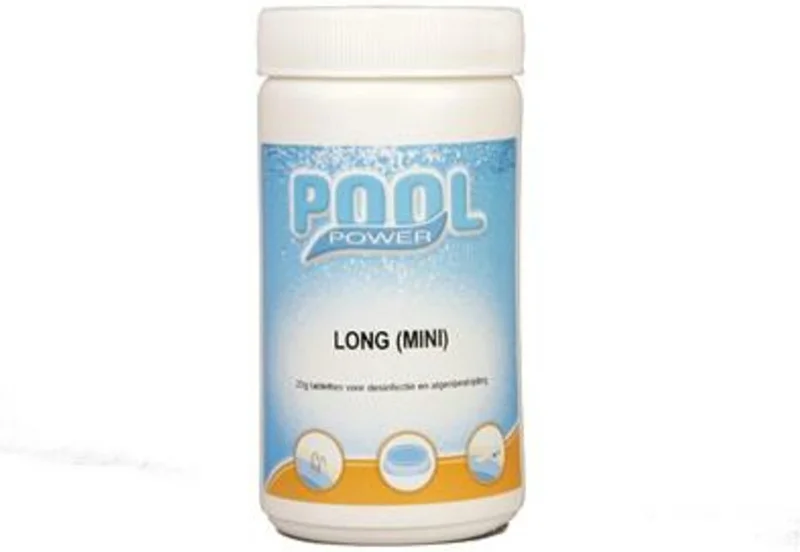
Pool Power Mini Chlorine Tablets 20g (1 kg)
Pool PowerSmall 20-gram trichloro tablets in a 1 kg pack. Dissolve in 1 to 2 days — ideal for small pools or fine-tuning alongside 200g tablets.
- Fast acting thanks to 20g format
- Ideal for pools up to 10,000 litres
- Easy dosing in spas or kiddie pools
- 90 percent active chlorine
- Higher consumption than 200g tabs in large pools
- Only sold as 1 kg pack
Chlorine alternatives
If you want to move away from chlorine, three options exist:
- Bromine: 2 to 4 ppm, more stable at high temperatures but pricier
- Active oxygen: skin-friendly but weaker, only for very light use
- Salt electrolysis spa: 1-3 g/l salt, continuous mild chlorine, 400-800 euros upfront
Hot tub pH: ideal range and corrections
Hot tub pH stays between 7.2 and 7.6. That range gives optimal chlorine effectiveness and comfortable skin feel. Above 7.8 water turns cloudy and chlorine loses effectiveness fast.
Test at least twice a week with strips or a digital meter. High pH is the most common drift in hot tubs because of exchange with soap, body wash or shampoo residue on skin.
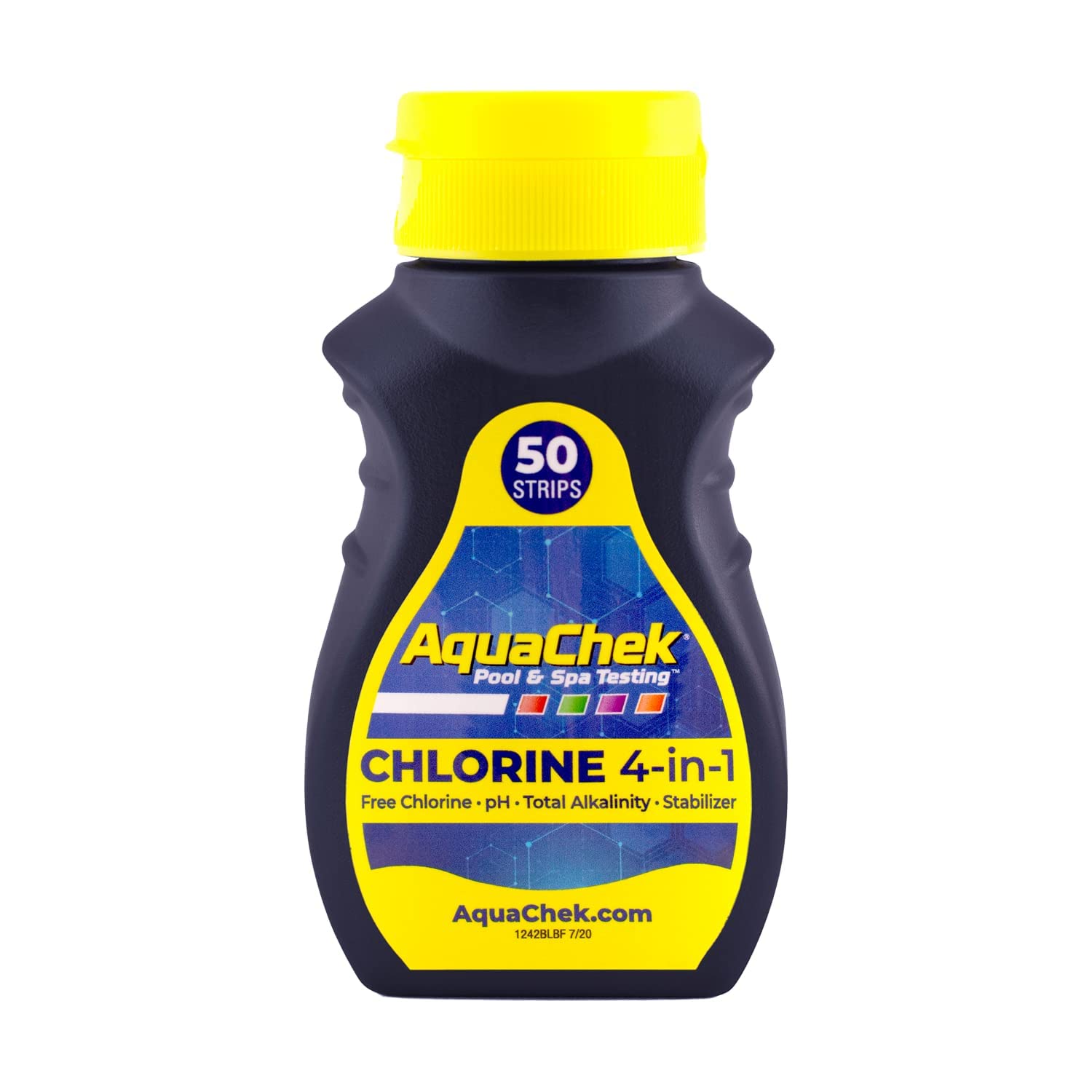
AquaChek 511244A Test Strips 6-in-1 (100 strips)
AquaChekTest pH, chlorine, alkalinity, hardness and more in one go. 100 strips per pack.
- Fast results
- 6 parameters in 1 strip
- Affordable
- Less accurate than digital testers
pH too high (above 7.6): Dose pH-minus (sodium bisulfate) in powder form. Dosage: 10 grams per 1,000 litres drops pH by about 0.2. Sprinkle slowly, run the pump for 15 minutes, retest. For more detail see how to lower pool pH .
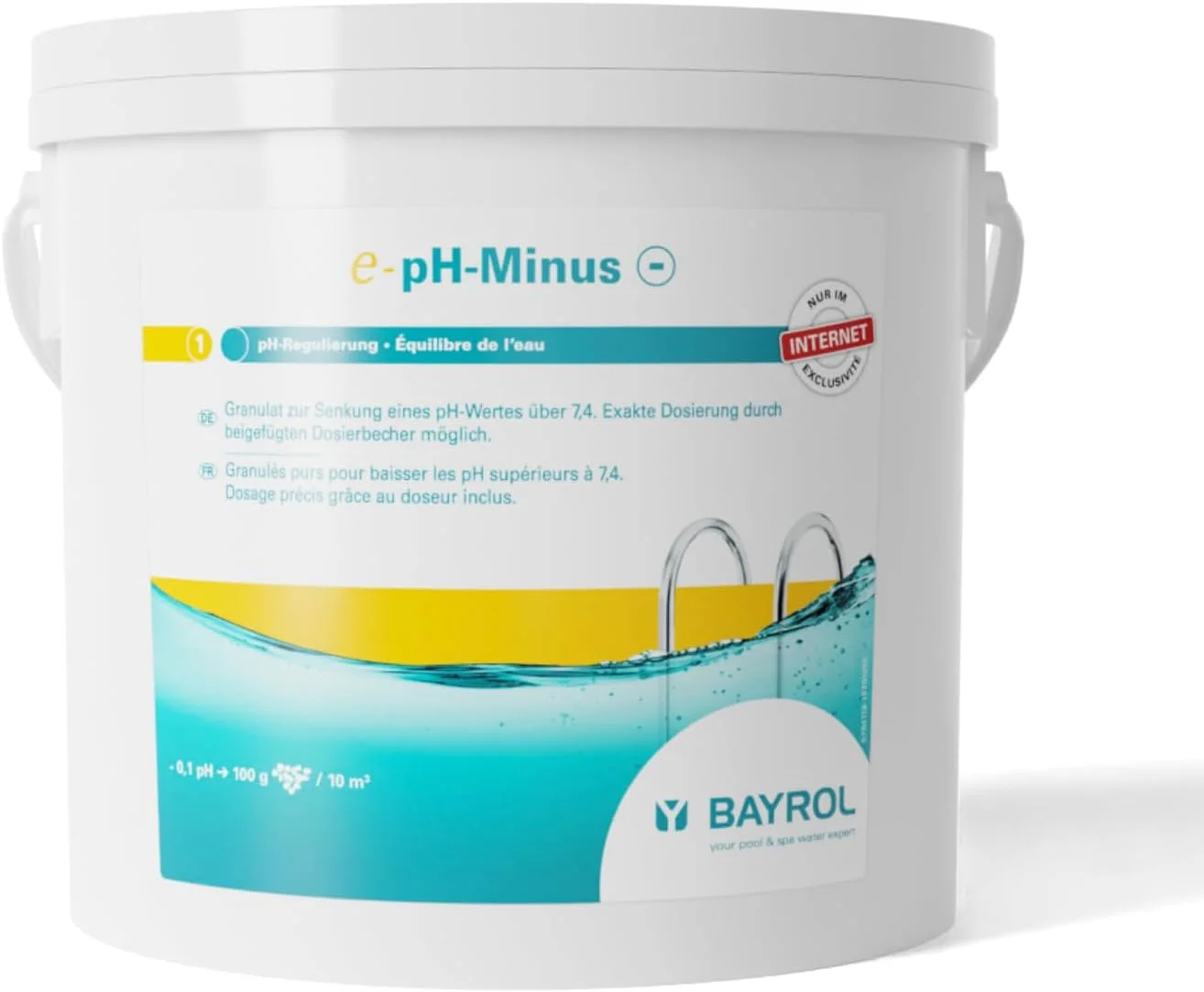
pH Decreaser Powder (5 kg)
Chloor.nlSodium bisulphate powder to lower pool pH. 5 kg for multiple treatments. Always dissolve in a bucket of water before adding.
- Fast-acting
- Good price per kg
- Easy to dose
- Creates dust when measuring, wear gloves
pH too low (below 7.2): Dose pH-plus (sodium carbonate) in granular form. Dosage: 10 grams per 1,000 litres raises pH by about 0.2. Read our guide on how to raise pool pH .
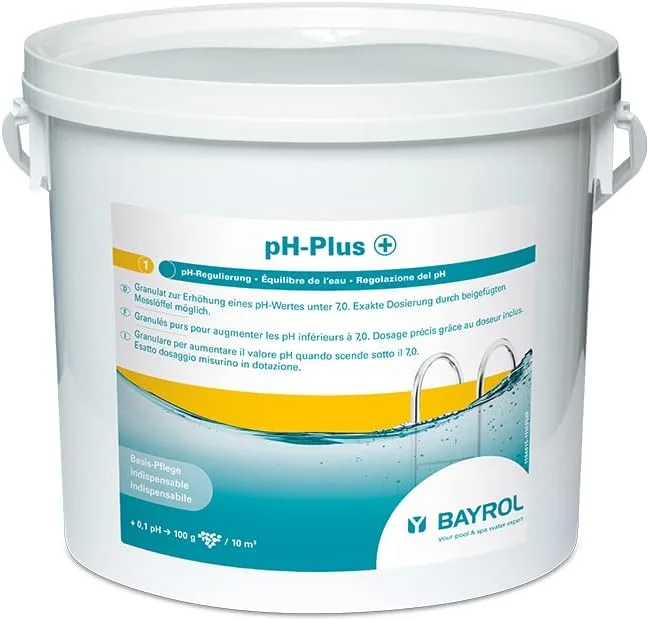
pH Increaser Granules (3 kg)
Chloor.nlSodium carbonate granules to raise pool pH. Always dissolve in water before adding. 3 kg for multiple treatments throughout the season.
- Effective
- Dissolves well
- Affordable
- Always pre-dissolve before adding to pool
Total alkalinity as a buffer
Alkalinity (80 to 120 ppm) buffers pH against swings. Low alkalinity (below 60 ppm) causes “pH bounce” where the value is different every day. Raise with sodium bicarbonate: 17 grams per 1,000 litres lifts alkalinity 10 ppm.
Too much chlorine in a hot tub: quick fix
High chlorine readings (above 5 ppm) in a hot tub come down in 30 to 60 minutes. The small volume works in your favour. Same methods as chlorine too high in pool , only with smaller doses.
Method 1: run the jets (fastest) Run all jets at maximum and take off the cover. Chlorine drops 2 to 3 ppm per hour through aeration and evaporation. Within an hour you go from 8 ppm to 4 ppm.
Method 2: sodium thiosulphate Dosage: 1 to 2 grams per 100 litres lowers chlorine by 1 ppm. For a 1,000-litre tub that is 10 to 20 grams. Sprinkle in, let it circulate 15 minutes, retest.
Method 3: partial refresh Drain 25% and refill. Handy when multiple readings are off. Note: you need to reset pH and alkalinity afterwards.
Hot tub maintenance: weekly routine
A hot tub needs 20 to 30 minutes of care per week, split across moments. Ten routines cover 95% of the work.
Daily (2 minutes):
- Test chlorine with a strip
- Visual check: foam, smell, clarity
- Close cover after use
Every 2 days (5 minutes):
- Refill mini chlorine tablet in dispenser
- Empty skimmer basket
Weekly (15 minutes):
- Rinse filter cartridge with garden hose
- Clean waterline with cleaning wipe
- Test and adjust pH and alkalinity
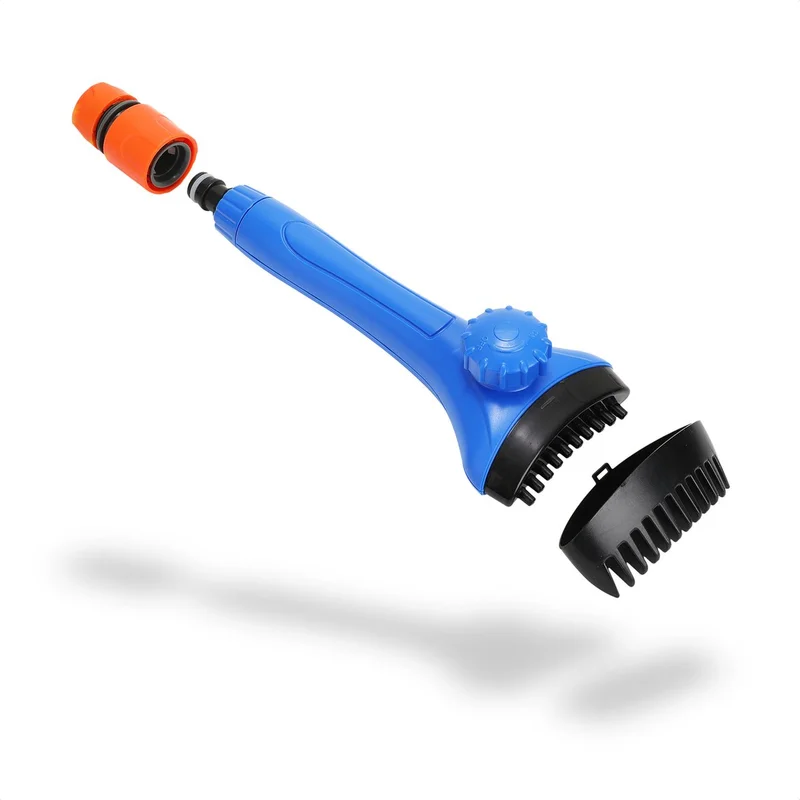
LIVIN' spa and pool filter brush
LIVIN'Compact filter brush with garden hose coupling for spa, hot tub and pool cartridges. Cleans folds in 5 minutes using standard water pressure.
- Fits any garden hose
- Extends cartridge life 3x
- Small enough to store near the spa
- Not suited for very dense cartridges
Monthly (30 minutes):
- Cartridge deep clean (24 hours in cartridge cleaner)
- Measure TDS (total dissolved solids)
- System check: air filter, heater, jets
Cover usage
A thermal cover saves 60 to 80% on energy, keeps water clean and extends chlorine life. Always close it when not bathing. Under a cover evaporation drops 95%, and pollen plus leaves stay out entirely.
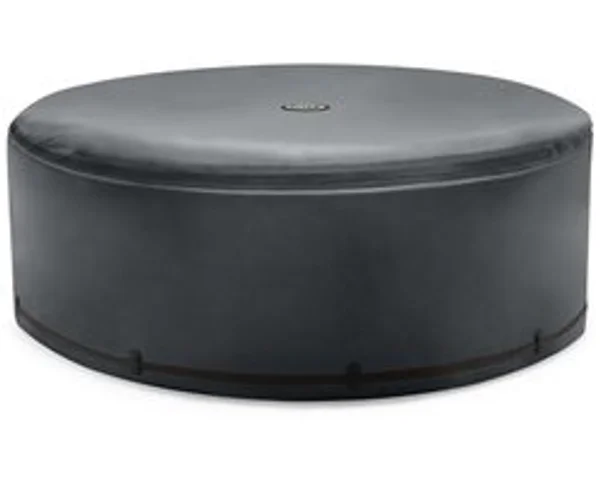
Intex 28532 PureSpa Thermal Cover (Ø218 cm, dark grey, round 6-person spa)
IntexInsulated thermal cover (model 28532) for round Intex PureSpa 6-person hot tubs at 218 cm diameter. Dark grey finish. Reflects heat back into the water, cuts heater electricity use by 30 to 40 percent in standby, and keeps debris out.
- Saves 30-40% on heating electricity in standby
- Fits 218 cm round PureSpa 6-person models
- Insulated multi-layer construction
- Official Intex product — outlasts third-party covers
- Only fits round 218 cm models, not the octagonal Onyx
- €143 is on the pricey side for a cover
Inflatable hot tub (Intex, MSpa) care
Inflatable hot tubs like Intex PureSpa or MSpa have specific watchpoints. PVC walls are more sensitive to chemicals and the filter is compact.
Filter cartridges in inflatable spas last 1 to 2 weeks with heavy use. Because the cartridge has limited surface area it saturates quickly with skin oil. Rinse with garden hose every 3 to 5 days, replace every 4 weeks.
PVC walls: never apply concentrated acids directly to the material. Always sprinkle pH-minus in the middle of the spa, not against the wall. On 20 kg PVC hot tubs at temperatures above 100 F, chlorine can bleach the material.
Recommended chlorine type: mini tablets (20 g) only, or unstabilized chlorine granules. Stabilizer builds up fast in small volumes.
For purchase info and model comparisons: see our inflatable hot tub reviews.
Cloudy water in a hot tub: causes and fixes
Cloudy water is the most common hot tub problem. Eight out of ten cases come from one of these three causes.
Cause 1: pH above 7.8 (most common) Elevated pH precipitates calcium out of solution and clouds the water immediately. Fix: drop pH with pH-minus to 7.4, circulate 30 minutes and the water usually clears within 4 hours.
Cause 2: saturation (TDS above 2,000 ppm) After 2 to 3 months the water saturates with salts, metals and organics. Measure with a TDS meter. Above 2,000 ppm: full water change.
Cause 3: biofilm in plumbing Biofilm (bacterial slime) in the plumbing releases on startup after inactivity. Symptoms: water stays cloudy despite good chlorine and pH. Fix: use a dedicated pipe cleaner (follow label), circulate 24 hours, then change the water.
Extra fix: clarifier A clarifier binds micro-particles into bigger clumps your filter can catch. Hot tub dose: 50 ml per 1,000 litres, 4 to 8 hours at max filter speed.
When to change hot tub water?
Rule of thumb for water changes: divide volume in litres by (3 x people per day) to get days until the next change.
Examples:
- 800-litre tub, 2 people 3x per week = 800 / (3 x 0.86) = 310 days (in practice max 8-10 weeks)
- 1,200-litre tub, 4 people daily = 1,200 / (3 x 4) = 100 days
- 400-litre tub, 2 people daily = 400 / (3 x 2) = 67 days
In practice: every 6 to 8 weeks with regular use, every 3 to 4 months with light use. A water change takes 2 to 4 hours including cleaning and rebalancing.
Water change step by step
- Turn off heater and wait 1 hour
- Drain water through outlet or pump
- Clean interior with spa cleaner
- Rinse or replace filter cartridge
- Fill with fresh tap water
- Set alkalinity (80-120 ppm)
- Set pH (7.2-7.6)
- Add starter chlorine (5 ppm)
- Heat to target temperature
- Retest after 24 hours and adjust