The total alkalinity in your pool must be between 80 and 120 mg/l. Below that range, pH bounces like a yo-yo: 7.2 today, 7.8 tomorrow. Fix alkalinity first, before attempting any pH correction.
What is alkalinity?
Total alkalinity (TA) measures the concentration of bicarbonate compounds in the water. Those compounds act as a chemical buffer: they neutralise acids and bases before they can shift the pH.
A simple analogy: think of your pool as a large glass of water. Alkalinity is the amount of antacid dissolved in it. The more antacid, the harder it is to make the water more acidic or more alkaline.
Without adequate alkalinity, pH shifts due to:
- Rain (acidic, pH 5 to 6)
- Sweat and urine from swimmers
- Chemical additions
- Carbon dioxide absorbed from the air
Ideal alkalinity values
| Alkalinity (mg/l) | Assessment |
|---|---|
| Below 60 | Dangerously low: pH unstable and water is corrosive |
| 60 to 80 | On the low side: pH swings are noticeable |
| 80 to 120 | Ideal |
| 120 to 150 | Acceptable: pH responds slowly to correction |
| Above 150 | Too high: pH is very difficult to bring down |
Measuring alkalinity
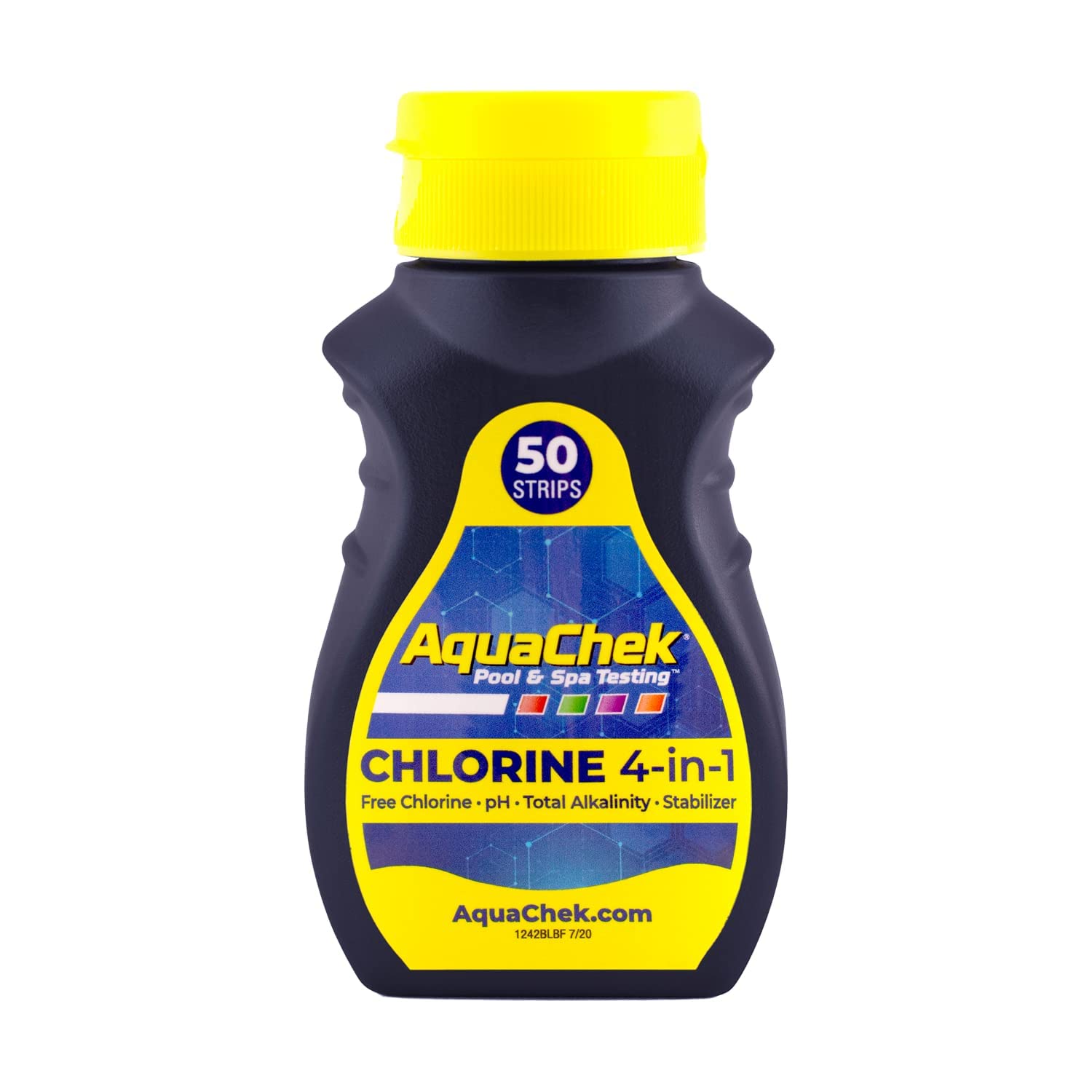
Measure alkalinity with 6-in-1 test strips that include a TA pad, or with a dedicated TA drop test. For guidance on testing pool water accurately , see our dedicated testing guide.
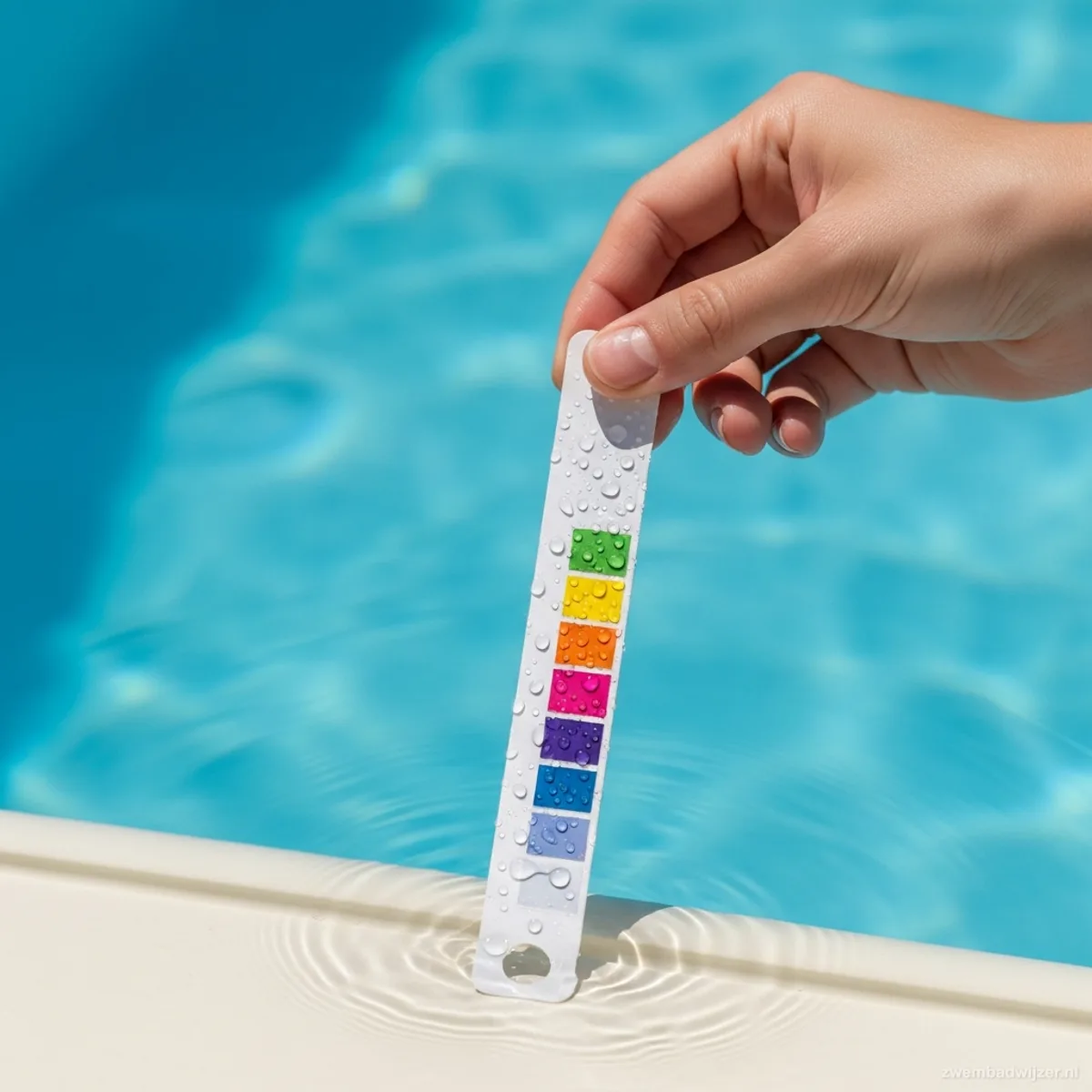
Test once per week. Alkalinity changes more slowly than pH or chlorine, but it drifts down gradually through rain and chemical use.
Tip
Always test alkalinity before correcting pH. Correct alkalinity if it is outside the 80 to 120 mg/l range, wait 24 hours, then reassess pH. Never the other way around.
Alkalinity too low: what to do
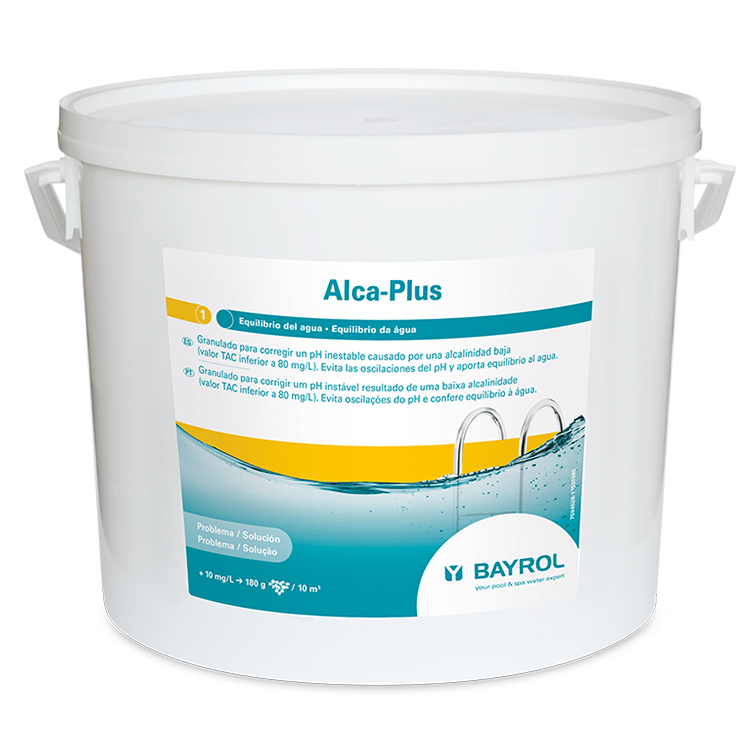
Use sodium bicarbonate (NaHCO3), also known as baking soda or bicarbonate of soda. This is the safest and most predictable product for raising alkalinity.
Dosage: 15 grams of sodium bicarbonate per 10,000 litres raises alkalinity by approximately 5 mg/l.
Step by step:
- Calculate the amount needed
- Dissolve the powder in a bucket of lukewarm water
- Pour evenly around the pool with the pump running
- Wait 6 to 8 hours
- Test again and repeat if needed
Worked example: your pool holds 20,000 litres and alkalinity is 60 mg/l. You want to reach 100 mg/l: a rise of 40 mg/l. Calculation: (40 / 5) x 15 grams x 2 = 240 grams of sodium bicarbonate.
Alkalinity too high: what to do
Use pH decreaser (sodium bisulphate). Note: with high alkalinity, pH decreaser affects the alkalinity first before it lowers the pH reading.
Special approach for reducing alkalinity:
- Turn the pump OFF
- Add the calculated dose of pH decreaser to the deep end
- Wait 30 minutes
- Turn the pump ON and run for 4 hours
- Test alkalinity and pH
By switching off the pump you concentrate the acid in one area. This attacks the alkalinity without dropping the overall pool pH all at once.
Alkalinity and pH: the correct sequence
- Test both values
- Correct alkalinity if it is outside 80 to 120 mg/l
- Wait at least 24 hours
- Correct pH if needed
- Wait at least 4 hours
- Test again
Never reverse this order. If you correct pH first without addressing alkalinity, the pH will have shifted again by the next day.
Alkalinity vs. total hardness
Alkalinity and water hardness are separate parameters. Alkalinity measures bicarbonate content (the buffer). Hardness measures calcium and magnesium content. Both affect the water balance, but they are corrected independently. For guidance on the calcium side of the equation, read our article on pool water hardness .
The Langelier Saturation Index
Pool professionals use the Langelier Saturation Index (LSI) to calculate overall water balance. The LSI combines pH, alkalinity, calcium hardness, temperature and TDS. An LSI of 0 is perfectly balanced. Negative values are corrosive; positive values cause scale.
For private pool owners it is sufficient to keep all four parameters within the ideal range:
- pH: 7.2 to 7.6
- Alkalinity: 80 to 120 mg/l
- Calcium hardness: 200 to 400 mg/l
- Chlorine: 1.0 to 3.0 mg/l
When all four are in range, the LSI is automatically close to zero for most residential pools.
Common mistakes with alkalinity
Adding too much at once: adding a large dose of sodium bicarbonate in one go can spike the alkalinity too high. Raise in steps of 20 mg/l per day.
Correcting pH when alkalinity is low: if alkalinity is under 60 mg/l, any pH adjustment will be undone within hours. Fix the buffer first.
Confusing alkalinity with pH: high alkalinity does not mean high pH, and low alkalinity does not mean low pH. They are related but independent. A pool can have a pH of 7.4 and alkalinity of 40 mg/l: the pH looks fine but the buffer is dangerously thin.