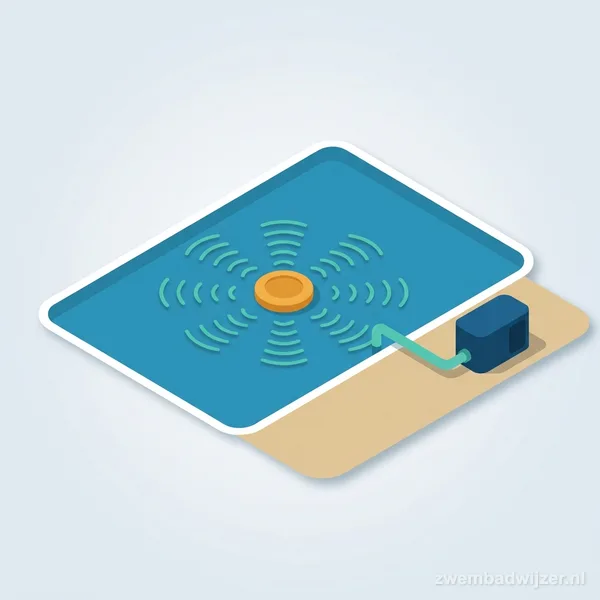
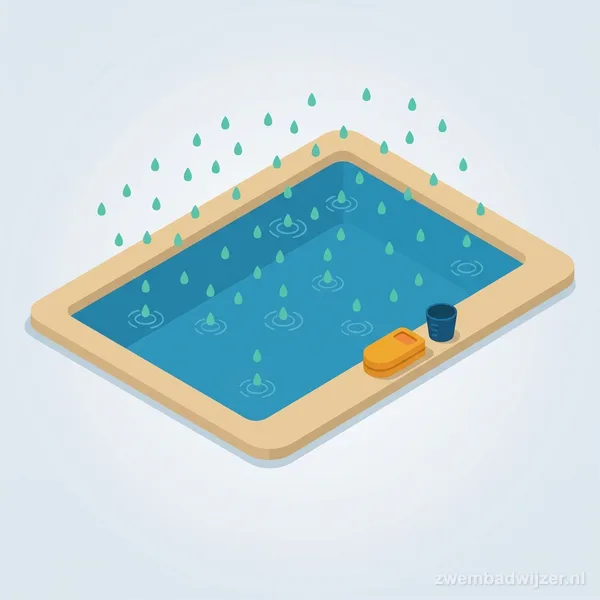
Pool flocculant clears cloudy water by clumping microscopic particles into heavier flocs that sink to the bottom. You then vacuum them up through the drain. Expect 12 to 24 hours from treatment to clear water. Use flocculant when your chlorine and pH are both correct but the water is still cloudy.
What does flocculant actually do in your pool?
A sand filter catches particles larger than 20 to 40 microns. But pool water also contains much finer material: sunscreen, skin oils, pollen, algae spores and fine suspended particles can be 1 to 10 microns in size and slip straight through the filter bed.
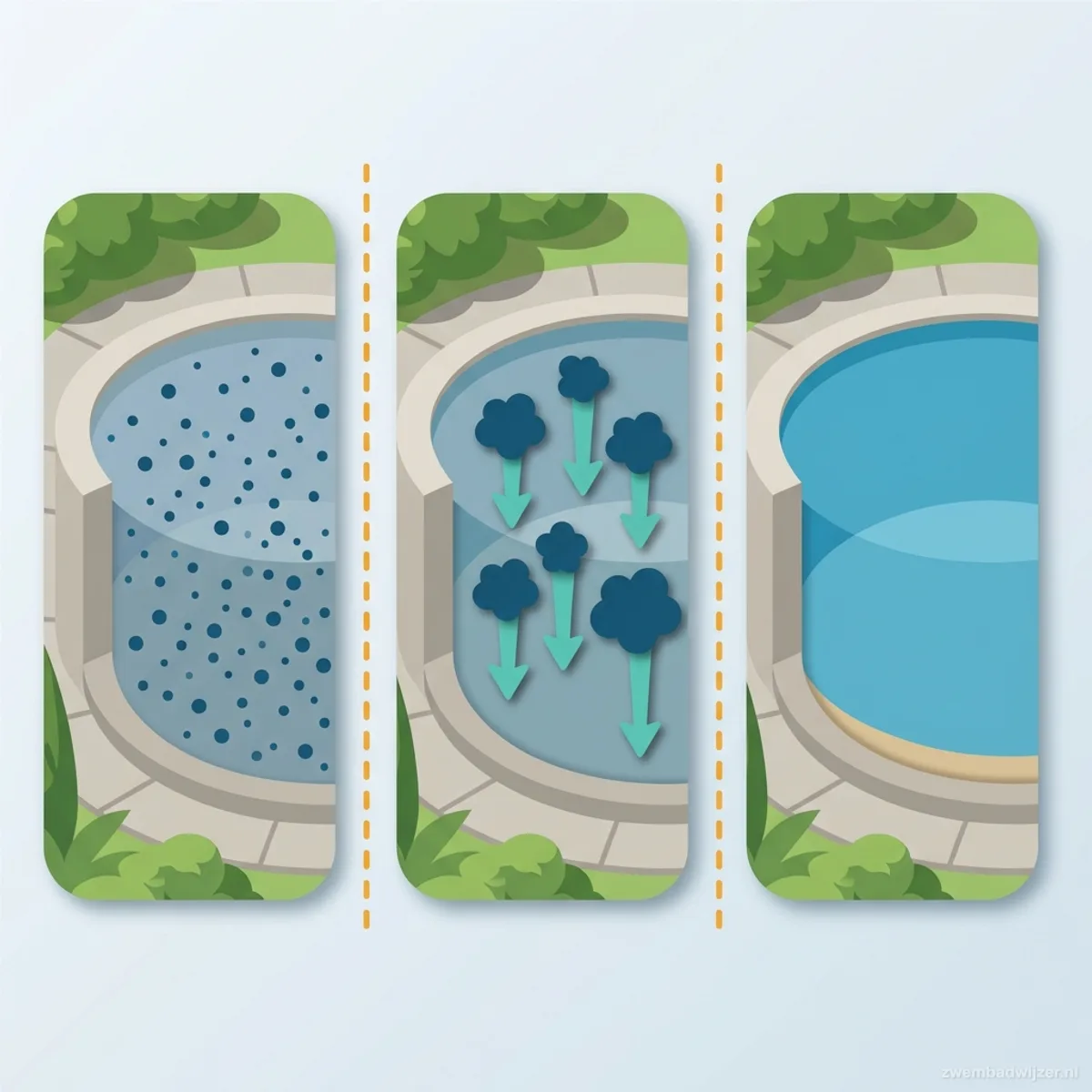
Flocculant is a positively charged polymer. Most fine particles in water carry a negative charge. The flocculant neutralises that charge so particles attract each other and clump into larger flocs. Those flocs are heavy enough to sink.
The result: particles that would otherwise float in the water for weeks settle to the bottom within 12 to 24 hours and can be vacuumed away. The water turns crystal clear.
Liquid or tablet flocculant: which works better?
Flocculant comes in two forms: liquid (flocculant liquid) and tablets or cartridges for the skimmer. Both work on the same principle but suit different situations.
Liquid flocculant is the most powerful option for acutely cloudy water. You add it directly to the pool (spread over the surface), run the pump for 2 hours, then switch it off for 8 to 12 hours while the flocs settle. Then vacuum the floor on the waste/drain setting.
Flocculant tablets (cartridges) go in the skimmer weekly. They dissolve slowly and release a continuous low dose of flocculant to the circulating water. This is a preventive approach for light haze. Not suitable for badly cloudy water.
| Type | Action | Suited for | Dosage | Cost per treatment |
|---|---|---|---|---|
| Liquid | Fast, sinking | Severely cloudy water | 50 to 100 ml per 10,000 L | €0.50 to €2.00 |
| Tablets/cartridges | Preventive, continuous | Light haze, maintenance | 1 tablet per 25 m3/week | €0.30 to €1.00 |
How to use flocculant in your pool
Follow this step-by-step process for an effective flocculation treatment on severely cloudy water:
Step 1: Check and adjust pH Test the pH and adjust to 7.0 to 7.4 if needed. Flocculant works most efficiently in this range. A pH above 7.6 significantly reduces its effectiveness.
Step 2: Add flocculant Dilute the recommended dose in a bucket of water. Spread the diluted solution evenly over the water surface. For a 30 m3 pool, the dose is 150 to 300 ml for a typical concentrated product.
Step 3: Run the pump for 2 hours Run the circulation pump on filter mode for 2 hours to distribute the product throughout the pool. Do not use backwash or bypass mode.
Step 4: Switch off the pump and wait 8 to 12 hours Turn the pump off. Leave the pool undisturbed for 8 to 12 hours. Do not enter the pool during this time. The flocs settle as a light grey or white layer on the floor.
Step 5: Vacuum to waste Set the multiport valve to ‘Waste’ or ‘Drain’ — not to ‘Filter’. Vacuum the floor slowly and carefully. If you vacuum on Filter mode, the flocs go back into the filter and clog it.
Step 6: Backwash the filter After treatment, backwash the filter and check the pressure gauge. Restart the pump on normal filter mode.
For more tips if your water stays cloudy after flocculation, read the article on cloudy pool water .
When do you need flocculant?
Not every cloudy pool needs flocculant. Check the chemistry first before starting a flocculation treatment.
Use flocculant when:
- Chlorine level is correct (1 to 3 mg/l) but the water stays cloudy
- Water looks grey or hazy after a chlorine shock
- Opening the pool after winter and the water is dull
- A lot of pollen, dust or fine debris has blown in after a storm
Do not use flocculant when:
- The water is green from algae — treat the algae with chlorine shock first
- Chlorine is too low — flocculant does not tackle cloudiness caused by biological growth
- You have a cartridge filter — flocculant will completely block fine cartridge filters
Always verify that your pool chlorine and pH levels are correct before starting.
Flocculant vs clarifier: what is the difference?
Flocculant and clarifier have a similar mechanism but different applications.
Flocculant: Makes particles sink to the bottom. Requires switching off the pump, waiting for the flocs to settle and vacuuming the floor. Fastest and most thorough for severely cloudy water.
Clarifier: Clumps particles into masses large enough for the sand filter to catch. The pump keeps running. Better for light haze and preventive maintenance. Works more slowly (24 to 48 hours) but needs less manual effort.
| Property | Flocculant | Clarifier |
|---|---|---|
| Mechanism | Particles sink to bottom | Particles caught by filter |
| Pump during treatment | Off after 2 hours | On |
| Suited for | Severely cloudy | Light haze |
| Follow-up action | Vacuum the floor | Nothing extra |
| Time to clear water | 12 to 24 hours | 24 to 48 hours |
What is the best pool flocculant?
All common flocculants on the market contain either aluminium sulfate or polyaluminium chloride (PAC) as the active ingredient. PAC-based products perform better at higher pH levels and leave less aluminium residue behind.
Choose a product with at least 10% active ingredient for an acute treatment. Cheaper products sometimes contain only 5%, meaning you need twice as much.
Store liquid flocculant in a cool, dry place out of reach of children. Flocculant that freezes and thaws loses effectiveness.
What happens if you add too much flocculant?
An overdose creates a persistent milky or white haze that is difficult to remove. Too many flocs prevent proper sedimentation — they form a colloidal suspension that passes through the filter and clogs the filter sand.
What to do:
- Backwash the filter immediately.
- Run the pump on filter mode for 4 hours.
- Let the pool sit for 12 hours.
- Vacuum the floor on waste setting.
- Backwash again.
Never add more flocculant if the water is still white or cloudy from the previous treatment.
Frequently asked questions
When should you use flocculant in a pool?
Use flocculant when the water is cloudy but chlorine and pH are both correct. Typical situations: after heavy rain, after a chlorine shock, when opening after winter, or when the water looks grey but the chemistry is fine.
How long does pool flocculant take to work?
Flocculant binds particles within 2 hours. The flocs need 8 to 12 hours to sink. After vacuuming, the water is typically clear. Allow 12 to 24 hours total.
What is the difference between flocculant and clarifier?
Flocculant makes particles sink to the bottom for vacuuming. Clarifier clumps particles for the filter to catch. Flocculant is faster and more thorough; clarifier is easier for light haze maintenance.
How much flocculant do I use per 10,000 litres?
50 to 100 ml of liquid flocculant per 10,000 litres. For tablets, 1 tablet per 25 m3 weekly in the skimmer. Always check the label — concentrations vary.
I added too much flocculant — what now?
Backwash the filter immediately, run the pump for 4 hours, let the pool sit for 12 hours, then vacuum the floor to waste. Never add more flocculant while the water is still cloudy from the last treatment.