The ideal pH for your pool is 7.2 to 7.6. Outside this range, chlorine loses effectiveness and the water can irritate eyes and skin. Test 2 to 3 times per week and correct immediately if the value falls outside this range.
Why does pH matter so much?
pH determines how effective your chlorine is. At pH 7.0, about 73% of chlorine is active. At pH 8.0, only 21% is active. You can add the right amount of chlorine, but if the pH is too high, it does almost nothing.
The pH also affects your body and your pool:
- pH too low (below 7.2): eyes and skin irritate quickly, metal components corrode faster, swimwear wears out sooner
- pH too high (above 7.6): chlorine loses effectiveness, calcium scaling on walls and equipment, cloudy water
Human eye fluid has a pH of 7.4. Keeping your pool pH around that value means literally comfortable swimming.
Ideal pH values
| Value | Assessment |
|---|---|
| Below 7.0 | Too low, corrosive, irritating |
| 7.0 to 7.2 | Slightly low, chlorine works well but may irritate |
| 7.2 to 7.6 | Ideal range |
| 7.6 to 8.0 | Too high, chlorine loses effectiveness |
| Above 8.0 | Far too high, barely any disinfection |
How to test pool pH: and how often
How often to test:
- Regular use: 2 to 3 times per week
- After adding chemicals: after 4 hours
- After heavy use or rain: immediately
- Hot weather (above 25°C): daily
Testing methods:
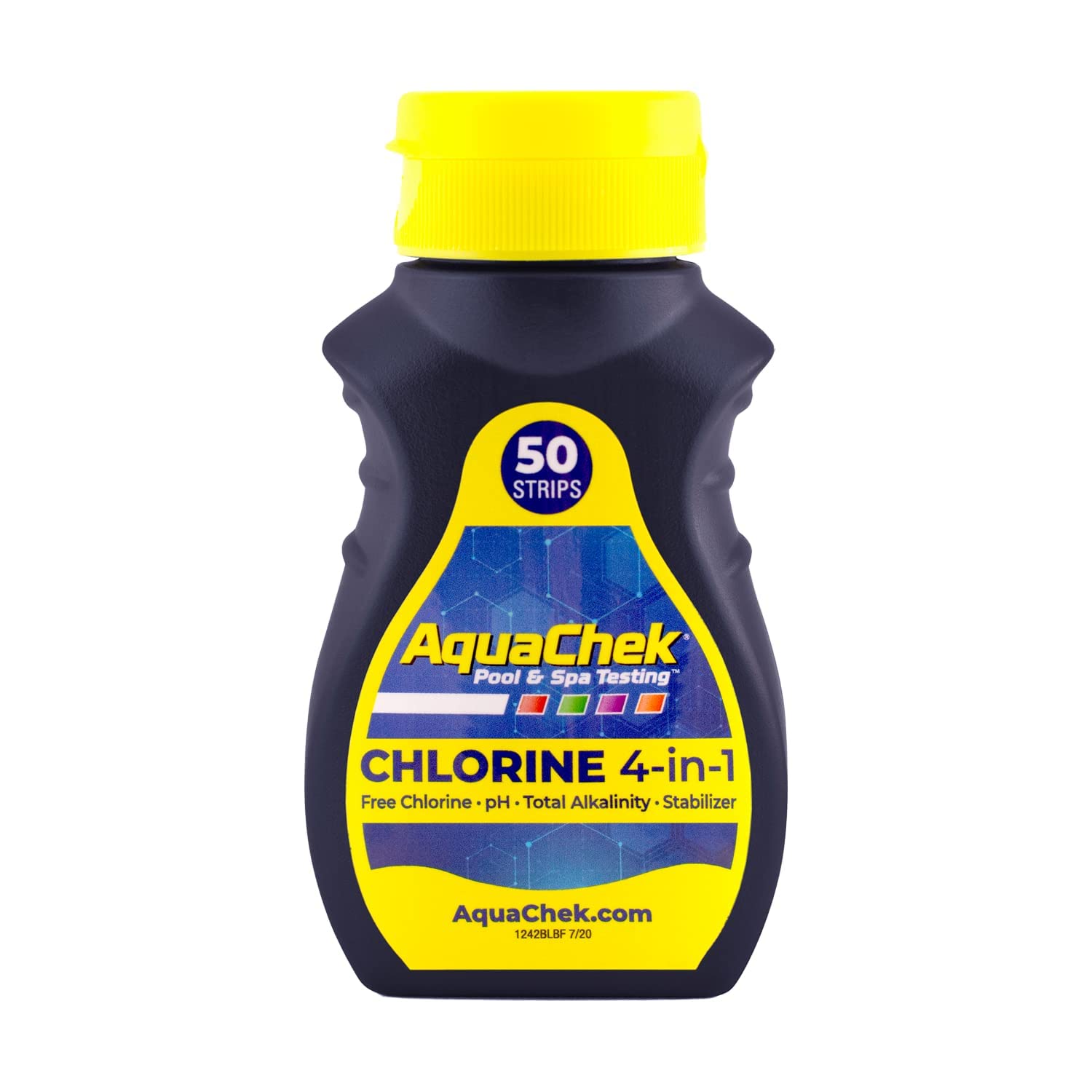
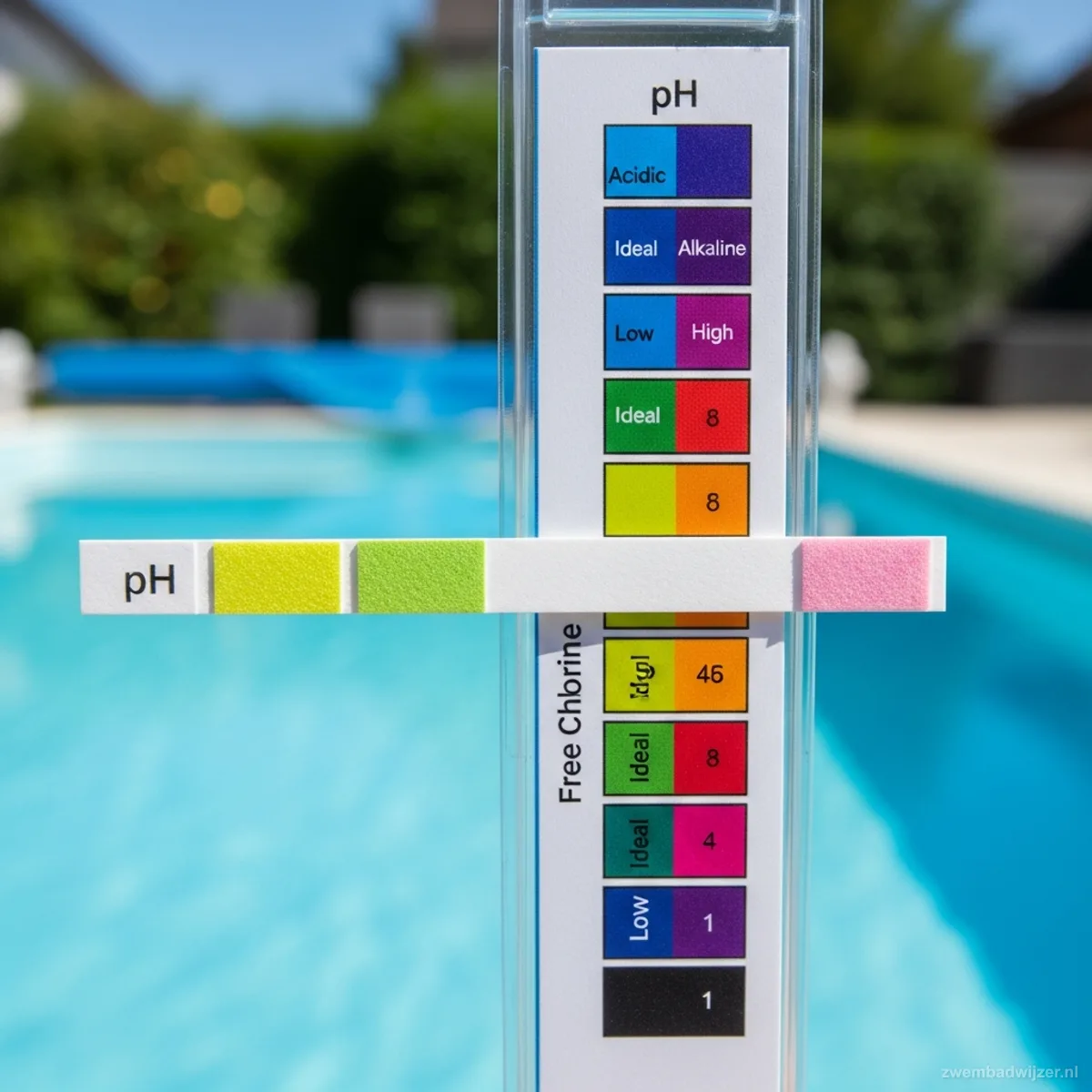
Test strips (quick): dip a dry strip 30 cm deep for 1 second, hold horizontal and compare after exactly 15 seconds. Cheap and good for daily checks.
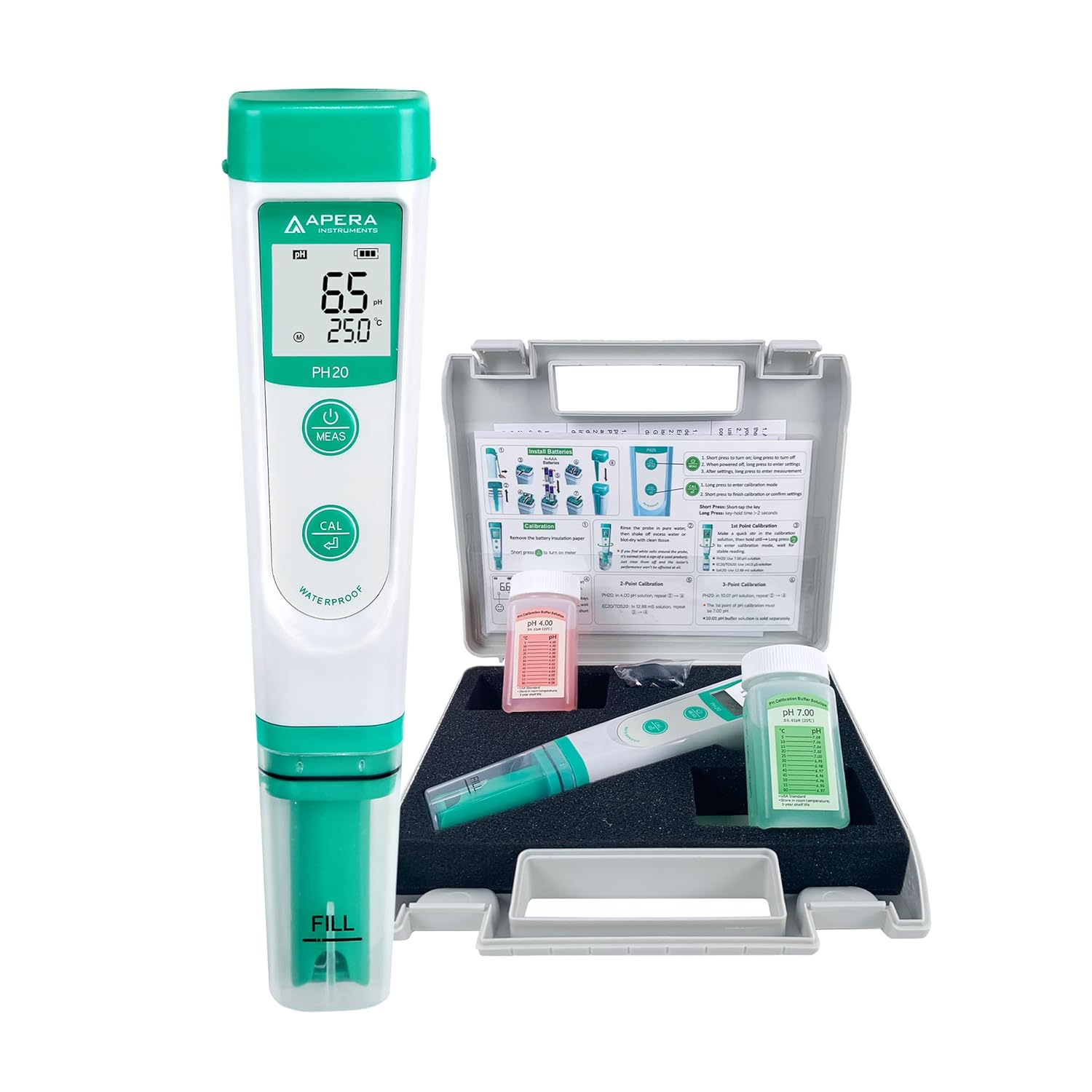
Digital pH tester: accurate to 0.01. Calibrate every 2 to 4 weeks with a pH 7.0 buffer solution. Best for serious pool maintenance.
Tip
Always take your water sample at 30 to 40 cm depth, at least 30 cm from the wall. Surface water gives a distorted reading due to evaporation.
More on testing methods: how to test pool water .
Pool pH too high: cause and fix
pH rises from calcium hypochlorite (chlorine granules), hard tap water, calcium deposits and reduced CO2. Above 7.6, chlorine quickly loses effectiveness and calcium scaling builds up.
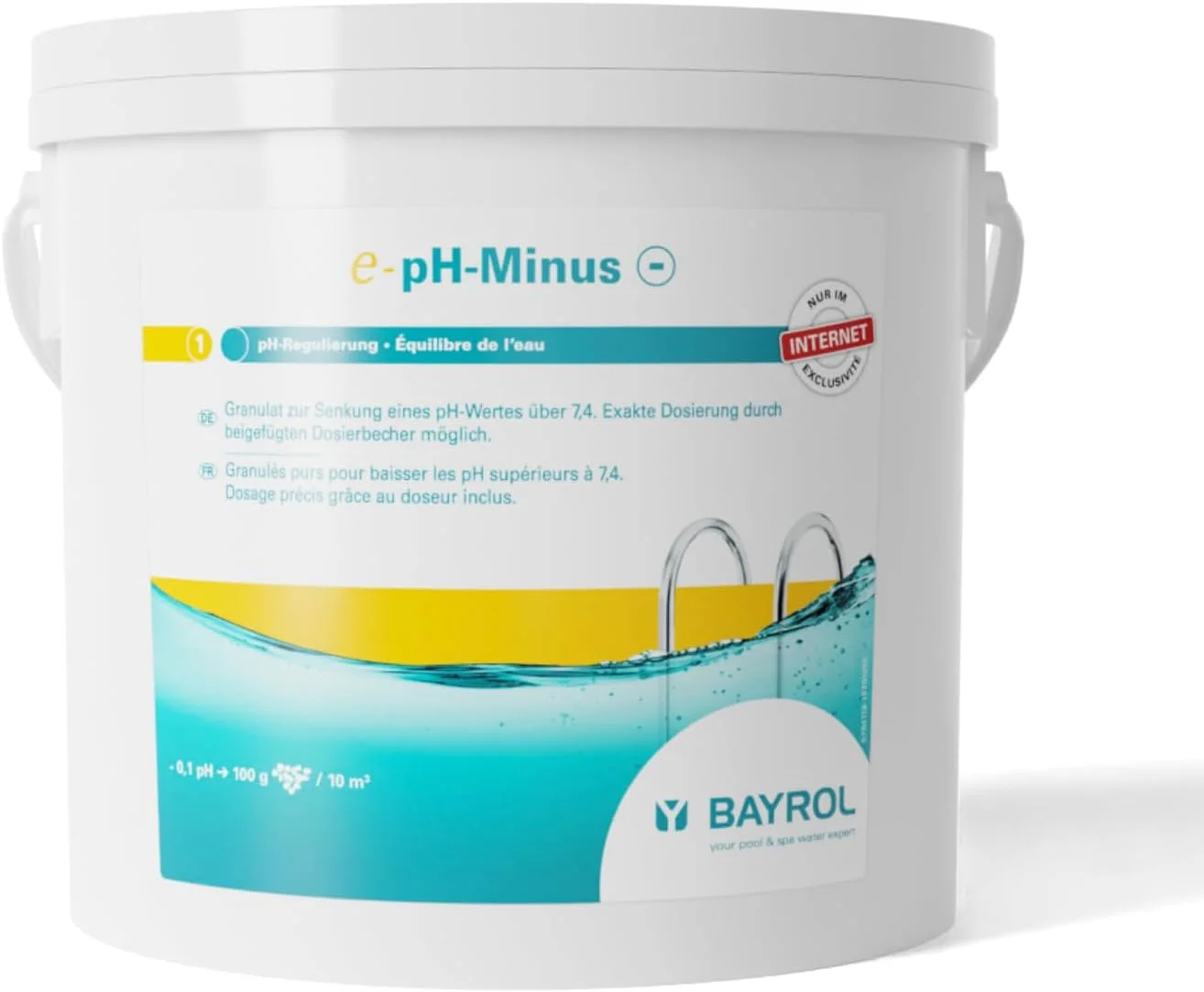
Fix: use pH decreaser (sodium bisulfate). Dosage: 10 grams per 10,000 litres lowers pH by approximately 0.1.
Step by step:
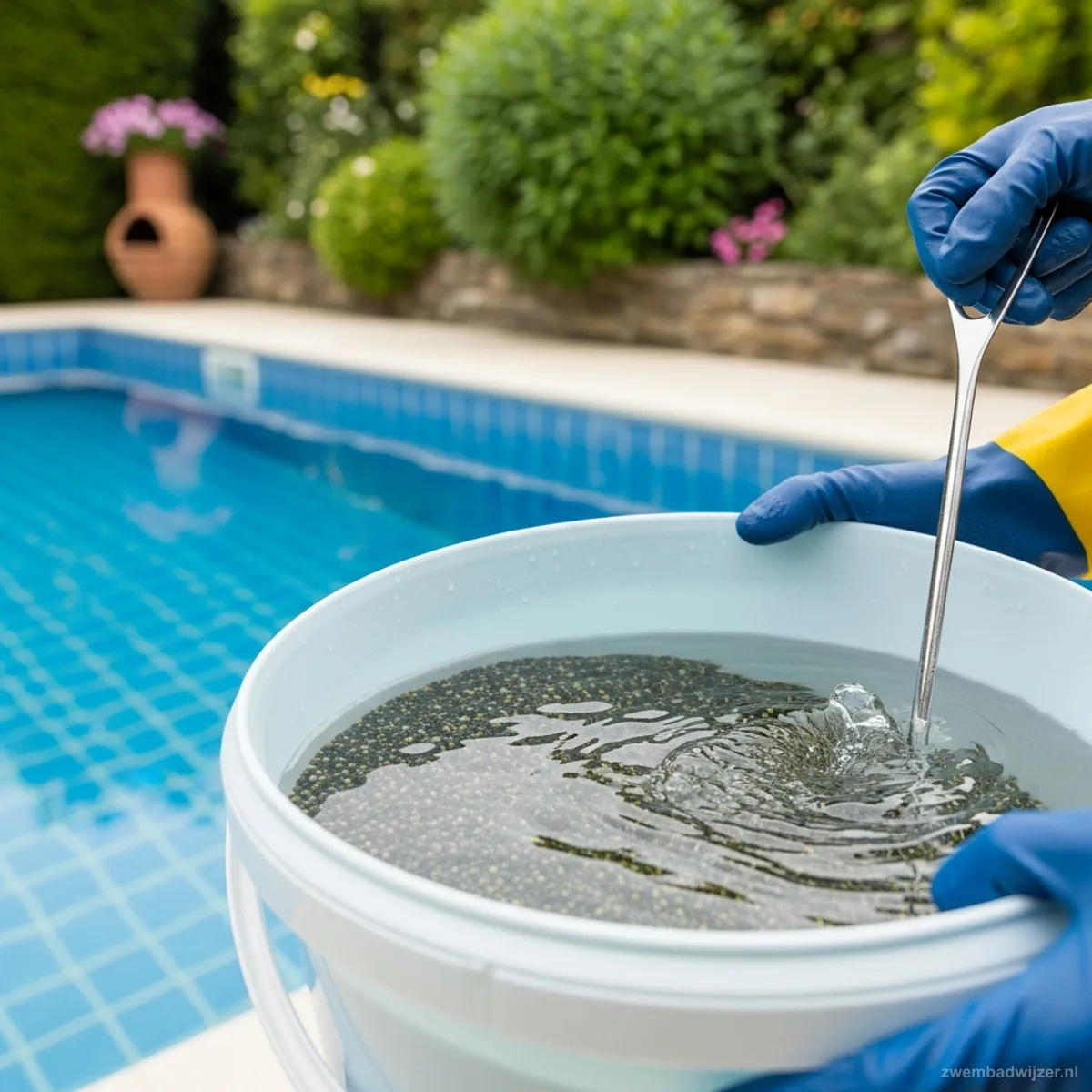
- Dissolve the required amount in a bucket of water (10 litres) while stirring
- Wear gloves and eye protection (pH decreaser is mildly corrosive)
- Pour the solution evenly into the deep end
- Run the pump for at least 4 hours
- Retest and repeat if needed
Warning
Never pour pH decreaser or increaser directly onto pool surfaces, steps or liners. Always dissolve in water first to prevent damage.
For the full step-by-step guide with exact dosing table, see how to lower pool pH .
Pool pH keeps going up: what now?
If the pH keeps returning to a high value after correction, your total alkalinity is probably too high (above 120 mg/l). High alkalinity acts as a buffer that pushes pH back up. Lower it by adding pH decreaser in several small doses with the pump off, so CO2 can escape. Check your pool alkalinity first.
Pool pH too low: cause and fix
Low pH (below 7.2) makes the water acidic. Causes: heavy rain, use of trichlor tablets (which are mildly acidifying), and low total alkalinity.
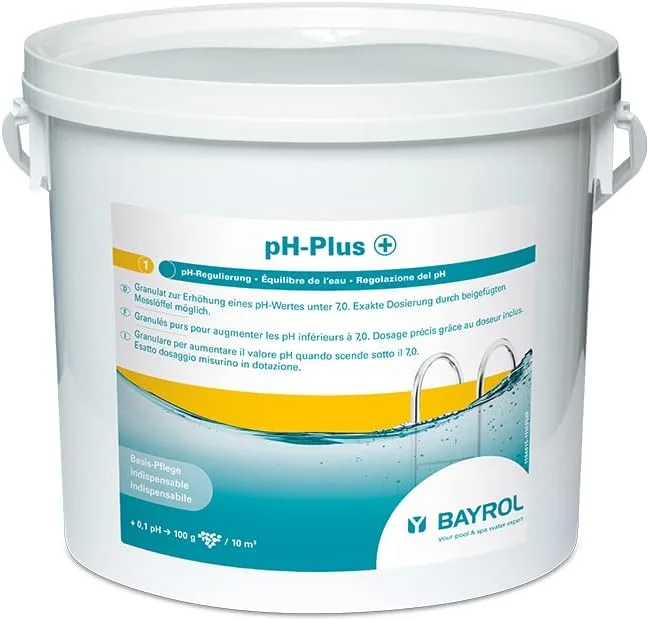
Fix: use pH increaser (sodium carbonate / soda ash). Dosage: 10 grams per 10,000 litres raises pH by approximately 0.1.
Step by step:
- Dissolve the required amount in a bucket of water
- Pour the solution evenly around the pool perimeter
- Run the pump for at least 4 hours
- Retest and repeat if needed
Never add more than the calculated amount in one dose.
For the full step-by-step guide, see how to raise pool pH .
Pool pH keeps dropping: what now?
If the pH keeps falling despite correction, your total alkalinity is probably too low (below 80 mg/l). Without enough buffering capacity, pH swings with every small influence: rain, sweat, chemicals. Raise alkalinity first with sodium bicarbonate. More on this: pool alkalinity: the pH buffer explained .
pH keeps fluctuating: alkalinity is the root cause
Unstable pH almost always points to low total alkalinity. Alkalinity acts as a pH buffer: the lower the alkalinity, the faster pH changes from rain, sweat, sunscreen or chemical additions.
Ideal alkalinity: 80 to 120 mg/l (ppm).
If your alkalinity is below 80 mg/l, fix that first before trying to stabilise the pH. Use sodium bicarbonate (NaHCO3) to raise it. Read more: pool alkalinity: what it is and how to correct it .
How much chlorine do you need at different pH levels?
| pH | Active chlorine | Dose needed for same effect |
|---|---|---|
| 7.0 | 73% | 1x |
| 7.2 | 63% | 1.2x |
| 7.4 | 48% | 1.5x |
| 7.6 | 33% | 2.2x |
| 8.0 | 21% | 3.5x |
At pH 8.0 you need 3.5 times more chlorine than at pH 7.0 for the same disinfecting effect. Good pH management directly reduces your chlorine costs. More on how pH and chlorine interact: pH and chlorine .
How much pH increaser or decreaser do you need?
pH increaser (sodium carbonate): raises pH:
| Pool volume | Raise pH by 0.2 | Raise pH by 0.4 | Raise pH by 0.6 |
|---|---|---|---|
| 10,000 litres | 20 grams | 40 grams | 60 grams |
| 25,000 litres | 50 grams | 100 grams | 150 grams |
| 50,000 litres | 100 grams | 200 grams | 300 grams |
pH decreaser (sodium bisulfate): lowers pH:
| Pool volume | Lower pH by 0.2 | Lower pH by 0.4 | Lower pH by 0.6 |
|---|---|---|---|
| 10,000 litres | 20 grams | 40 grams | 60 grams |
| 25,000 litres | 50 grams | 100 grams | 150 grams |
| 50,000 litres | 100 grams | 200 grams | 300 grams |
Rule of thumb: 10 grams per 10,000 litres corrects pH by approximately 0.1. Never add more than the calculated amount in one dose. Retest after 4 hours and repeat if needed. Never add two chemicals at the same time.