Water temperature is the parameter that most directly affects the day-to-day enjoyment of a pool. Too cold and the pool gets avoided; too warm and it becomes a bacterial risk and chlorine is consumed rapidly. Temperature also has a direct effect on water chemistry, particularly chlorine behaviour and algae growth risk.
This guide covers the ideal temperature ranges for different types of swimming, how temperature and chemistry interact, the main options for heating a pool with realistic cost comparisons, and how to deal with an overheated pool.
Ideal pool water temperature
There is no single universally ideal pool temperature - it depends on who is swimming and for what purpose.
| Use case | Ideal temperature | Notes |
|---|---|---|
| Recreational swimming for adults | 26 to 28 degrees C | Most commonly preferred range |
| Young children and toddlers | 28 to 30 degrees C | Children feel cold more quickly |
| Competition and fitness swimming | 25 to 26 degrees C | Lower temp improves performance |
| Therapeutic or rehabilitation | 30 to 32 degrees C | Warm water aids muscle relaxation |
| General comfortable range | 24 to 30 degrees C | Within this range most swimmers are comfortable |
The 26 to 28 degrees Celsius range is the most widely cited comfort zone for recreational swimming. Many pool owners set their heat pump to 27 degrees as a practical target that satisfies most swimmers without pushing running costs unnecessarily high.
Above 30 degrees, two significant problems emerge. First, chlorine breaks down faster, requiring more frequent dosing and testing. Second, warm water is an ideal environment for algae growth - the combination of warm temperature, UV exposure and any temporary dip in chlorine can trigger an algae bloom very quickly. Keeping the pool below 30 degrees is a practical chemistry decision as much as a comfort one.
How temperature affects pool chemistry
Temperature is one of the most important variables in pool water management, and it is the one that changes most with the seasons.
Chlorine consumption increases with temperature. The chemical reactions that consume free chlorine all accelerate at higher temperatures. Bacterial and algae activity increases. Bather use tends to be higher on hot days. UV intensity is greater in summer. As a rule of thumb, chlorine demand roughly doubles for every 10 degree Celsius rise in water temperature.
Algae grows faster in warm water. Above 28 degrees Celsius, algae can establish and bloom within 24 to 48 hours if free chlorine drops. This is why careful monitoring is more important in summer than in spring or autumn. When water temperature is consistently above 25 degrees, test chlorine daily rather than every few days.
Practical adjustments for warm weather:
- Maintain free chlorine at 2 to 3 mg/l rather than the minimum 1 mg/l
- Test more frequently - at least every day during hot spells
- Keep the pool covered when not in use to reduce UV degradation
- Check stabiliser (cyanuric acid) levels are in the 30 to 50 mg/l range to protect chlorine from UV
Tip
If a heatwave is forecast, raise your free chlorine to the upper end of the normal range (2.5 to 3 mg/l) before temperatures peak. Once algae starts growing in a warm pool with low chlorine, treatment takes several days. Prevention takes minutes.
Pool at 20 degrees: too cold to swim?
At 20 degrees Celsius, most recreational swimmers find the water uncomfortably cold. Whether it is too cold depends on the swimmer and the type of use.
For competitive and fitness swimmers, 20 degrees is manageable: intensive exercise generates body heat quickly, and cooler water can improve performance in training. For casual recreational swimming, particularly for children, 20 degrees is below the comfortable threshold.
| Swimmer type | Minimum comfortable temperature |
|---|---|
| Competitive / fitness swimmers | 20 to 22°C |
| Recreational adults | 24 to 26°C |
| Children (6-12 years) | 26 to 28°C |
| Young children (under 6) | 28 to 30°C |
| Elderly or rehabilitation | 30 to 32°C |
There is no health risk for healthy adults swimming in 20-degree water, but prolonged exposure increases the risk of muscle cramp. An unheated outdoor pool in the Netherlands typically reaches 20 degrees in late May or early June, making comfortable recreational swimming rare before July without heating.
Pool temperature in a garden: seasonal norms
An unheated garden pool follows outdoor temperatures with a delay: the water heats up and cools down more slowly than the air. A hot day of 30 degrees adds approximately 1 to 2 degrees to the water; a cool night removes a similar amount.
| Month | Typical water temperature (unheated) | Suitable for swimming? |
|---|---|---|
| May | 14 to 18°C | No, too cold for most |
| June | 19 to 22°C | Possible for adults only |
| July | 22 to 25°C | Yes, comfortable for adults |
| August | 22 to 26°C | Best month, warmest after heatwaves |
| September | 18 to 22°C | Borderline, too cool for children |
| October | 13 to 16°C | Not suitable without heating |
A solar cover extends the swimming season by 4 to 6 weeks by retaining heat overnight and adding solar gain during the day. A heat pump makes swimming possible from May onwards and into October. See pool heating options for a full comparison.
How to heat a pool: comparison of methods
The right heating method depends on your pool size, your budget, how much temperature rise you want and how reliably you need it.
| Method | Installation cost | Running cost per season | Temperature gain | Reliable in all weather? |
|---|---|---|---|---|
| Solar cover only | EUR 50 to 200 | Almost zero | 3 to 5 degrees (retains heat) | Yes, passive |
| Solar heater panels | EUR 300 to 1500 | Very low | 5 to 10 degrees above ambient | Only when sun is shining |
| Heat pump | EUR 800 to 3000 | EUR 150 to 400 | 10 to 15 degrees above ambient | Yes, reliable |
| Gas heater | EUR 600 to 2000 | EUR 300 to 800 | Fast, large gain | Yes, but expensive |
| Electric heater (immersion) | EUR 200 to 800 | Very high | Works but inefficient | Yes, small pools only |
For most residential pool owners in northern Europe, a heat pump combined with a solar cover gives the best balance of reliable performance and reasonable running costs.
Solar covers
A solar cover (also called a bubble cover or thermal blanket) is the simplest and most cost-effective thing you can do to raise and maintain water temperature. It serves two distinct functions.
Function 1 - Retaining heat. Without a cover, a pool loses most of its heat overnight through evaporation and radiation. A solar cover significantly reduces this loss. A pool that reaches 27 degrees during a sunny day may drop back to 23 degrees overnight without a cover. With a cover, it might drop to only 25 or 26 degrees. The accumulated difference over weeks becomes significant.
Function 2 - Capturing solar energy. The small air bubbles in a solar cover act as miniature lenses, trapping and transferring solar heat into the water. This additional heat input adds 1 to 3 degrees Celsius on a sunny day compared to an uncovered pool.
Practical tips for solar covers:
- Always remove the cover when people are swimming and replace it afterwards
- Store the cover on a reel to make this easy and protect the cover from UV degradation when not in use
- A cover reel (manual or motorised) is worth the investment for pools used daily
- Solar covers have a typical lifespan of 3 to 6 years - the bubbles deteriorate and the insulating effectiveness drops over time
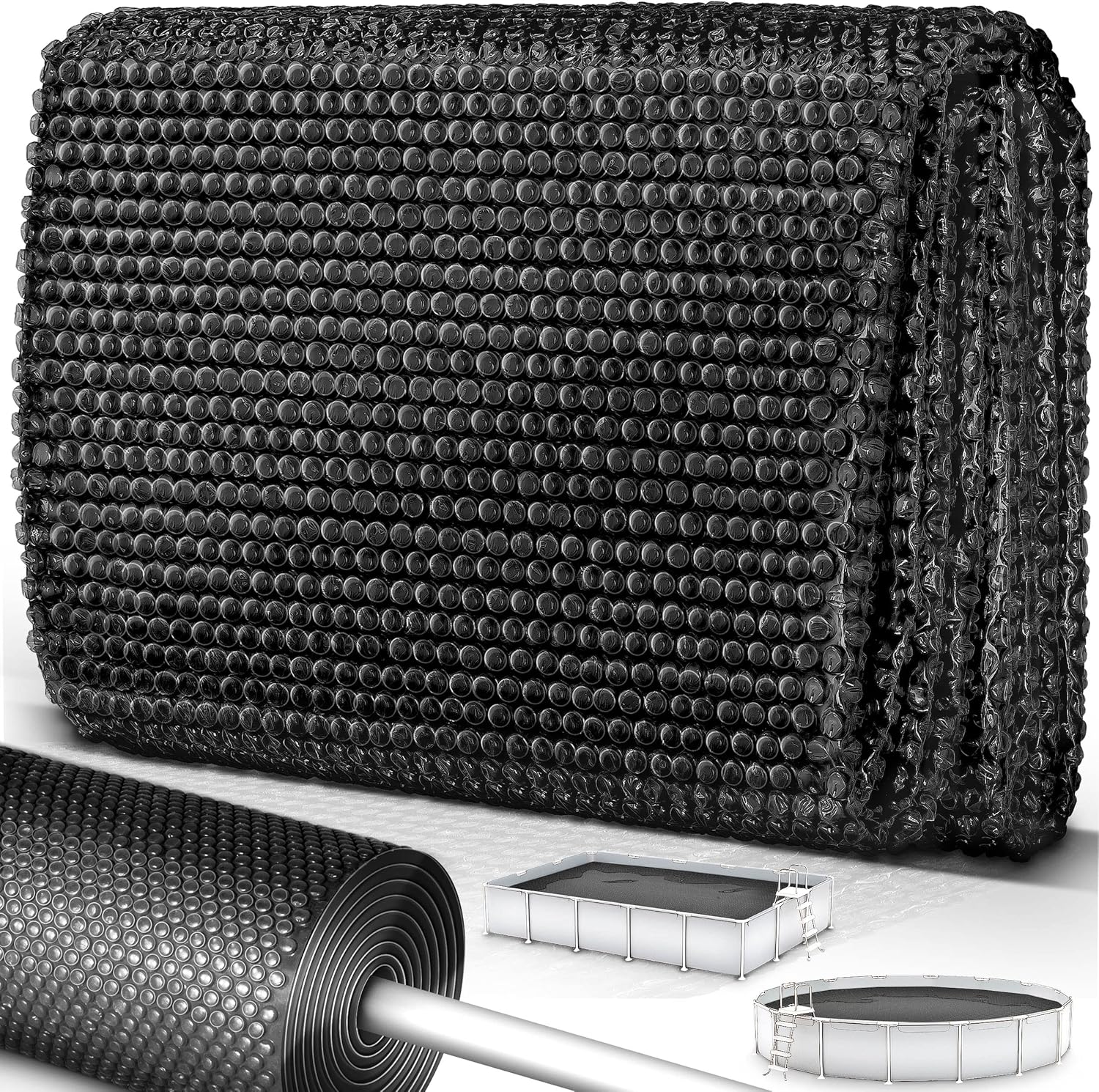
Solar cover (thermal blanket)
Universal solar cover available in multiple sizes, can be cut to fit. Reduces overnight heat loss by 50 to 70 percent.
- Significantly reduces heat loss
- Can be cut to fit
- Low cost
- Store on a reel for longer lifespan
Tip
Up to 70 percent of pool heat loss is through evaporation. A solar cover dramatically cuts evaporation, which means less water top-up, less chemical dilution, and less energy consumed by other heating systems. Even if you have a heat pump, keeping a solar cover on when the pool is not in use reduces your heat pump running time and running costs.
Solar heater panels
Solar heating panels (or solar collectors) circulate pool water through tubes exposed to the sun, where the water is heated before being returned to the pool. They require no additional electricity beyond the pool pump that would already be running.
Dome solar heaters are the simplest type - a coiled black tube or dome-shaped absorber that heats water passing through it. They are inexpensive (EUR 50 to 200 for smaller models) but have limited heating capacity. Suitable for smaller above-ground pools.
Flat panel solar collectors are more effective and can be mounted on a roof or south-facing structure. For a medium-sized pool, a set of flat panels can add 5 to 10 degrees Celsius when the sun is strong. Cost ranges from EUR 300 to 1500 installed.
Limitation: Solar heaters only work when the sun is shining and when the air temperature is warm enough for effective heat transfer. In overcast or cool weather, they provide little to no heating. For reliable temperature control across variable weather, solar heating alone is not sufficient.
Heat pumps
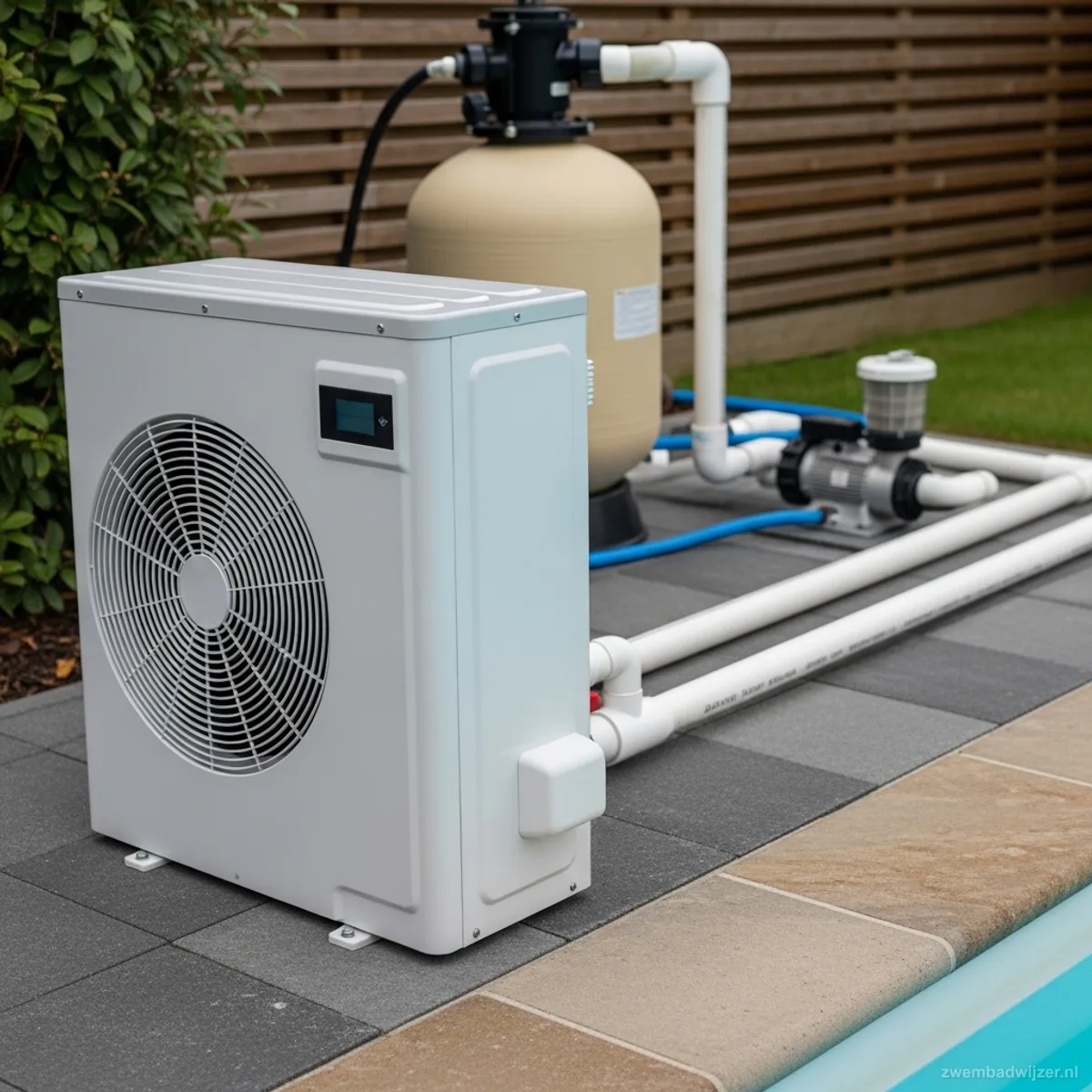
A pool heat pump is the most practical and reliable heating solution for most residential outdoor pools. It works like a refrigerator in reverse - extracting heat energy from the outside air and transferring it to the pool water, multiplied by the efficiency of the compressor cycle.
COP (Coefficient of Performance): This is the key efficiency metric for heat pumps. A COP of 5 means the heat pump delivers 5 kWh of heat for every 1 kWh of electricity consumed. For pool heat pumps, look for a COP rating of at least 4 to 5 in the product specifications. Premium models achieve COP 6 or higher in optimal conditions (warm air, moderate temperature differential).
Temperature range: Heat pumps work effectively when air temperatures are above 10 to 15 degrees Celsius. Below this, efficiency drops. Most pool heat pumps include a defrost cycle for cold conditions. For spring and autumn use at lower air temperatures, choose a model rated to work at low air temperatures rather than assuming summer performance extends year-round.
Sizing: A heat pump that is too small for the pool volume will struggle to maintain temperature in cooler weather or after heavy heat loss. As a rough guide, allow approximately 1 kW of heating capacity per 10 m3 of pool volume for a northern European climate. Consult the manufacturer’s sizing guide using your pool volume and target temperature.
Running costs: A well-sized heat pump with a COP of 5 in an average season will cost EUR 150 to 400 per season to run, depending on pool size, target temperature and local electricity tariff. Using a solar cover alongside the heat pump can reduce running time and costs by 30 to 50 percent.
Tip
If your electricity tariff has off-peak rates, programme the heat pump to run primarily during those hours. Pool water retains heat well, so maintaining a stable temperature with overnight off-peak running and a cover on is more economical than heating during peak rate hours.
Gas heaters
Gas pool heaters are the fastest way to heat a pool - they can raise water temperature by several degrees in a few hours, regardless of air temperature or weather. This makes them useful for pools that are used infrequently and heated on demand rather than maintained at a constant temperature.
When gas heating makes sense: If you open the pool for occasional weekend use rather than daily swimming, a gas heater can bring the water to temperature in a few hours before each use rather than running a heat pump continuously. For frequent use, the gas running costs become prohibitive.
Running costs: Gas heating is expensive per kWh delivered compared to a heat pump. A season of regular gas heating for a medium pool can cost EUR 400 to 800 or more, depending on gas prices and usage frequency. This is 2 to 4 times the running cost of a heat pump delivering the same heat output.
Dealing with an overheated pool
In hot climates or during prolonged heatwaves, pool water can exceed 30 degrees Celsius even without any artificial heating. An overheated pool is uncomfortable to swim in and creates an elevated risk of algae and bacterial growth.
Options for cooling an overheated pool:
Run a fountain or water feature. Water flowing through the air loses heat through evaporation and contact with cooler air. Even a simple fountain return nozzle can noticeably cool a pool overnight. This also improves aeration and helps stabilise pH.
Add cold tap water. Running fresh water into the pool lowers the temperature while simultaneously diluting and refreshing the water chemistry. Offset the dilution by testing and correcting pH and chlorine afterwards.
Remove the cover during cool nights. If you normally keep a solar cover on overnight, removing it on hot nights allows the pool to radiate heat naturally. This is the simplest and most passive cooling option.
Swim in the cooler parts of the day. Early morning and evening are the coolest times. Pool water loses heat overnight, so an early morning swim in an overheated pool is often more comfortable than an afternoon swim.
Measuring pool temperature
An accurate temperature reading helps you make the right decisions about heating, chlorine dosing and algae risk.
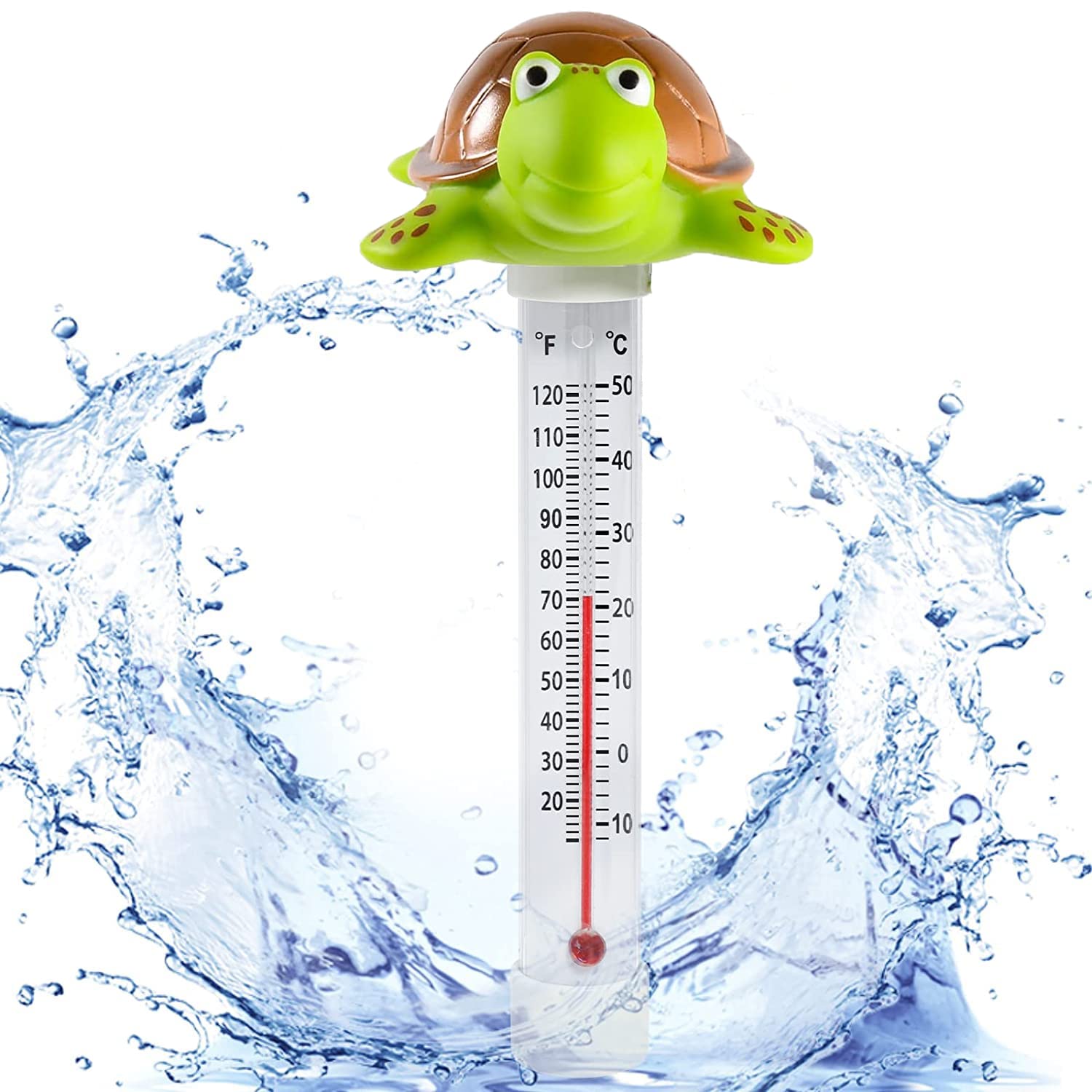
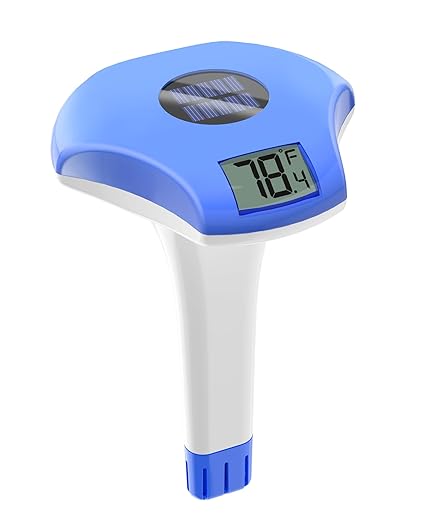
Floating pool thermometer (analogue)
Classic floating thermometer with attachment cord. Always ready in the water for a quick temperature reading.
- Simple to use
- Always in the water
- Inexpensive
- Less precise than digital
Floating thermometer: The cheapest and simplest option - EUR 5 to 15. Leave it in the pool for a few minutes to get an accurate reading. Accurate enough for all practical pool management purposes.
Wall-mounted thermometer: Attaches to the pool wall or return fitting. More convenient than a floating thermometer for regular checks.
Smart pool systems and heat pump displays: Many pool heat pumps display current water temperature on the control panel or via an app. This is the most convenient option if you have a heat pump, as it integrates temperature monitoring with control of the heating system itself.
Most adults find 26 to 28 degrees Celsius comfortable for recreational swimming. Below 24 degrees the water feels cool to many people. Above 30 degrees the water can feel uncomfortably warm and also poses a higher risk of bacterial growth and rapid chlorine loss. The 26 to 28 degree range is the most widely used target for residential pools.